How do I work out my body fat?
Grab a tape measure. Height and waist are enough. It’s free, within 20% of a scan for 9 in 10 US adults. But in Army recruits, a tape formula missed fat loss a scan caught.
On this page
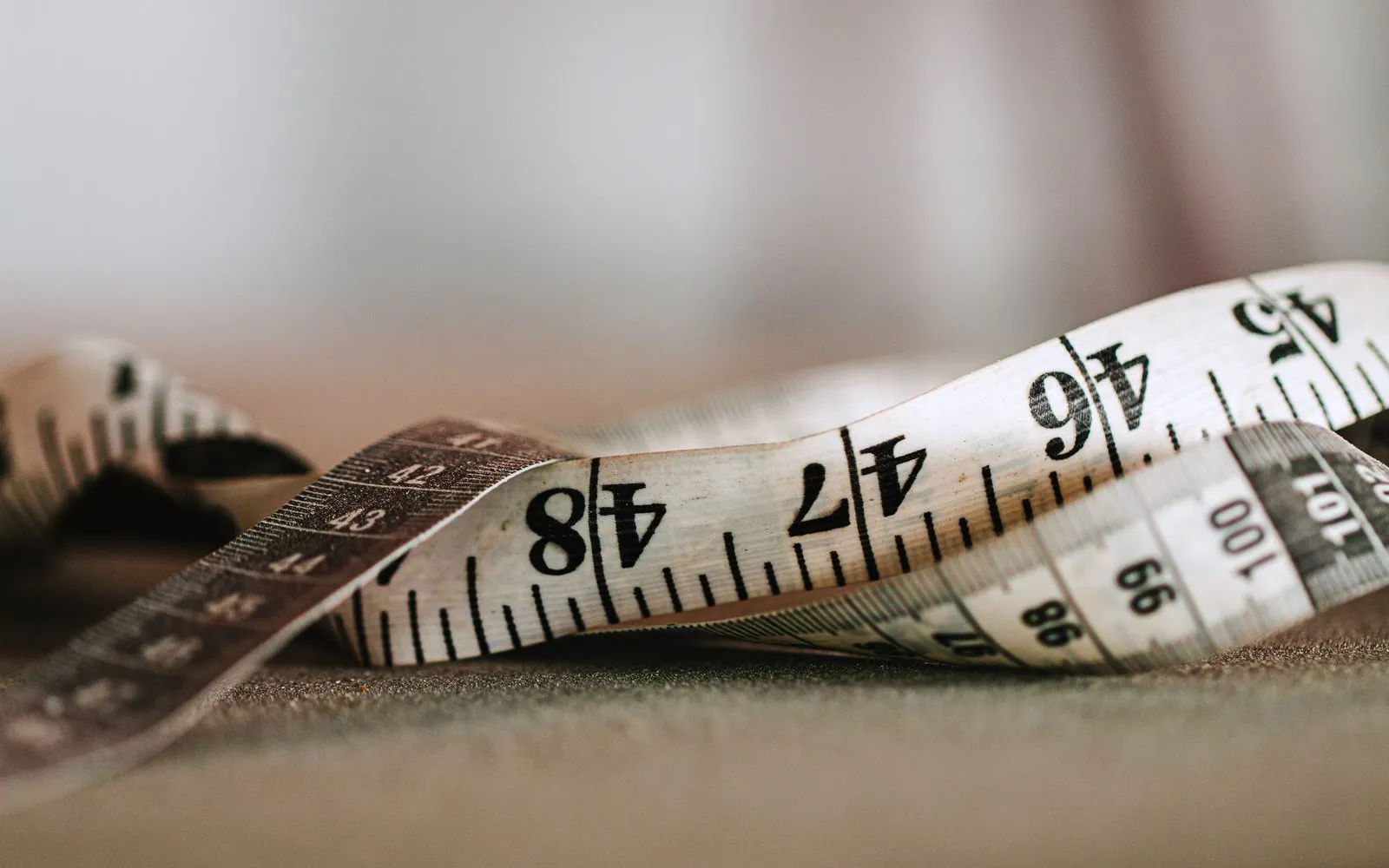
How do I calculate my body fat percentage?
Use a tape formula called relative fat mass (RFM). It needs only your height and your waist.
First, measure your waist the NHS way. Find the middle point between your lowest rib and the top of your hip bone, roughly level with your belly button. Breathe out naturally, and don’t hold your tummy in.
Work out your body fat in three steps
- 1
Divide
Your height by your waist, both in cm. 178 ÷ 90 = 1.98.
- 2
Times by 20
1.98 × 20 = 39.6.
- 3
Take it away
From 64 for a man, or 76 for a woman. 64 − 39.6 = 24.4%.
Sources: Woolcott and Bergman 2018; NHS
| Height | Waist | Body fat (RFM) |
|---|---|---|
| Man, 178 cm | 80 cm | 19.5% |
| Man, 178 cm | 90 cm | 24.4% |
| Man, 178 cm | 100 cm | 28.4% |
| Woman, 165 cm | 72 cm | 30.2% |
| Woman, 165 cm | 80 cm | 34.8% |
| Woman, 165 cm | 90 cm | 39.3% |
Source: Woolcott and Bergman 2018
How close is it? Tested against DXA scans, it was within 20% of the scan’s number for 88.9% of men and 91.5% of women. So if a scan says 25%, the formula mostly lands between 20 and 30%.
A DXA scan is a low-dose X-ray that sorts fat from muscle and bone. The formula was built on US adults aged 20 and over. It isn’t meant for pregnancy.
Its authors say it still needs testing in other ethnic groups, such as Asian adults, in athletes and in people with some health conditions.
Write your number down with the date. Then check it against your age below.
What is a healthy body fat percentage?
There’s no agreed answer. The 2000 study behind this scale chart said no accepted ranges existed. The NHS checks your BMI and waist instead.
These bands come from a major scale maker. It’s a rough guide, not an NHS line.
| Age | Women: normal | Men: normal |
|---|---|---|
| 20 to 39 | 21 to 32.9%. High from 33%. | 8 to 19.9%. High from 20%. |
| 40 to 59 | 23 to 33.9%. High from 34%. | 11 to 21.9%. High from 22%. |
| 60 to 79 | 24 to 35.9%. High from 36%. | 13 to 24.9%. High from 25%. |
Sources: Akindele 2016 (scale chart); Gallagher 2000
Take the man on 24.4%. That’s high up to age 59, and normal from 60.
Read your number against your own age row. Men can see what 15%, 20% and 30% mean in body fat percentage for men.
What is the best way to measure body fat?
Every method makes a guess. A review found DXA more accurate than tapes and body fat scales.
| Method | How it works | How close |
|---|---|---|
| Tape formula (RFM) | Height and waist. | 9 in 10 within 20% of DXA, in US adults. |
| Navy tape | Neck, belly or waist, and hips for women. | Typical error 3 to 4 points. |
| Body fat scale | Sends a tiny current through you. | Most readings within about 10 points either way, in 43 men with overweight or obesity. |
| Skinfold callipers | Pinch the fat under your skin at set spots. | Depends a lot on who measures. |
| DXA scan | A low-dose X-ray of fat, muscle and bone. | Closest of these. About a day of natural background radiation. |
Sources: Woolcott and Bergman 2018; Army study 2023; Pateyjohns 2006; Udroiu 2026 review
Scales shift with water, food, exercise and temperature. Callipers only see fat under the skin, not the deep fat round your organs.
For most people, a tape is the place to start: it’s free, and gives you your waist too. Weighing up a scan? Read body fat scales vs DEXA first.
Can a body fat calculator track fat loss?
The Navy formula didn’t, in one big test. RFM wasn’t part of it. In 1,407 US Army recruits, DXA found body fat fell by 3.3 points in men and 4 in women over 8 weeks of training.
On average, the Navy formula showed no change at all. It also read about 6 points lower than DXA at the start.
So treat one reading like a photo, not a film, and watch your waist in cm as well. The NHS says to keep your waist to less than half your height. At 178 cm, that’s under 89 cm.
Six rules for checking your body fat at home
- Measure your waist midway between your lowest rib and the top of your hip bone, breathing out naturally.
- Use the same units for your height and your waist.
- Stick to one formula or one device. Don’t compare a Navy number with an RFM one.
- Use a body fat scale at the same time of day, before food and exercise.
- Keep your waist to less than half your height, as the NHS advises.
- Treat one reading as a snapshot, and watch the trend over weeks.
Sources: NHS; NHS obesity; Udroiu 2026 review
More on the waist check in waist-to-height ratio vs BMI. Losing fat? Read keeping muscle while you lose weight.
When to speak to a GP
The NHS says to see a GP if your BMI is overweight or obese and:
- you want help to lose weight
- your waist is more than half your height
- you have pre-diabetes, diabetes, high blood pressure, joint pain, high cholesterol, sleep apnoea (breathing that stops and starts as you sleep) or heart and circulation disease
- obesity runs in your family
- you have, or think you may have, an eating disorder, such as binge eating
Skip the NHS waist calculator if you’re pregnant, or have or may have an eating disorder. Skip it too if you have a condition that affects your height, or you’re an adult with a BMI over 35. If you’re worried about your waist size, contact your local pharmacist or GP surgery.
Check your BMI with what your BMI means. For weight round your middle, see visceral fat and blood tests.