What is a normal body temperature?
Around 37C (98.6F) for most adults. A high temperature is usually 38C (100.4F) or above. In one big US study, most readings in well people fell between 35.7 and 37.3C. Two things move yours most.
On this page
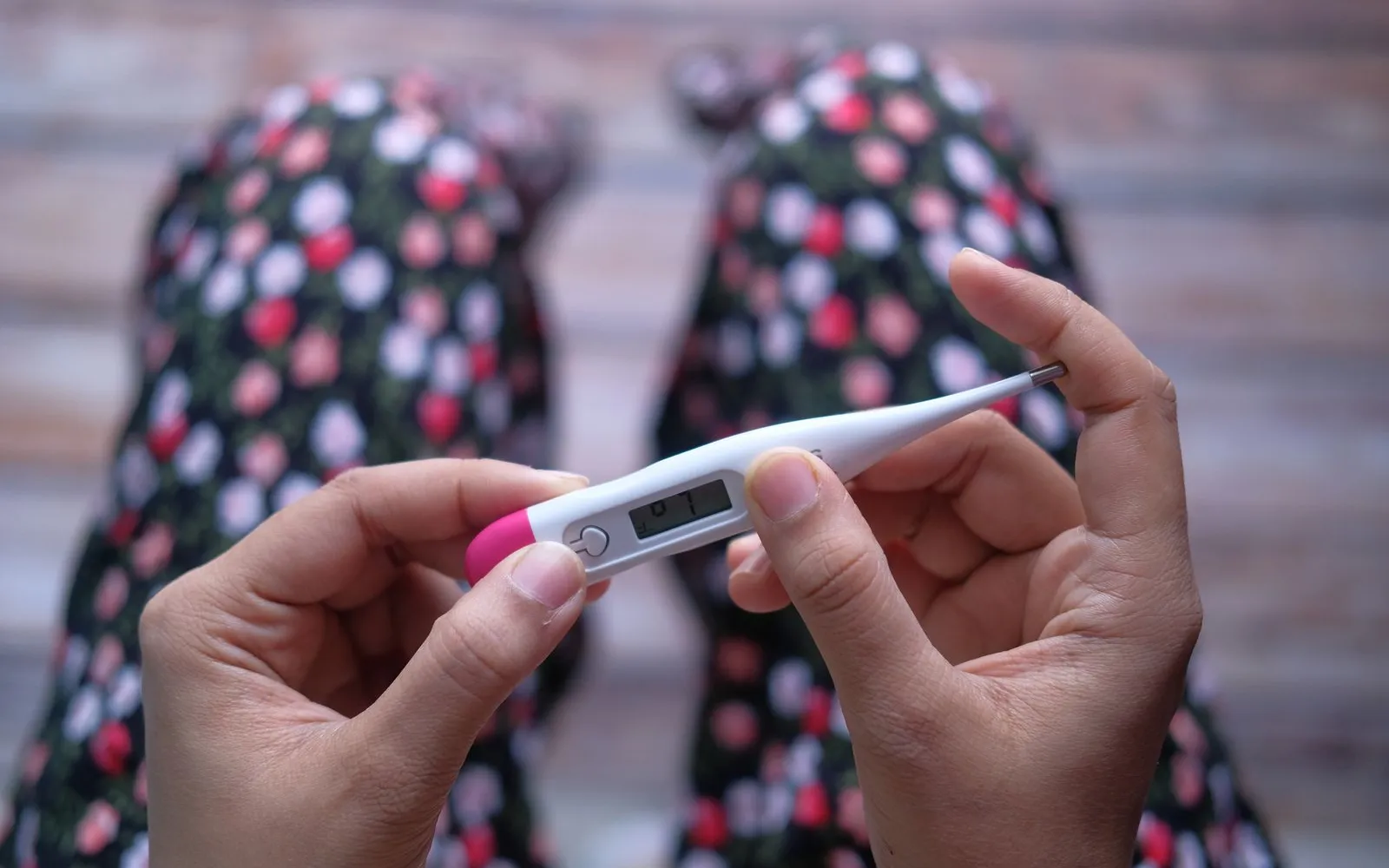
What is a normal body temperature for adults?
The NHS says normal body temperature is around 37C. It also says normal is different for everyone and changes during the day.
Two lines matter most. A high temperature is usually 38C or above.
Below 35C is hypothermia, a dangerous drop in body temperature. It's a medical emergency.
- Below 35 CNHS: hypothermia, an emergency. See the 999 signs below.
- 35 to just under 38 CBelow a high temperature.
- 38 C or aboveNHS: usually a high temperature (fever).
Sources: NHS fever; NHS hypothermia
Think of 37C like an average shoe size. It's a useful middle, not the size everyone should be. A 36.3 is not too low just because it isn't 37.
Feel hot, cold or shivery? The NHS says you may have a high temperature even if a thermometer reads below 38C. So go by how you feel as well as the number.
Normal body temperature in Celsius and Fahrenheit
| Celsius | Fahrenheit | What it means |
|---|---|---|
| 35C | 95F | Below this is hypothermia. NHS: an emergency. |
| 35.7C | 96.3F | Low end of most readings in a big US study. |
| 36.6C | 97.9F | The average in that study of 35,488 people. |
| 37C | 98.6F | The NHS's normal of around 37C. |
| 37.3C | 99.1F | Top end of most readings in the same study. |
| 38C | 100.4F | NHS: usually a high temperature (fever). |
Sources: NHS fever; NHS hypothermia; BMJ 2017
That study followed 35,488 US clinic patients without an infection. Their average was 36.6C, and 95% of readings sat between 35.7 and 37.3C.
An older study of healthy adults aged 18 to 40 found an average of 36.8C (98.2F) under the tongue. It put the top of normal under the tongue at 37.2C (98.9F) early in the morning and 37.7C (99.9F) overall.
Need to convert a reading? Multiply the Celsius number by 1.8, then add 32.
Why is my temperature not 37C?
A review of 36 studies found two things matter most. Those two things are your age and where you measure.
Aged 60 or over? Your temperature tends to run about 0.2C lower than in younger adults. The big US study also found older people were the coolest.
The time of day moves it too. In healthy adults aged 18 to 40, it swung about 0.5C (0.9F) over the day.
How temperature moves through the day
- 1
6am
Lowest point of the day.
- 2
Daytime
Rises from the morning low.
- 3
4 to 6pm
Highest point of the day.
Source: JAMA 1992
Women in that study ran slightly warmer than men. The review found no meaningful gap between men and women.
Average temperatures have also drifted down. US data shows a fall of 0.03C for each decade of birth since the 1800s.
Feel cold all the time? See always cold: the blood tests that explain why and underactive thyroid symptoms.
Does it matter where you take your temperature?
Yes. On average, armpit readings came out about 0.6C lower than readings under the tongue.
| Where you measure | Most healthy adults (C) | Average (C) |
|---|---|---|
| Under the tongue | 35.7 to 37.4 | 36.6 |
| Armpit | 35.0 to 36.9 | 36.0 |
| Ear | 35.8 to 37.5 | 36.6 |
| Forehead strip | NHS: not accurate | No figure |
Sources: Review, 36 studies; NHS fever
So a 36.0 in the armpit is close to the average there. Don't compare it with a mouth reading.
Checking how a fever is going? Use the same thermometer in the same place each time, so you compare like with like.
How to take your temperature properly
Taking your temperature with a digital thermometer
- Clean the tip with cold water and soap, then rinse it.
- Turn the thermometer on.
- Put the tip under your tongue, towards the back of your mouth, and close your lips.
- Wait until it beeps or flashes, then read the display.
- Using your armpit? Keep your arm tight against your body until it beeps or flashes.
- Skip glass thermometers, infrared thermometers and forehead strips.
Source: NHS: high temperature in adults
The NHS says glass thermometers can be dangerous, some infrared ones don't meet UK rules, and forehead strips aren't accurate. For an ear thermometer, follow its instructions.
Got a high temperature? Rest, and drink enough that your pee is light yellow and clear. Take paracetamol or ibuprofen if you feel uncomfortable.
Try to stay at home and avoid contact with other people until you do not have a high temperature.
Never stop or change a prescribed medicine without your prescriber. For bad nights with a fever, see sleeping with a cold or flu.
When to speak to a GP
Most high temperatures get better on their own. Get help if:
- You've treated a high temperature at home and it's not getting better or is getting worse. Ask for an urgent GP appointment or contact NHS 111.
- You think someone has hypothermia: shivering, pale, cold and dry skin, blue or grey lips, slurred speech, slow breathing, tiredness or confusion. Call 999 or go to A&E.
- An adult is breathing very fast, is confused, has slurred speech or is not making sense, or has blue, pale or blotchy skin. Call 999 or go to A&E, as this could be sepsis, a serious reaction to an infection.
- An adult has a very high or very low temperature, feels hot or cold to touch or is shivery, or has a rash that does not fade when pressed. Call 999 or go to A&E.
- You're unwell and think something is seriously wrong, or you're worried it might be sepsis. The NHS says to get medical help immediately.
This guide is for adults. For a child, see the NHS page on high temperature in children.
Sweating at night? See night sweats and hot flushes when it isn't the menopause.