Is caffeine powder safe?
Only if you can measure your dose exactly. For a healthy adult the most for one serving is 200 mg, which is 0.2 g. Kitchen spoons and scales often can’t measure it accurately.
On this page
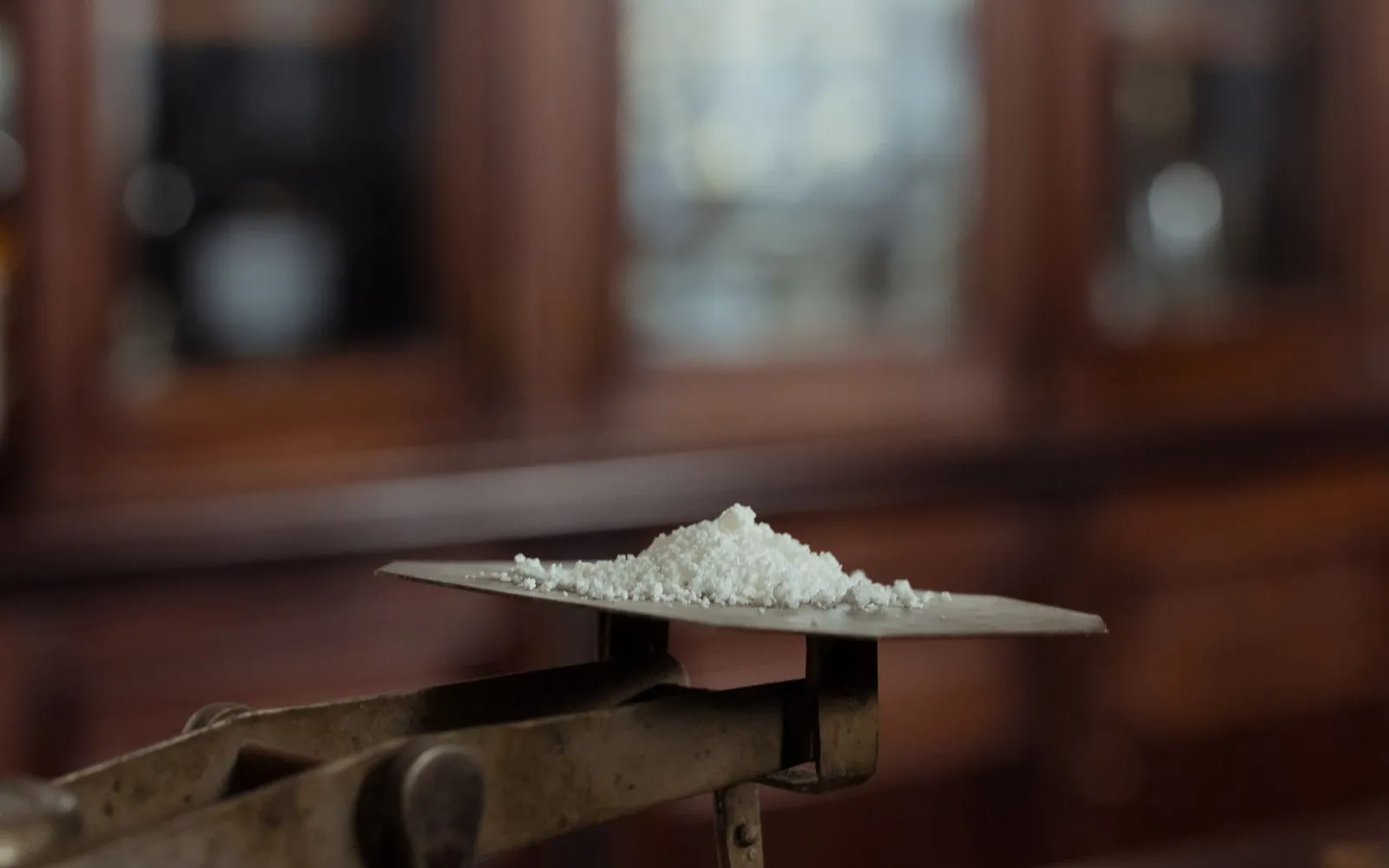
How much caffeine powder is safe?
No more than 200 mg in one serving. That’s 0.2 g. The Food Standards Agency (FSA) says to avoid supplements with more than 200 mg in a single serving, or over 400 mg across the day.
The FSA calls 100% caffeine powder the most concentrated form sold in the UK. The FDA, the US food regulator, says the gap between a safe amount and a toxic one is very small.
| Powder | In milligrams | What the FSA says |
|---|---|---|
| 0.2 g | 200 mg | The most for one serving, for healthy adults. |
| 0.4 g | 400 mg | The most across a day, from every source, for healthy adults. |
| About 1.2 g | About 1,200 mg | Racing heart, abnormal heart rhythm and fits (seizures) seen. |
| Over 10 g | Over 10,000 mg | Reported to be fatal. Smaller doses can be life-threatening for sensitive people. |
Source: FSA
Pregnant? The FSA says up to 200 mg a day in total, from all sources.
Sensitive to caffeine, or have heart disease or high blood pressure? The FSA says side effects may be worse and may come at lower doses.
Before your first serving, find the mg per serving on the pack.
Can you measure caffeine powder with a teaspoon?
No. The FDA says teaspoons aren’t precise enough for pure caffeine. One teaspoon can hold as much caffeine as 28 cups of coffee.
It says common kitchen tools can make a safe amount difficult or nearly impossible to measure. A scale that only shows whole grams can’t show 0.2 g at all.
So use the scoop or measuring device that comes with the product. That’s the FSA’s answer to the measuring problem.
Six FSA rules for every serving of caffeine powder
- Take no more than 200 mg in one serving, and no more than 400 mg across the day.
- Follow the dose on the label, even if it feels like it isn’t working.
- Use the measuring device that comes with the product. Never guess.
- Mix the powder with water as the label says. Never dry scoop it.
- Cut back on tea, coffee, chocolate and energy drinks on days you take it.
- Buy only from sellers you trust, and be wary of prices far below other sellers.
Source: FSA
Dry scooping means swallowing powder without mixing it in water. The FSA says it may take you over the daily dose.
Feel nothing yet? Effects may begin 15 to 30 minutes after you take it.
Upping your dose by feel may lead to unsafe levels, the FSA warns. So wait, and don’t take more.
Does caffeine powder count towards 400 mg?
Yes. The FSA says the 400 mg covers all sources of caffeine. A mug of coffee has about 100 to 140 mg, and a mug of tea about 75 mg.
Source: FSA
Person B only added two drinks. Count them before you scoop. See caffeine in coffee for more drinks, and caffeine tablets and gum for ready-measured doses.
Pre-workout powders may contain caffeine too. Guarana contains caffeine, even when the label doesn’t list caffeine.
Using it for training? EFSA, the EU food safety body, has looked at this. It says up to 200 mg less than two hours before hard exercise doesn’t raise safety concerns for healthy adults, in normal conditions.
Is caffeine powder legal in the UK?
Yes. Caffeine can be used in food supplements, and the FSA lists 100% caffeine powder on the UK market.
| Rule | What it means for you |
|---|---|
| A warning in the same view as the name | “Contains caffeine. Not recommended for children or pregnant women.” |
| Caffeine per portion on the label | Use it to work out your serving. Never guess. |
| The FSA’s 200 mg a serving | Avoid any serving over 200 mg. |
| Report unsafe products | Tell your local council. It passes reports to the food regulator. |
Sources: UK food labelling law; FSA
The US has acted on it. The FDA has sent warning letters to sellers of pure caffeine since 2015. In 2018 it set out when these products count as illegal.
It says they have contributed to at least two deaths in the US.
Buying online? The FSA says beware of fakes, especially at prices cheaper than other sellers.
What are the signs of too much caffeine?
Too much can cause anxiety, sleeplessness, agitation, a pounding or fluttering heartbeat (palpitations), diarrhoea and restlessness. With a mental health condition, the FSA says it can make psychosis (losing touch with what is real) worse.
With pure caffeine, the FDA adds a fast or dangerously irregular heartbeat, fits (seizures), vomiting, diarrhoea, stupor and disorientation. Stupor means barely responding. Disorientation means being confused about where you are.
In a review of 51 caffeine poisoning deaths, people had taken tablets or powder. Drinks alone seem unlikely to reach toxic levels, it said.
Another review found 92 deaths, though it says caffeine poisoning is relatively uncommon. They happened more often in babies, people with mental health conditions and athletes. Keep the pack where children can’t reach it.
Think someone has swallowed too much? Call 999 or go to A&E, and don’t drive yourself.
Not sure it’s harmful? Call 111.
When to speak to a GP
The NHS lists caffeine as a common cause of palpitations. See a GP if:
- Your palpitations keep coming back, happen more often or last longer than a few minutes.
- You get palpitations and have a heart condition, or heart problems run in your family.
- You’re unsure about a dose, or you take other medicines. The FSA says to get professional advice.
Never stop or change a prescribed medicine without your prescriber.
Call 999 or go to A&E if palpitations do not go away, or come with chest pain, shortness of breath, feeling faint or fainting. Do the same for a fit (seizure), passing out, stopped breathing or severe trouble breathing.
If palpitations with those symptoms have stopped, ask your GP surgery for an urgent appointment or call 111. Want to cut down? See quitting caffeine and palpitations and blood tests.