Can a blood test detect cancer?
Not on its own. Cancer markers like CEA, CA19-9 and AFP can rise without cancer, and stay normal with it. NHS labs say CEA and CA19-9 aren’t for screening people without symptoms.
On this page
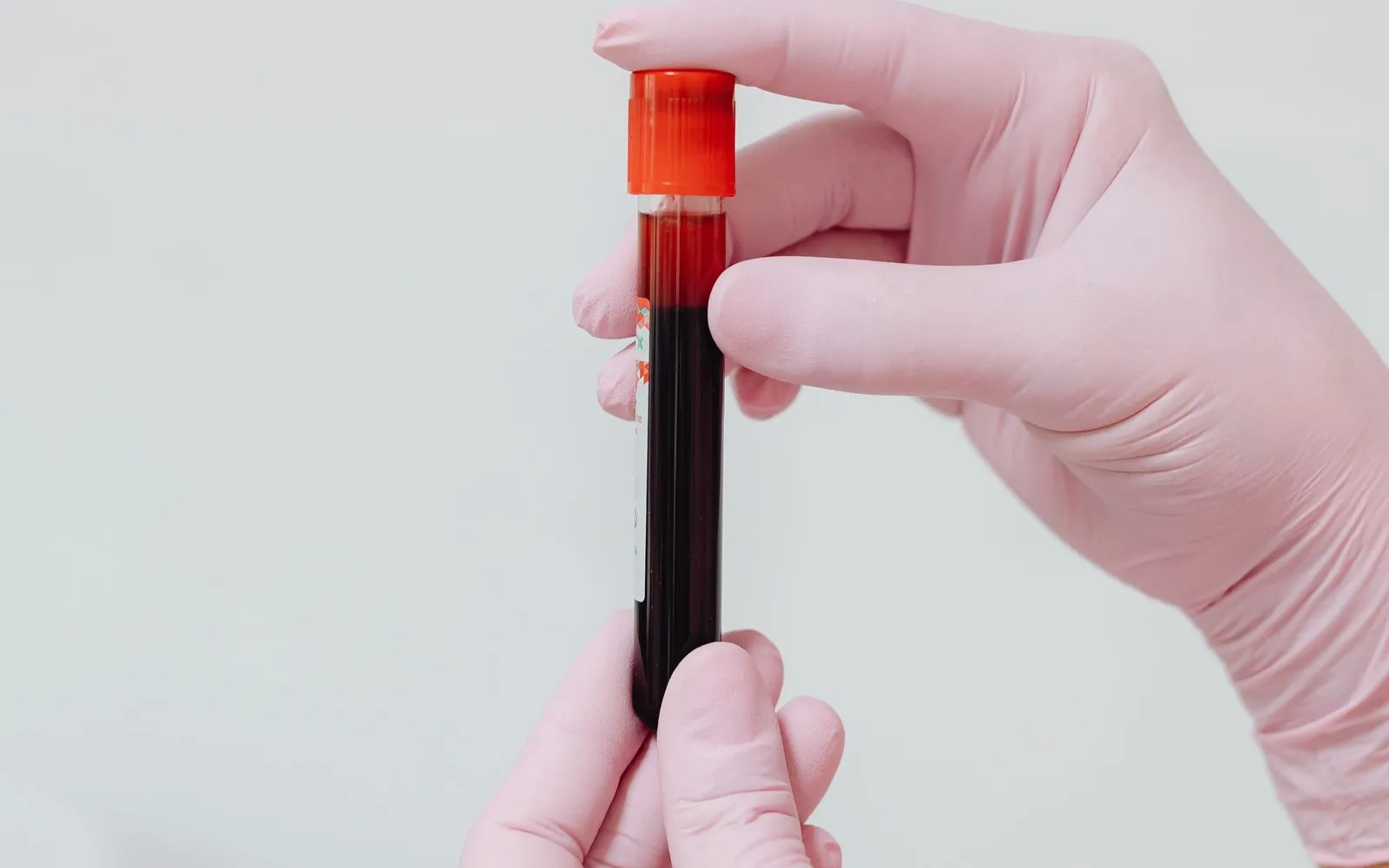
Can a blood test detect cancer?
Not by itself. A cancer marker (tumour marker) is something in your blood that some cancers make more of. North Bristol’s NHS lab notes that all tumour markers have a limited role in diagnosis.
Think of a marker as a smoke alarm. It can go off for burnt toast. And it can stay quiet in a real fire.
So a beep means “check”, not “fire”. A raised marker means more tests, not that you have cancer.
| Marker | Cancers it’s linked to | Can also rise with |
|---|---|---|
| CEA | Bowel cancer, and many cancers once advanced | Liver disease, bowel inflammation (IBD), kidney problems, some heavy smokers |
| CA19-9 | Pancreatic cancer, and some bile duct, stomach and bowel cancers | Inflamed pancreas (pancreatitis), jaundice (yellow skin or eyes), liver scarring (cirrhosis) |
| AFP | Liver cancer, some testicular and ovarian tumours | Pregnancy, hepatitis (an inflamed liver), cirrhosis, alcohol-related liver disease |
Sources: Liverpool University Hospitals: CEA; CA19-9; AFP
Now the quiet alarm. CEA is raised in 60% of people with bowel cancer, more often when it’s advanced. That leaves 4 in 10 whose CEA may look normal.
Got a raised result? Ask your GP what else could explain it, and what test comes next.
What is a normal CEA level?
CEA is short for carcinoembryonic antigen. Liverpool’s NHS lab counts 4.7 µg/L or below as normal. North Bristol uses below 3 µg/L.
So read your result against the range printed on your own report. More on this in blood test reference ranges.
- Below 3 µg/LNormal at both NHS labs here.
- 3 up to 4.7 µg/LNormal at Liverpool. Above North Bristol’s range.
- Above 4.7 µg/LAbove both ranges. Ask what else could explain it.
Sources: Liverpool University Hospitals; North Bristol NHS Trust
Looking for a bowel cancer blood test? CEA isn’t one.
Both labs say it’s not for screening. It works best for checking whether bowel cancer has come back after treatment.
After bowel cancer surgery, Liverpool’s lab treats a rise of at least 30% on your last result as important. It should be checked with a second test within a month.
You smoke heavily, or have liver or bowel trouble? Tell your GP, as these can push CEA up a little.
What is a normal CA19-9 or AFP level?
| Marker | Liverpool | North Bristol |
|---|---|---|
| CA19-9 (cancer antigen 19-9) | Below 35 kU/L | Below 35 kIU/L |
| AFP (alpha-fetoprotein) | 7 µg/L or below | Below 8 kIU/L |
Sources: Liverpool: CA19-9; Liverpool: AFP; North Bristol: CA19-9; North Bristol: AFP
CA19-9 is not good enough to screen people with no symptoms. It’s used once a scan has found a lump in the pancreas, and to check on treatment.
About 3 to 7 in 100 people can’t make CA19-9 at all, because of their blood group. For them, a low result tells you nothing.
AFP is raised in 70% to 90% of liver cancers. It’s also high in pregnancy and in babies under one. And 20% to 40% of adults with hepatitis or cirrhosis have a raised AFP.
In general, a rise that keeps going is more worrying, and steady or falling results make cancer less likely.
Above 50 µg/L, Liverpool’s lab advises a liver specialist looks at the result.
What to do after a raised cancer marker
- Read your result against the range printed on your own report.
- Tell your GP if you smoke heavily or have liver, bowel or kidney problems.
- Tell your GP if you’re pregnant.
- Ask whether you need a repeat test, as a trend says more than one result.
- Ask what test comes next, as a marker can’t confirm or rule out cancer.
- Aged 50 to 74 in England? Do your NHS bowel screening kit when it arrives.
Sources: Liverpool University Hospitals: CEA; AFP; NHS: bowel cancer screening
Which cancer tests does a GP use?
NICE links each test to certain symptoms. There’s no single blood test your GP runs to check for every cancer.
| Test | Who it’s for | What happens next |
|---|---|---|
| CA125 blood test | People with ovaries, aged 40 or over, with lasting symptoms that suggest ovarian cancer | An urgent scan if it’s at or above the level for your age |
| PSA blood test | People with a prostate who have urinary symptoms, erection problems or blood in their pee | Your GP may refer you if it’s above the level for your age |
| FIT (a poo test) | Adults with bowel symptoms, such as a change in bowel habit | An urgent referral at 10 or more micrograms of blood per gram of poo |
| Full blood count | Adults who look pale or have lasting tiredness, fever, bruising or bleeding with no clear cause | Your GP may do it very urgently, to check for leukaemia, a blood cancer |
Source: NICE NG12
CA125 levels for an urgent scan go by age. NICE uses 35 or more at 40 to 49, 31 or more at 50 to 59 and 24 or more at 60 to 69. It’s 25 or more at 70 to 79, and 31 or more at 80 and over.
Under 40, NICE says not to rely on CA125 alone.
See our guides to the PSA test and the full blood count.
Can the Galleri blood test find cancer early?
Galleri looks for DNA in your blood that might come from cancer cells. More than 142,000 people aged 50 to 77 in England took part in the NHS-Galleri trial.
The trial did not meet its main goal. It found no fall in late-stage cancers overall (stage 3 and 4 together). But at least 20% fewer of the most advanced cancers (stage 4) were found in the second and third rounds.
About 1 in 100 people got a positive result, and about half of them had cancer. It found around a third of the people who had cancer.
It’s not currently available on the NHS. Keep going to your NHS cancer screening when you’re invited. More in what blood tests can detect.
When to speak to a GP
Notice a symptom that isn’t normal for you? See a GP if you have:
- A new lump or swelling anywhere on your body.
- Weight loss without trying, less hunger than usual, or feeling more tired than usual.
- Unusual bruising or bleeding, such as from your bottom, in your pee or when you vomit.
- Heavy sweating, especially at night, or a high temperature that lasts or keeps coming back.
- Yellow skin or yellow whites of the eyes (jaundice), pain that isn’t usual for you, or peeing more often, more urgently or with pain.
The NHS says most of these symptoms are very common and often have other causes. If your GP thinks it could be cancer, you may get an urgent referral.
Asked back after a test? Read when your GP wants to see you about a blood test.