What cardio can I do at home?
Anything that leaves you too out of breath to sing. Marching, dancing, stairs and burpees all count. In one small trial, 11 minutes, 3 times a week, made inactive young adults fitter in 6 weeks.
On this page
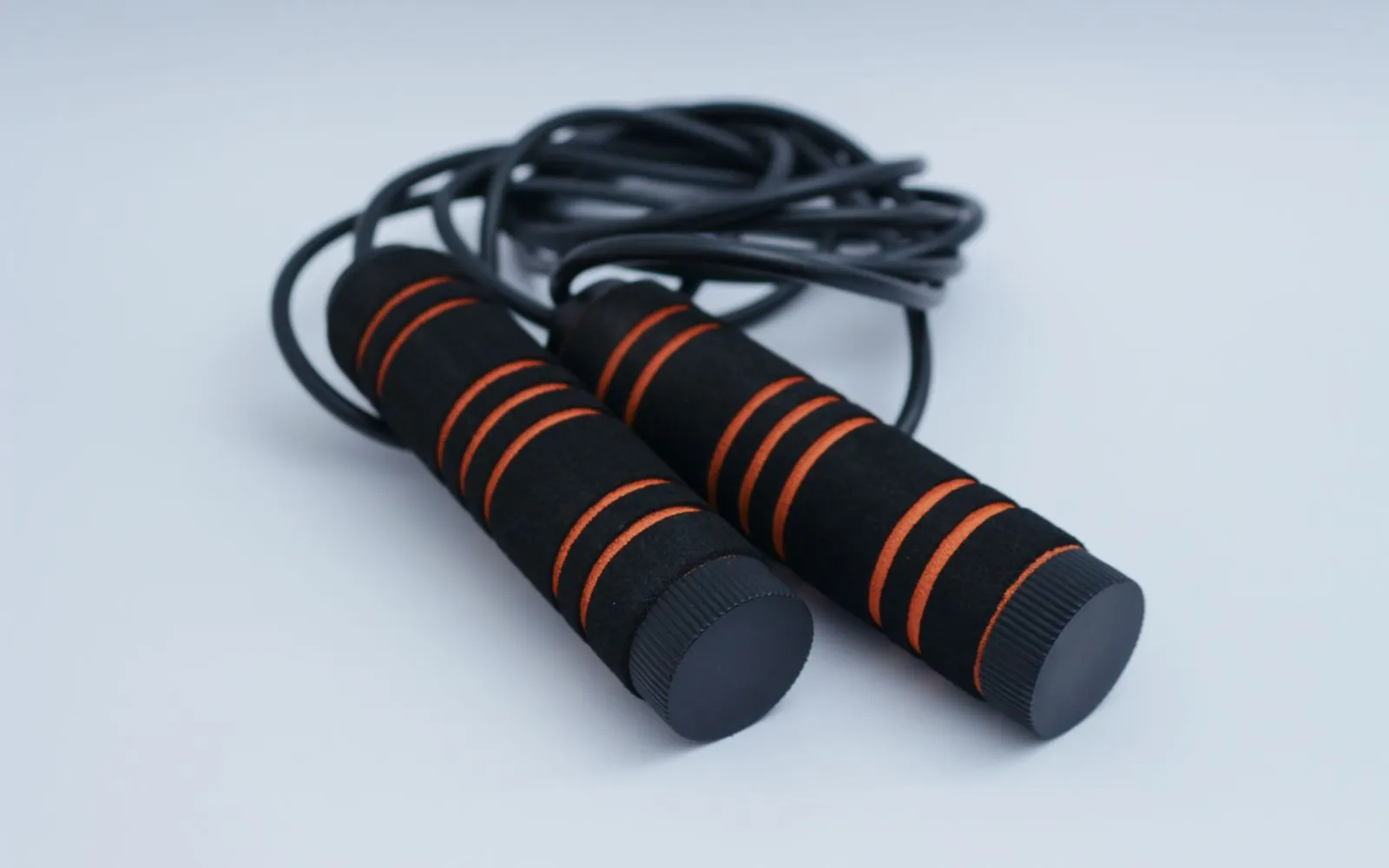
List of cardio exercises at home
Cardio, aerobic and cardiovascular exercise are the same thing. It’s anything that makes you breathe faster and feel warmer.
Use the NHS talk test. If you can still talk, but not sing, that’s moderate. If you can only say a few words before pausing for breath, that’s vigorous.
| Move | NHS effort level | What you need |
|---|---|---|
| Dancing | Moderate | Music and a bit of floor. |
| Aerobics | Vigorous | A free NHS video. |
| Walking up the stairs | Vigorous | A flight of stairs. |
| Skipping | Vigorous | A rope and room overhead. |
| Running up stairs | Very vigorous (bursts with rest) | Stairs and a handrail. |
| Burpees, high knees, squat jumps | Done at a challenging pace in a trial | Floor space. |
No move here is the best one. The NHS says most moderate activities can become vigorous if you push harder. So the best cardio is the one you’ll keep doing.
Pick one you’d enjoy and try the talk test on it today.
How much cardio should I do at home?
| Effort | Talk test | Each week |
|---|---|---|
| Moderate | You can talk, but not sing. | At least 150 minutes. |
| Vigorous | Only a few words, then you pause for breath. | Or at least 75 minutes. |
| Strength | Work legs, hips, back, tummy, chest, shoulders and arms. | Plus at least 2 days. |
Think of it as a weekly budget where a vigorous minute is worth about two moderate ones. The NHS says 75 vigorous minutes can give similar health benefits to 150 moderate ones.
Spread it over 4 to 5 days a week, or every day. Half an hour of dancing on 5 days covers it.
Over 65? The NHS suggests the 75 vigorous minutes if you’re already active.
Why bother? Regular exercise can cut your risk of heart disease, stroke and type 2 diabetes. The NHS says it can lower your risk of early death by up to 30%.
Count your minutes for one week to see where you start. Walking counts too: see how many steps a day.
The best bodyweight cardio workout to start with
This is the 11-minute workout. In a 2021 trial, 9 inactive young adults did it 3 times a week for 6 weeks.
The 11-minute workout from the trial
- 1
Burpees
Squat, jump your feet back, jump them in, then stand up. 60 seconds at a pace you find hard, then walk.
- 2
High knees
60 seconds, then walk.
- 3
Split squat jumps
Lunge, jump and swap legs in the air. 60 seconds, then walk.
- 4
High knees, then squat jumps
60 seconds each, with walking in between. 11 minutes in all.
Source: Archila 2021
After 6 weeks, they scored higher on a lab fitness test than 10 people who didn’t train. Their leg endurance, grip and jump height didn’t change.
It’s one small trial in people with an average age of 20. It didn’t measure weight loss or heart disease.
Do the NHS warm-up below first, then try it 3 times this week. For squats with no jumping, see leg exercises at home.
Step workout at home: use your stairs
The NHS lists walking up the stairs as vigorous, and running up them as very vigorous. So your stairs are a free step machine.
Two stair sessions that raised fitness in 6 weeks, in women new to exercise
- 1
Harder
Climb as fast as you can for 20 seconds. Do 3 of these.
- 2
Result
Fitness rose 12% after 3 days a week for 6 weeks.
- 3
Longer
Go up and down one flight for 60 seconds. Do 3 of these.
- 4
Result
Fitness rose 7% after 3 days a week for 6 weeks.
Source: Allison 2017
The 2017 study was in 31 women who didn’t exercise, with an average age of 24. It’s small, so treat it as a promising start.
Pick the one that suits your stairs, and hold the handrail. For more short bursts, see exercise snacks.
Aerobics workout at home with no jumping
Live in a flat, or don’t want to jump? Start with the NHS warm-up. It needs little room and should take at least 6 minutes.
A 6-minute NHS warm-up for a small room
- March on the spot for 3 minutes, pumping your arms.
- Do 60 heel digs in 60 seconds, each heel to the front in turn.
- Do 30 knee lifts in 30 seconds, each knee up to touch the opposite hand.
- Roll your shoulders, 2 sets of 10, while you keep marching.
- Do 10 knee bends, lowering no more than 10cm.
Source: NHS: how to warm up
These are warm-up moves, so they start gentle. To make them count as cardio, keep marching and lift your knees higher until you can talk but not sing.
Want to follow along? The NHS has free aerobics videos, including one for beginners, a dance workout and a wake-up workout. If you want cardio to help with weight, see the best exercise for weight loss.
When to speak to a GP
Speak to a GP before you start if:
- You have not exercised for some time, or you have medical conditions or concerns.
- You have a health problem, an injury, any symptoms or feel unwell, or had a recent heart attack or operation.
- You’re pregnant or recently gave birth. The NHS says not to start a new vigorous activity in pregnancy, such as running, and to stop if you feel uncomfortable, too hot or unwell.
- You have chest pain that comes and goes, or that goes away quickly but you’re still worried.
Stop at once if you feel any pain or become unwell, and call 111 if symptoms worry you or don’t go away.
Call 999 for sudden chest pain or discomfort that doesn’t go away. It can feel like squeezing, pressure, burning or indigestion.
Call too for pain spreading to either arm, or your neck, jaw, stomach or back. Also call for chest pain with sweating, feeling sick, light-headed or short of breath.