Does high blood pressure cause symptoms?
Usually none. Most people feel fine. And the headache many people blame on it? In one big study, people whose top number was 150 or more were less likely to get everyday headaches years later.
On this page
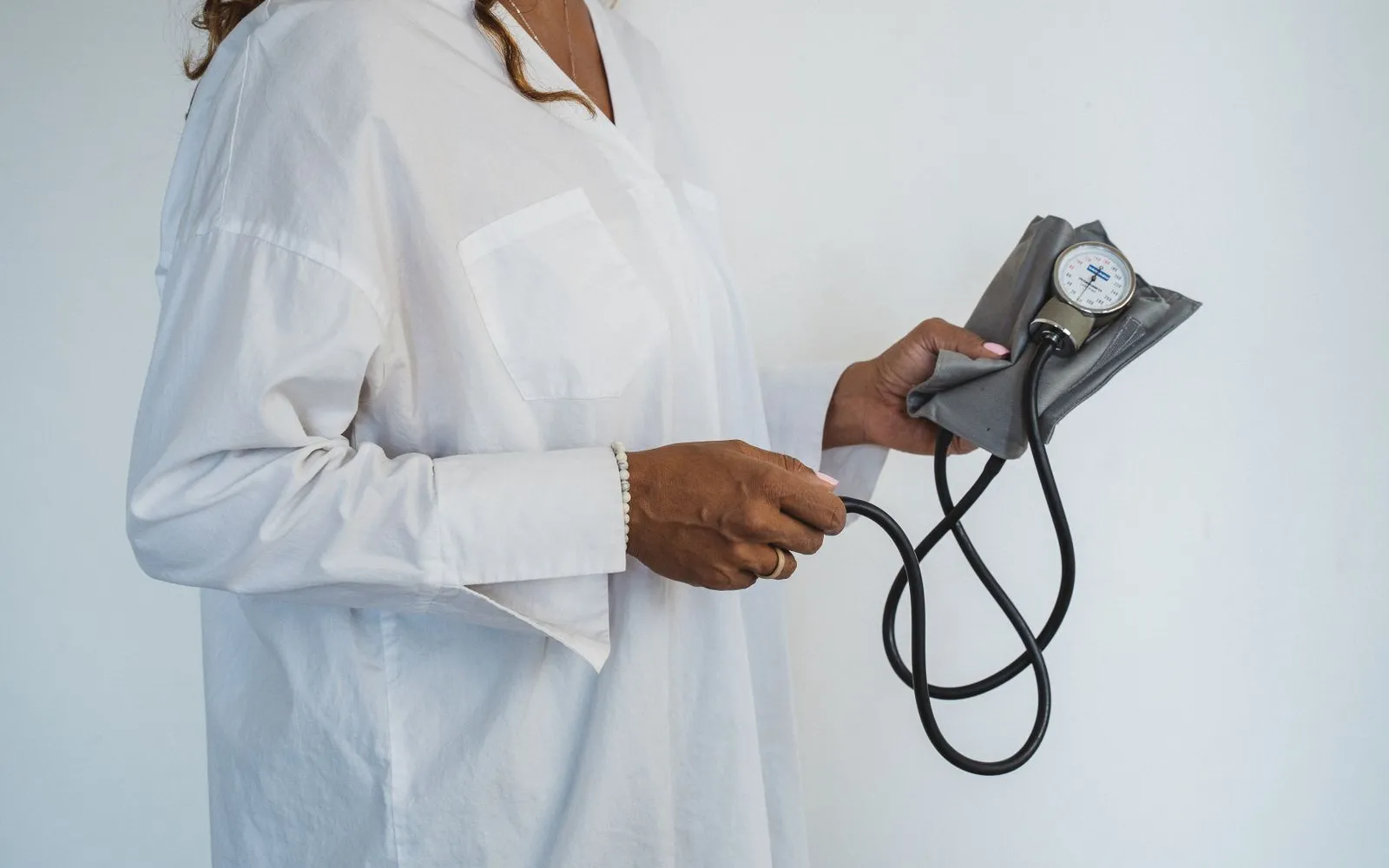
Does high blood pressure cause symptoms?
Not usually. The NHS says high blood pressure does not usually cause any symptoms, and many people have it without realising.
About a third of UK adults have it, says Blood Pressure UK. Many don’t know.
| Symptom | What UK sources say |
|---|---|
| None at all | The usual picture. Most people feel fine. |
| Headaches | Rare (NHS, BHF). Occasionally seen with very high blood pressure (Blood Pressure UK). |
| Blurred vision | Rare (NHS, BHF). |
| Chest pain | Rare (NHS). Sudden chest pain that won’t go away needs 999. |
| Nosebleeds | Rare (BHF). |
| Bloodshot eyes, feeling sick or unwell | Occasionally seen with very high blood pressure (Blood Pressure UK). |
Sources: NHS; BHF; Blood Pressure UK
Blood pressure isn’t usually something you feel. Think of a tyre: it can look fine and still be at the wrong pressure. Only a gauge tells you.
Feeling fine doesn’t mean your number is fine. It means you need to check.
Your next step is a check. Many pharmacies offer free checks if you’re 40 or over.
Can high blood pressure cause headaches?
Rarely. Many people believe it causes headaches, a red face and nosebleeds. Blood Pressure UK says it rarely causes any of these things.
Here’s the headache surprise. A Norwegian study followed 22,685 adults without headaches for 11 years.
| Top number at the start | Risk of an everyday headache later |
|---|---|
| Under 140 | The comparison group |
| 150 or more | About 30% lower |
This was for everyday headaches, not migraine. For migraine there was no clear link. The study shows a pattern, not that high blood pressure stops headaches.
The point: a headache is a poor guide to your blood pressure. If you often get headaches, the NHS says get help from NHS 111.
Can high blood pressure make you dizzy, red in the face or cold?
None of the UK sources lists dizziness, a cold feeling or breathlessness on its own as a sign of high blood pressure. These feelings can have other causes, including the tablets that treat it.
| Feeling | Linked to high blood pressure? | Other causes the NHS lists |
|---|---|---|
| Dizzy | Not on the symptom lists | Low blood pressure. A side effect of amlodipine or bisoprolol. A stroke sign. |
| Red face | Rarely (Blood Pressure UK) | Flushing is a common side effect of amlodipine. |
| Feeling cold | Not on the symptom lists | Cold hands and feet are a common side effect of bisoprolol. |
| Feeling sick | Occasionally, with very high blood pressure | A side effect of amlodipine. A stroke sign. |
| Short of breath | With chest pain, call 999 | Can come with a heart attack. |
Sources: Blood Pressure UK; NHS: low blood pressure; NHS: amlodipine; NHS: bisoprolol; NHS: stroke; NHS: high blood pressure
Low blood pressure is a reading under 90/60. Amlodipine and bisoprolol are common blood pressure tablets.
If a side effect bothers you or won’t go away, the NHS says speak to a pharmacist or doctor. Never stop or change a prescribed medicine without your prescriber.
What are the signs of very high blood pressure?
Very high readings can still cause no symptoms. What matters is the number plus how you feel. Here is what doctors are told to do.
| Reading and symptoms | What happens next |
|---|---|
| 180/120 or more at the clinic, no warning signs | Checks for organ damage as soon as possible. If damage is found, treatment may start straight away. If not, a repeat reading or review within 7 days. |
| The same reading, plus warning signs | Same-day specialist care. |
| Very high, for example above 240/120 | Needs treatment straight away in A&E (Blood Pressure UK). |
Sources: NICE NG136; Blood Pressure UK
The NICE warning signs are new confusion, chest pain or sudden kidney damage. Signs of heart failure count too, such as breathlessness or swollen ankles and legs. They also include bleeding or swelling at the back of the eye, which a doctor sees with an eye check.
Got a high reading at home? Book a repeat check at a pharmacy or GP surgery.
Very high and feeling unwell? Don’t wait for a routine slot. Use the 999 and 111 advice at the end of this guide.
How do you know if you have high blood pressure?
You get it checked. The NHS says that’s the only way to find out.
A reading of 140/90 or higher at a check, or 135/85 or higher at home, usually counts as high.
Your next steps to find out
- Get your blood pressure checked at a pharmacy or GP surgery.
- If you’re 40 or over, find a pharmacy that offers free checks.
- If a reading is high, confirm it with home readings over a few days, a repeat check or a 24-hour monitor.
- If you often get headaches or blurred vision, get help from NHS 111.
- If a blood pressure medicine gives you side effects that bother you, speak to a pharmacist or doctor.
- Never stop or change a prescribed medicine without your prescriber.
Sources: NHS: high blood pressure; NHS: amlodipine
One reading is a snapshot. A high one means check again before anyone calls it high blood pressure. See how to measure at home and what your readings mean.
No symptoms doesn’t mean no risk. Read what high blood pressure does to your body and what causes it.
When to speak to a GP
- Your reading is 140/90 or more at a pharmacy or surgery, or 135/85 or more at home. That usually counts as high.
- You’re 40 or over and haven’t had it checked for more than 5 years.
- You have any symptoms you’re worried about. Blood Pressure UK says visit your GP.
- A blood pressure medicine gives you side effects that bother you or don’t go away. A pharmacist can help too.
Get help from NHS 111 if you often have headaches or blurred vision, or chest pain that comes and goes. Also get help for other symptoms you’re worried could be from high blood pressure.
Call 999 for sudden chest pain or discomfort that doesn’t go away. It can feel like squeezing, pressure, burning or indigestion. Also call for pain spreading to either arm, your neck, jaw, stomach or back.
Call 999 too for chest pain with sweating, feeling sick, light-headed or short of breath. Do not drive yourself to A&E.
Call 999 for any sign of a stroke: a face drooping on one side, an arm too weak to lift, or slurred speech. Call even if the signs stop.