High protein vegetarian meals
Pair two protein foods per meal. Think eggs and cheese, or tempeh and edamame. Why two? Many single portions, like two eggs, fall just short of a meal’s share of your day.
On this page
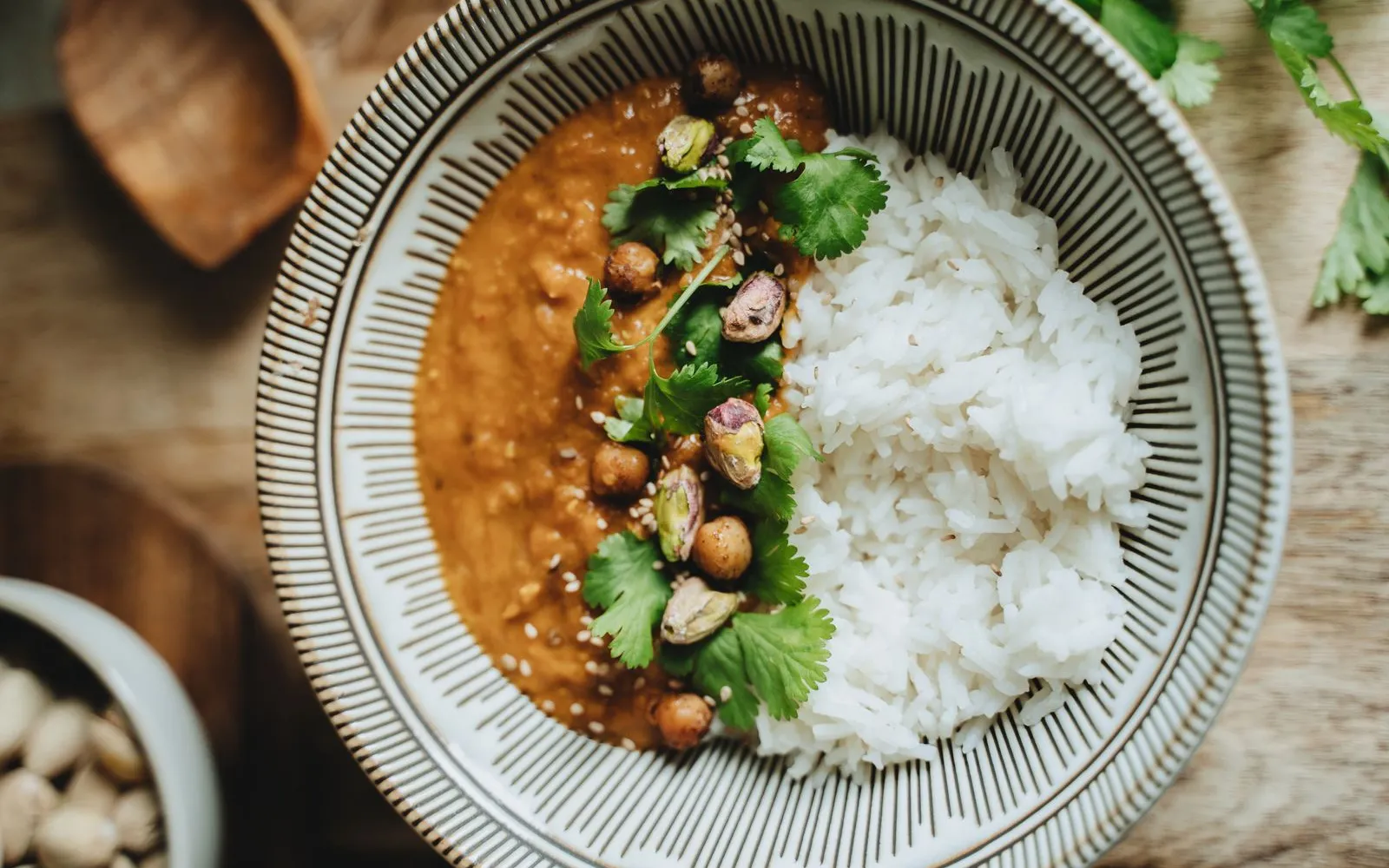
What are good high protein vegetarian meals?
Ones with two protein foods on the plate. Eggs, cheese, paneer, tempeh, Quorn, beans and lentils all count.
Why two? The UK amount for adults is 0.75 g of protein per kg of body weight a day. For a 70 kg adult that’s 52.5 g, or 17.5 g a meal over three meals.
Two boiled eggs give 14.1 g. A 150 g bowl of red lentils gives 12.2 g. Each one falls a little short alone.
Sources: UK food tables (CoFID); British Nutrition Foundation
So look at your next plate and ask one thing. What’s my second protein?
How much protein do I need in each meal?
Find your weight below. The day column is the UK amount. The meal column splits it over three meals.
| Body weight | A day (0.75 g per kg) | A meal (split over 3) |
|---|---|---|
| 60 kg | 45 g | 15 g |
| 70 kg | 52.5 g | 17.5 g |
| 80 kg | 60 g | 20 g |
| 90 kg | 67.5 g | 22.5 g |
Source: British Nutrition Foundation
No UK guideline sets an amount per meal. Splitting by three is just an easy way to plan.
Most vegetarians already get enough protein, says the British Nutrition Foundation. What matters is eating a variety of foods.
Training hard? The BNF quotes the American College of Sports Medicine: 1.2 to 2.0 g per kg a day, spread across the day.
See plant protein for strength training. Note your meal number from the table.
What are easy high protein vegetarian meals?
Each meal below pairs two protein foods. All of them pass 17.5 g.
| Meal | What’s in it | Protein |
|---|---|---|
| Eggs and cheese on toast | 2 boiled eggs (about 100 g), 30 g cheddar, 40 g slice of wholemeal bread | 25.5 g |
| Red lentil dal with paneer | 150 g cooked red lentils, 50 g paneer | 25.2 g |
| Chickpea curry with yoghurt | 150 g chickpeas, 150 g plain yoghurt | 21.2 g |
| Baked potato, beans and cottage cheese | 180 g potato, 200 g baked beans, 100 g cottage cheese | 23.9 g |
| Quorn and pea stir-fry | 100 g Quorn pieces, 80 g peas | 18.4 g |
| Bean and lentil chilli (vegan) | 150 g cooked red lentils, 150 g tinned kidney beans | 25.1 g |
| Tempeh and edamame stir-fry (vegan) | 100 g tempeh, 100 g edamame | 32.9 g |
Source: UK food tables (CoFID)
The dal and the chickpea curry are easy Indian meals. The potato and the chilli pack well for work. For more, see high protein lunch ideas.
Eat fish? 100 g of tinned tuna gives 24.9 g.
The NHS says a balanced diet should include at least 2 portions of fish a week, including 1 of oily fish. Tuna does not count as oily.
The advice may be different if you’re pregnant, breastfeeding or a child. If you’re trying for a baby or pregnant, the NHS says have no more than 4 cans of tuna a week.
Pick one meal from the table and cook it this week.
What are high protein vegan meals?
Swap the eggs and dairy for soya foods, beans and lentils. The chilli and the tempeh stir-fry above are both vegan.
You don’t need to mix plant proteins at each meal to get all the building blocks of protein (amino acids). A variety of plant foods eaten during a day gives enough, when you eat enough calories.
Six ways to add protein to meals you already make
- Add a second protein food to each meal, such as cheese with eggs or yoghurt with dal.
- Stir a tin of drained lentils, chickpeas or beans into soup, curry or pasta sauce.
- Add 50 g of paneer to a curry, or 30 g of cheddar to eggs.
- Put tempeh or edamame in your stir-fry.
- Check the label on meat substitutes for salt, fat, egg, milk and honey.
- Have some vitamin C with your meal, such as peppers, to help your body absorb iron.
Sources: NHS; BDA; UK food tables (CoFID)
Vegan? Your only reliable sources of vitamin B12 are foods with B12 added (fortified foods) and supplements, says the BDA. For a full food list, see high protein vegan foods.
Which are low carb or low fat?
Quorn and reduced-fat cottage cheese are low in both. Most of the rest trade one for the other.
| Food | Protein | Carbs and fat |
|---|---|---|
| Paneer | 26.0 g | 0.9 g carbs, 24.5 g fat |
| Halloumi | 23.9 g | 1.7 g carbs, 23.5 g fat |
| Tempeh | 20.7 g | 6.4 g carbs, 6.4 g fat |
| Eggs, boiled | 14.1 g | A trace of carbs, 9.6 g fat |
| Quorn pieces | 14.0 g | 1.1 g carbs, 1.4 g fat |
| Cottage cheese, reduced fat | 10.6 g | 3.3 g carbs, 1.5 g fat |
| Red lentils, boiled | 8.1 g | 16.9 g carbs, 0.7 g fat |
Source: UK food tables (CoFID)
For low carb, build on eggs, paneer, halloumi or Quorn. For low fat, pick Quorn, reduced-fat cottage cheese or lentils.
Vegan and low carb? Tempeh has 6.4 g carbs in 100 g.
The NHS calls pulses (beans, lentils and chickpeas) a low-fat source of protein.
Paneer and halloumi are high in fat as well as protein. The NHS says to go for lower fat milk and dairy foods. For more, see high protein, low carb eating.
When to speak to a GP
Without planning, the NHS says vegetarians could miss out on iron and vitamin B12. Speak to a GP if:
- You have tiredness and lack of energy, shortness of breath, noticeable heartbeats, paler skin than usual or headaches. These can be signs of low iron (iron deficiency anaemia).
- You feel weak or tired, or have shortness of breath, headaches, noticeable heartbeats, a sore or red tongue, or problems with memory, vision or balance. Pins and needles, numbness, muscle weakness, low mood, loss of appetite, indigestion or diarrhoea can also be signs of low vitamin B12.
- You keep losing weight without changing your diet or exercise routine. See a GP as soon as possible if you also have other symptoms.
- You have kidney disease and want to change your diet. The NHS says you may be referred to a dietitian if blood tests show high potassium and phosphate.
- You are pregnant or breastfeeding on a vegetarian diet. You need enough vitamins and minerals for your baby to develop healthily.
Vegetarians are more likely to have lower iron stores than people who eat meat. Eat few eggs or dairy foods? The NHS says you need a reliable source of B12.
See also iron deficiency blood tests and blood tests for vegans.