How much sugar should you have a day?
No more than 30g of free sugars, about 7 cubes. That’s for men and women aged 11 and over. Labels say 90g, but that includes milk and fruit sugars you don’t need to cut.
On this page
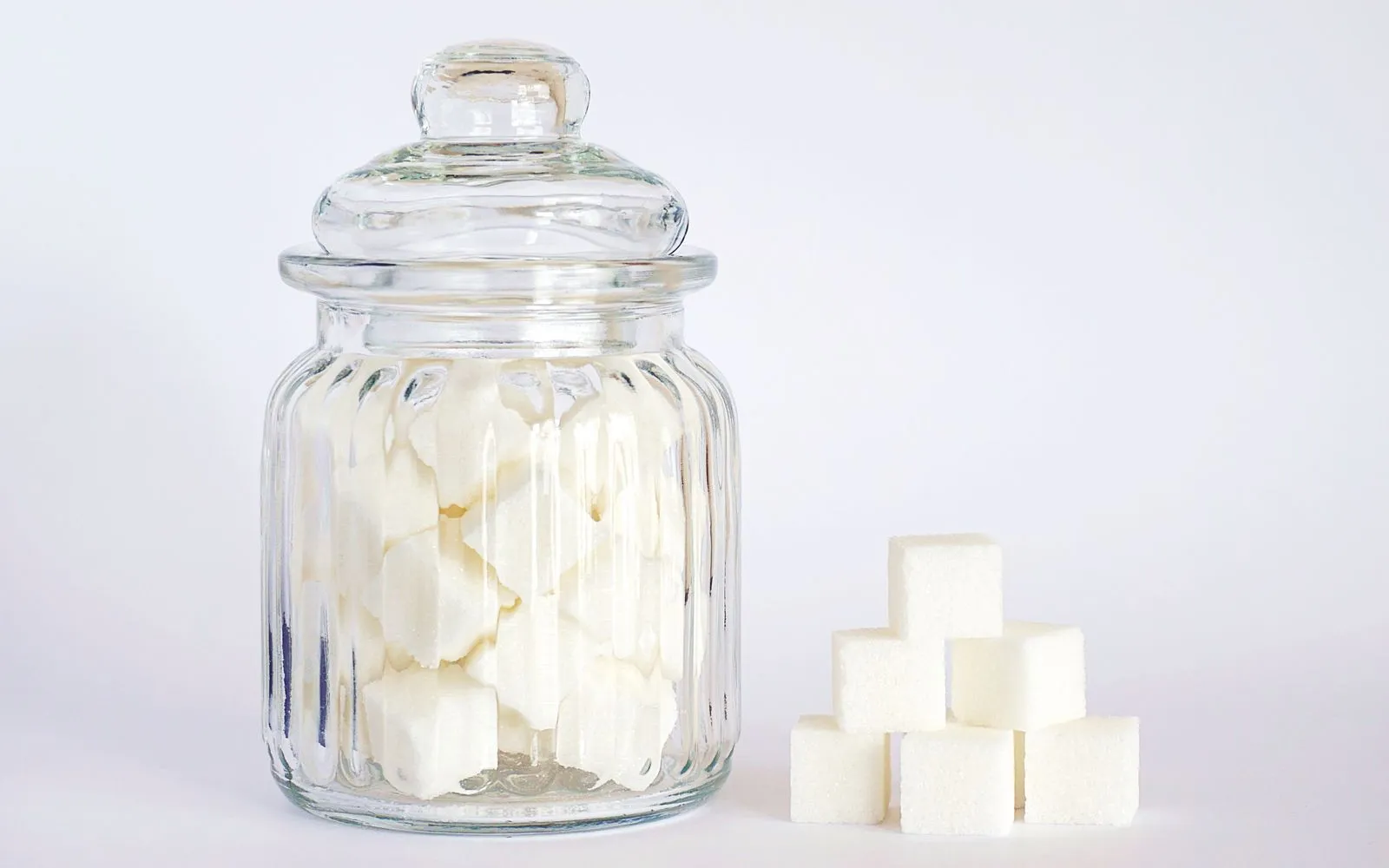
How many grams of sugar should you have a day?
Adults should have no more than 30g of free sugars a day. That’s roughly 7 sugar cubes.
Free sugars are any sugars added to food or drink, plus the sugar in honey, syrups, fruit juice and smoothies. The UK limit is that they make up no more than 5% of your calories.
Think of 30g as a daily budget. A can of regular cola costs 35g, or 7 teaspoons. One can puts you over for the whole day.
- 30 g a day or belowWithin the NHS limit for adults.
- Above 30 up to 60 g a dayOver the limit. Cut sugary drinks and snacks first.
- Above 60 g a dayTwice the limit or more.
Source: NHS
Most of us go over. In the latest national diet survey, fewer than 1 in 5 adults kept to the limit. On average, adults ate around double.
Too much sugar can lead to weight gain. Being overweight raises your risk of heart disease, some cancers and type 2 diabetes. Sugar is also one of the main causes of tooth decay.
Your first move: check what you drink. Drinks are the easiest place to win back grams.
Sugar intake by age: is it different for men, women and children?
Men and women get the same figure. The NHS gives one limit for all adults: 30g. Children get less.
| Age | Free sugars a day | About |
|---|---|---|
| Under 1 | No limit set. Don’t add sugar. | None added |
| 1 | No more than 10g | 2 and a half cubes |
| 2 to 3 | No more than 14g | 3 and a half cubes |
| 4 to 6 | No more than 19g | 5 cubes |
| 7 to 10 | No more than 24g | 6 cubes |
| 11 and over, adults | No more than 30g | 7 cubes |
Sources: NHS; NHS Healthier Families
So a teenager has the same limit as their parents. Girls aged 11 to 18 had the highest share of their calories from free sugars of any group in the survey.
For children, the NHS says sugary squash, fizzy drinks and juice drinks have no place in their daily diet. Swap them for water or lower-fat milk.
Why do food labels say 90g of sugar?
That 90g is total sugars. The front-of-pack reference intake for total sugars is 90g, and it includes the 30g of free sugars.
The rest is sugar found naturally in milk, fruit and vegetables. The NHS says we don’t need to cut down on these.
Source: NHS
So a pot of plain yoghurt can hold 8g of sugar, none of it free. An apple has around 11g, which doesn’t count either.
Juice is the catch. Once fruit is juiced or blended, its sugar counts as free. Keep juice and smoothies to 150ml a day in total, a small glass, with a meal.
How can you tell if a food is high in sugar?
Look for “Carbohydrate, of which sugars” on the back, and read the per 100g column.
| Label colour | Sugar | What it means |
|---|---|---|
| Green | 5g or less per 100g | Low in sugar. |
| Amber | More than 5g, up to 22.5g per 100g | Medium. |
| Red | More than 22.5g per 100g, or more than 27g per portion | High in sugar. |
Source: NHS
The label counts milk and fruit sugars too. To spot added sugar, read the ingredients list. It starts with whatever there’s most of, so sugar near the top means it’s likely high in free sugars.
Sugar hides under other names, such as glucose, fructose, dextrose, corn syrup, molasses and fruit juice concentrate.
Watch savoury foods as well. Ketchup can have as much as 23g of sugar in 100g.
Next shop, compare two similar products and pick the one with less sugar per 100g. For other label traps, see ultra-processed food.
How can I cut down on sugar?
Start where the sugar is. For adults, the biggest sources are cakes, buns, pastries, biscuits and breakfast cereals, then sugar, jam and sweets. Nearly a quarter of added sugar comes from sugary drinks.
Six NHS swaps to start this week
- Swap sugary fizzy drinks and squash for water, lower-fat milk or sugar-free drinks.
- Keep fruit juice and smoothies to 150ml a day in total, with a meal.
- Cut the sugar in tea, coffee and cereal a little at a time until it’s gone.
- Choose plain porridge, no-added-sugar muesli or plain wholegrain cereal, and add fruit.
- Have one biscuit instead of two, and buy normal-sized packs, not family bags.
- Pick tinned fruit in juice, not syrup.
Sources: NHS: sugar; NHS: cut down on sugar
For adults, sweeteners are an option. The NHS says approved sweeteners are a safe and acceptable alternative to sugar. Aspartame isn’t suitable for people with PKU, a rare inherited condition.
For children, the NHS says if they don’t have sweeteners now, it’s best not to start. From age 11, sugar-free drinks can be a short-term step away from sugary ones, then move to water or plain lower-fat milk.
For filling swaps, see how much fibre you need and these quick healthy breakfasts.
When to speak to a GP
Being overweight raises your risk of type 2 diabetes, and not everyone gets symptoms. See a GP if:
- You think you or your child may have type 2 diabetes.
- You feel very tired, pee more than usual, feel thirsty all the time or lose weight without trying. These are the most common signs of type 2 diabetes.
- You have blurred vision, cuts that heal slowly, or itching around your penis or vagina, or you keep getting thrush.
- You or your child are at higher risk: white and over 40, or over 25 and South Asian, Chinese, Black African or Black Caribbean, or a parent, brother or sister has type 2 diabetes.
- You’re overweight and not very active, or you have a condition such as high blood pressure.
Aged 40 to 74 without an existing condition? Ask your GP surgery or pharmacy for a free NHS Health Check.
Toothache, or a sharp pain when you eat or drink something sweet? See a dentist.
See also blood sugar levels by age and the pre-diabetes blood test.