Which supplements help muscle recovery?
Protein first, then creatine. Most other recovery products have weak evidence. And the rush to drink a shake straight after training matters less than one other number.
On this page
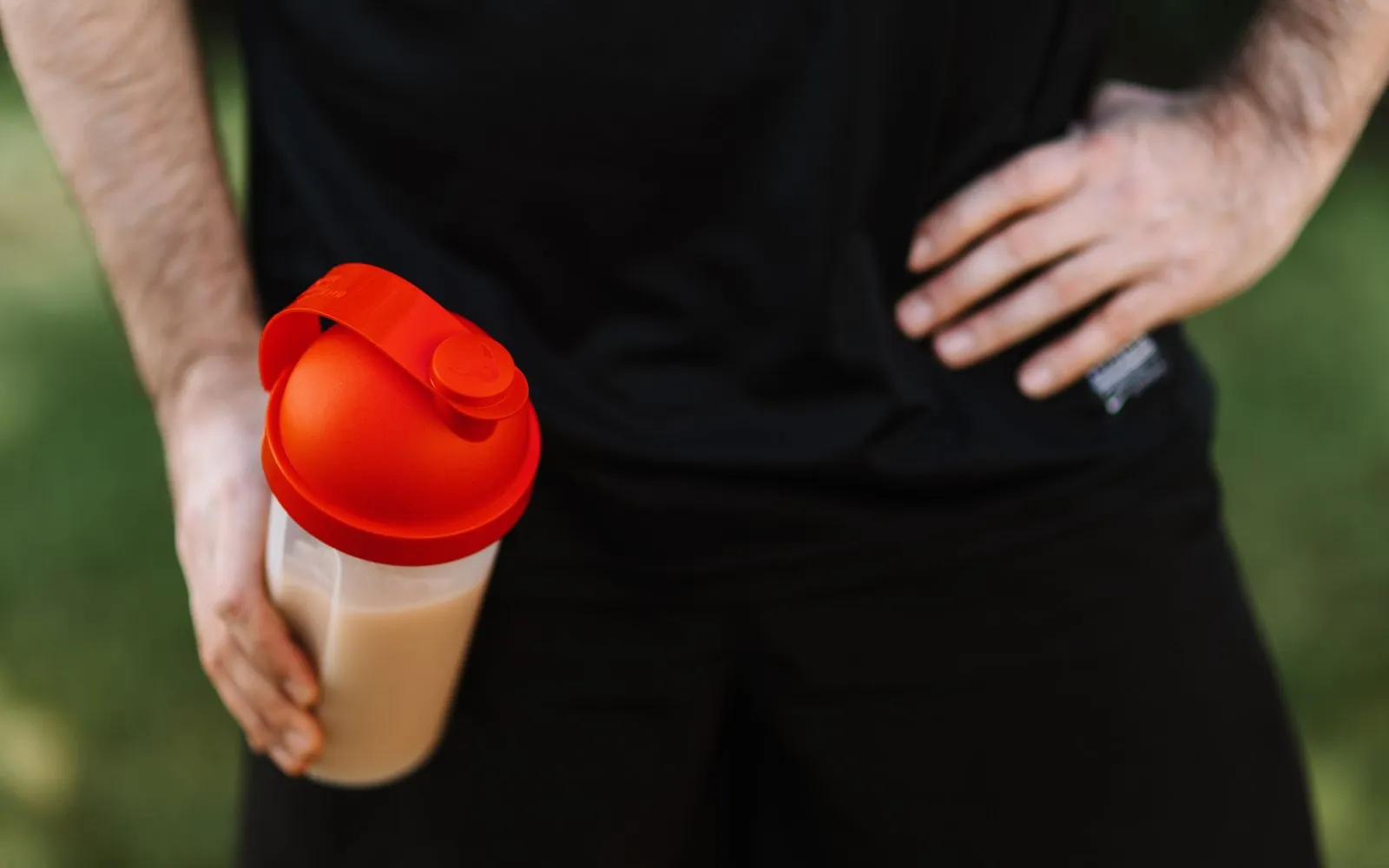
What are the best supplements for muscle recovery?
Protein and creatine. Protein carries UK health claims for growing and keeping muscle. A sports nutrition society, the ISSN, says creatine may help recovery after exercise.
After very long or very hard sessions, carbs help too. The other popular picks below have weak evidence.
| Supplement | What the evidence says | Amount in the evidence |
|---|---|---|
| Protein (whey, milk, soy) | UK claims: helps grow and keep muscle. | 20 to 40 g a dose, every 3 to 4 hours |
| Creatine | UK claim: helps repeated short bursts of hard exercise. ISSN: may help recovery. | 3 g a day |
| Carbs | UK claim: help muscles recover after very hard or long exercise that drains their fuel. | 4 g per kg of body weight within 4 hours |
| Tart cherry juice | IOC: more research is needed before it can be recommended. | 250 to 350 mL, twice a day, for 2 to 3 days after an event |
| High-dose vitamin C or E | Cochrane: may cut soreness slightly, but probably too little to make any difference. | Above the daily amount you need |
| Fish oil (omega-3) | IOC: limited support for calming inflammation after exercise. | No dose given |
Sources: legislation.gov.uk; ISSN protein; ISSN creatine; IOC; Cochrane
So spend your money on protein first. If you want a second product, make it creatine. See how much creatine to take a day.
Do you need a post-workout shake straight away?
No. Your muscles stay primed for protein for up to 24 hours after weights.
That other number is your daily protein total. The ISSN says your total protein and calories appear to matter most. For people who aren’t athletes, timing appears to make little difference.
For most people who exercise, 1.4 to 2.0 g per kg of body weight a day is enough. For someone who weighs 75 kg, that’s 105 to 150 g.
Source: ISSN protein
Person A could time the shake perfectly and still fall short. So add up a normal day first. Then use a shake to fill the gap, whenever suits you.
Need help with the sums? See how much protein you need a day.
What should a post-workout drink have in it?
After weights, aim for 20 to 40 g of protein. A shake works, and so does a meal with milk, yoghurt, eggs, fish or meat.
| Session | What to have after | Why |
|---|---|---|
| Weights | 20 to 40 g of protein, from food or a shake | ISSN dose for building muscle |
| Very hard or long session that leaves muscles drained | Carbs as well: 4 g per kg of body weight within 4 hours | UK claim for muscle recovery |
| Any session | Enough fluid to keep your pee pale yellow | NHS: you may need more if active for long periods |
Sources: ISSN protein; legislation.gov.uk; NHS
The carb amount is bigger than it sounds. Someone who weighs 70 kg would need 280 g over those 4 hours, from all their food and drink.
Water, lower-fat milk, and tea or coffee all count as fluid. Taking creatine too? You can mix it into your protein shake.
Do you need an intra-workout drink?
An intra-workout drink is one you sip during training. You mainly need one for very hard sessions of more than an hour. The ISSN advises 30 to 60 g of carbs an hour then, sipped every 10 to 15 minutes.
It suggests a sports drink that is 6 to 8% carbs, with salts. It matters most when the session goes past 70 minutes.
- 60 minutes or belowNo carb target from the ISSN.
- Above 60 up to 70 minutesVery hard sessions: 30 to 60 g carbs an hour.
- Above 70 minutesVery hard sessions: carbs matter most here.
Source: ISSN nutrient timing
A normal hour of weights sits in the first band. There, the ISSN sets no carb target, so check your pee stays pale yellow and save the money.
Do tart cherry, BCAAs and vitamin C help recovery?
Probably not. A Cochrane review (a careful summary of all the trials) looked at 50 trials. They tested high doses of antioxidants, like vitamin C, vitamin E and cherry juice, in mostly men.
These may cut soreness slightly, but probably too little to make any difference.
An expert panel for the IOC looked at tart cherry juice. It says more research is needed before it can be recommended.
BCAAs are three building blocks already found in protein. A 20 to 40 g protein dose gives you 1 to 3 g of leucine, the main one, plus the others muscle needs.
Before you buy a recovery supplement
- Work out your daily protein: 1.4 to 2.0 g per kg of body weight.
- Split it into doses of 20 to 40 g, every 3 to 4 hours.
- Taking creatine? 3 g a day is the amount in the UK claim.
- Skip high-dose vitamin C and E for soreness.
- Tested in your sport? Check UKAD advice first. It says no supplement is certain to be free of banned substances.
- Drink enough to keep your pee pale yellow, and more after long sessions.
Sources: ISSN protein; legislation.gov.uk; Cochrane; UKAD; NHS
Recovery tubs can hold extra ingredients. The IOC says some may raise the risk of contamination. Fewer ingredients means fewer surprises.
Still sore and wondering if you trained right? See muscle soreness and training progress.
When to speak to a GP
Soreness 24 to 72 hours after a workout is normally harmless. Get help if:
- Your soreness is lasting or getting worse. See a GP or physio, or call 111.
- You get muscle pain, swelling, weakness and dark pee after hard exercise. Get medical help urgently. It can start hours or days later.
- You hurt yourself and it’s very painful or getting worse, very swollen or bruised (or the swelling or bruising is getting worse), or very stiff or hard to move. Get help from NHS 111. Do the same if you can’t put weight on it or walk more than a few steps, it isn’t better after treating it yourself, or you have a very high temperature or feel hot, cold or shivery.
- You heard a crack, it looks out of shape, it’s numb or tingling, or the skin is blue, grey or cold. Call 999 or go to A&E.
- You have kidney disease and want to take creatine. Some experts suggest you ask your doctor first.
Worried about creatine and kidney blood tests? See does creatine raise creatinine.