What is a normal PTH level?
It depends on your lab: 1.6 to 6.9 at one NHS lab, 3.0 to 12.0 for adults at another. And a normal PTH can still be wrong for you, because of one other line.
On this page
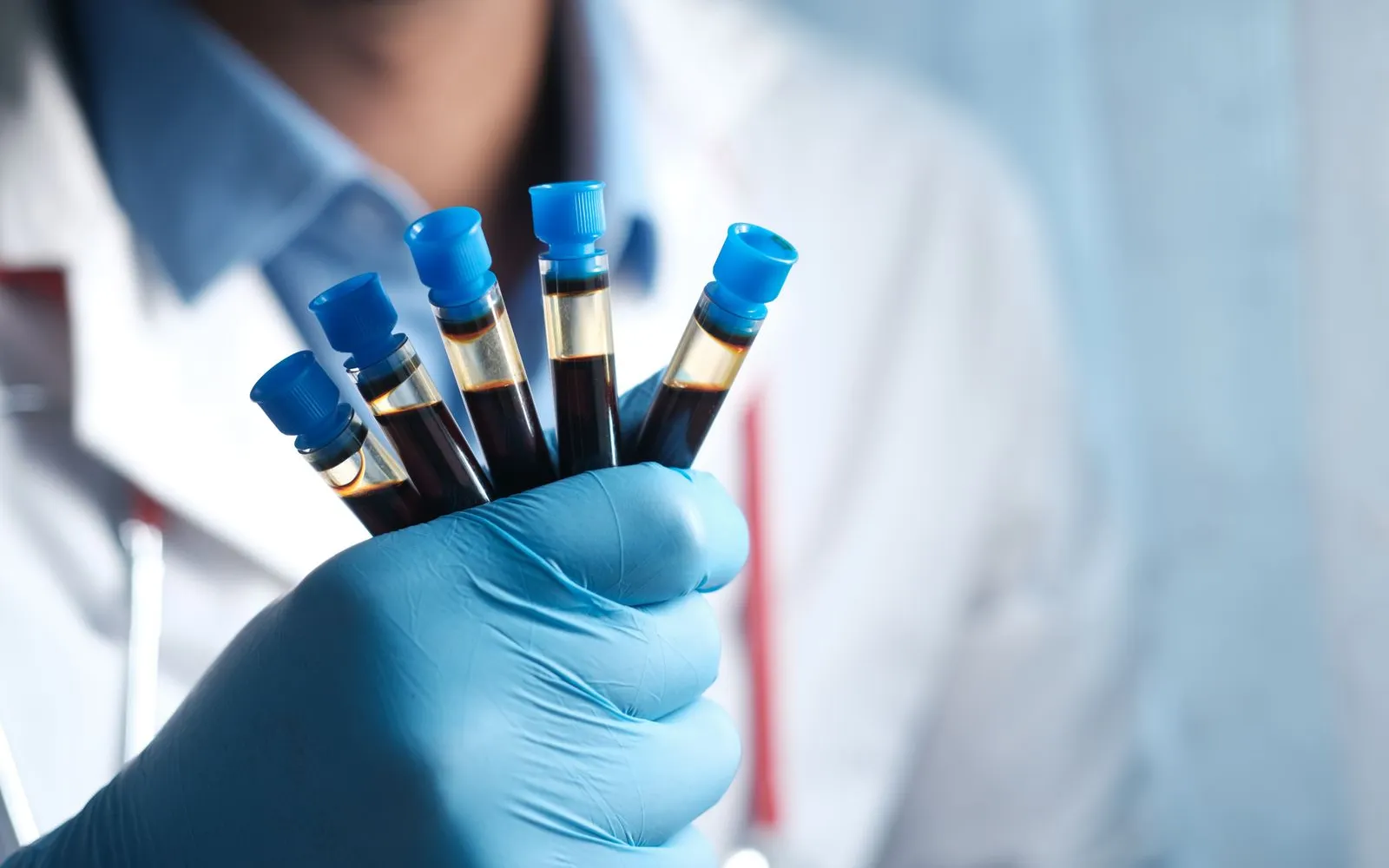
What is a normal PTH level?
There’s no single UK range. Each lab sets its own. NICE says ranges differ so much between labs that it could not set PTH numbers for doctors to use.
PTH stands for parathyroid hormone. UK labs report it in pmol/L, with their own range printed next to it. Read your result against that range.
| NHS lab | Normal PTH (pmol/L) |
|---|---|
| Gloucestershire Hospitals | 1.6 to 6.9 (with normal calcium) |
| Royal Stoke University Hospital | 2.0 to 8.5 |
| North Bristol | 1.3 to 9.3 |
| Oxford, adults | 3.0 to 12.0 |
Sources: Gloucestershire Hospitals; UHNM; North Bristol NHS Trust; Oxford University Hospitals
Why the gap? A UK study of 1,727 adults with normal calcium, vitamin D and kidney tests found a range of 3.0 to 13.7. That’s well above the test maker’s 1.6 to 7.2.
The four labs in that study then set their own ranges. The aim was to stop people being wrongly told their glands were overactive.
Just over the top? A result outside the range does not necessarily mean disease. Ask your GP what it means next to your calcium.
Why is PTH read with calcium?
That other line is your adjusted calcium (your calcium result corrected for a blood protein called albumin). Your parathyroid glands are four small glands in your neck. Their hormone, PTH, raises the calcium in your blood.
Think of PTH as the heating and calcium as the room temperature. A cold room should switch the heating on. A warm room should switch it off.
So a high PTH with low calcium can be your body doing its job. A PTH that stays on while calcium is high can point to a gland problem.
That’s why a PTH inside the range may still be wrong if your calcium is outside its range.
| Calcium | PTH | What it can point to |
|---|---|---|
| High | Normal or high | Overactive parathyroid glands (primary hyperparathyroidism) |
| Low | High | Glands reacting to low calcium or vitamin D (secondary hyperparathyroidism) |
| Low | Low | Underactive parathyroid glands (hypoparathyroidism) |
| High | Below the range | Another cause, which NICE says doctors should look for |
Sources: UK PTH study (Davies 2023); NHS; nidirect; NICE NG132
Ask for both results side by side. Then use the calcium blood test guide to read your calcium line.
What does high PTH mean?
Too much PTH is called hyperparathyroidism. The NHS gives two main types:
- Primary: a growth on a parathyroid gland that isn’t cancer.
- Secondary: low calcium or vitamin D in your blood, or high phosphate (another mineral in your blood), which may be due to another condition.
Low vitamin D can raise your PTH. See vitamin D deficiency.
Kidney disease is another reason PTH is checked. NICE advises checking PTH in adults whose kidney score (GFR) is below 30. See the eGFR blood test guide.
How NICE says a GP uses your PTH
- 1
Calcium twice
Adjusted calcium of 2.6 mmol/L or more on 2 tests, or 2.5 or more on 2 tests if overactive glands are suspected, leads to a PTH test.
- 2
PTH and calcium together
Both taken at the same time, at any time of day.
- 3
Above the middle
If overactive glands are suspected, your GP seeks specialist advice.
- 4
Below the middle
Inside the range but below the middle, with calcium below 2.6: no more tests for this. With calcium of 2.6 or more: your GP seeks specialist advice.
Sources: NICE NG132; NICE NG132 rationale
NICE uses the middle of your lab’s range, not the top. On a range of 1.6 to 6.9, the middle is 4.25.
So a PTH of 5 is inside the range but above the middle. That matters if your GP suspects overactive glands.
Many people have no, or very mild, symptoms. The NHS lists:
- tiredness and poor sleep
- joint and bone pain
- muscle weakness, spasms and shaking you can’t control
- feeling and being sick, and loss of appetite
- constipation and tummy pain
- feeling thirsty all the time and peeing more than usual
- low mood and depression
- problems with memory and concentration
See high calcium for what comes next.
What does low PTH mean?
Low PTH with low calcium fits underactive parathyroid glands (hypoparathyroidism). It’s found when a blood test shows low PTH, low calcium and high phosphorus.
The most common cause is surgery to the neck that removes or hurts the glands. Others include radiotherapy to the neck and conditions where the immune system attacks the body.
Low magnesium is another cause, for example from drinking too much alcohol. Ask your GP about a magnesium blood test.
The NHS lists these symptoms:
- tingling or burning in your fingers, toes and face
- muscle pain, stiffness and spasms
- tummy pain
- brittle nails, dry hair and dry skin
- cataracts, cloudy patches at the front of your eyes
- less often: confusion, an irregular heartbeat or seizures (fits)
Low PTH with high calcium is a different pattern. NICE advises doctors to look for other causes, including cancer. Ask your GP which pattern your results fit.
What happens at a PTH test?
It’s a normal blood test from your arm. Labs such as Royal Stoke use a purple-top tube for PTH and a separate tube for calcium.
NICE says it can be done at any time of day. PTH can’t be added to blood already taken, so a fresh sample is always needed.
Why was it ordered? Labs list three reasons: an abnormal calcium result, checks after thyroid or parathyroid surgery, or to monitor kidney disease.
Before and after your PTH test
- Check your adjusted calcium was taken at the same time.
- Find your lab’s range on your results, not one from the internet.
- Work out the middle of that range, and see which side your PTH falls.
- Ask whether your vitamin D and kidney function have been checked.
- Don’t change your diet to lower your calcium unless your specialist tells you to.
- Don’t expect a repeat PTH from your GP. NICE says GPs shouldn’t routinely repeat it.
Sources: NICE NG132; UHNM; NHS
When to speak to a GP
Many people only find out from tests for something else. Speak to a GP if:
- Your adjusted calcium is 2.6 or more on 2 tests, or 2.5 or more on 2 tests and your GP suspects overactive glands. NICE advises a PTH test.
- You think you might have overactive glands, for example from constant thirst or peeing more. The NHS says get checked.
- Your PTH is above the middle of your lab’s range and overactive glands are suspected. NICE advises specialist advice.
- You get tingling in your fingers, toes or face, or muscle spasms. After neck or head surgery, contact your surgery team first.
Call 999 if someone has a seizure for the first time. Also call if it lasts longer than usual for them, or over 5 minutes if you don’t know. Don’t drive yourself to A&E.