How do I start strength training at home?
Four moves, 2 days a week. A squat, a push, a pull and a hinge work your main muscles, with no gym. Then one number tells you when to make it harder.
On this page
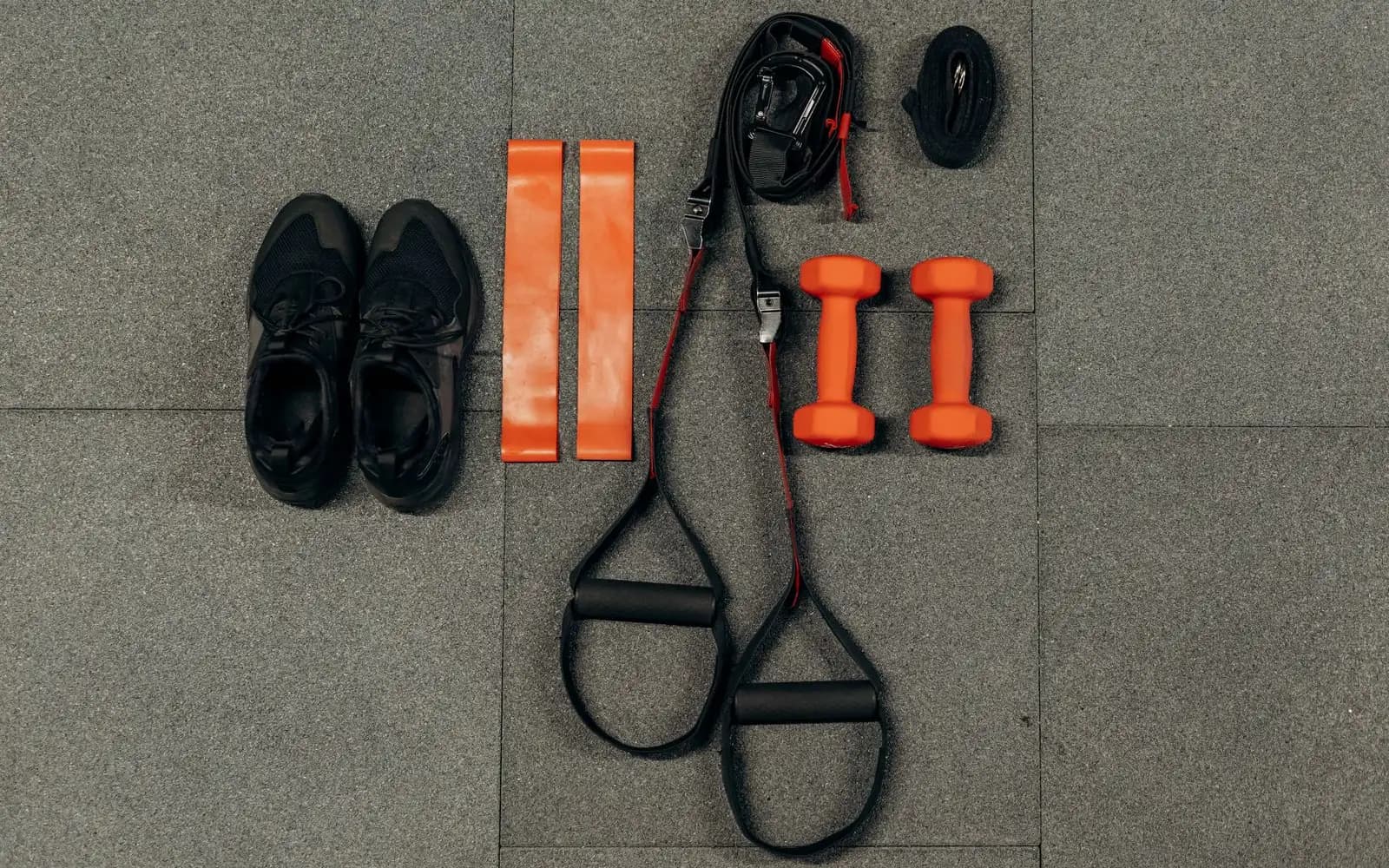
What strength exercises can I do at home?
Pick one move from each of four groups: squat, push, pull and hinge (bending at the hips). The Royal Osteoporosis Society says one from each group helps strengthen all your main muscles.
The NHS says you can build strength at home or in a gym. Your own body weight counts, and so do bands and weights.
| Group | Start here | Then try |
|---|---|---|
| Squat | Sit-to-stand from a chair | Squat |
| Push | Wall press-up | Press-up |
| Pull | Row with a band | One-arm row with a band |
| Hinge | Bridge: on your back, lift your hips | Romanian deadlift with a band (stand on the band, bend forward from your hips, then stand tall) |
Sources: Royal Osteoporosis Society; NHS
New to it? Start in the left column. The charity says to move on when you feel confident with the movements.
No band for the pull? Do a one-arm row with a filled water bottle or a bag of tins. The charity names water bottles and tins of food as home weights.
Try the four left-hand moves today. For a sit-to-stand, the NHS says to use your legs, not arms, on a solid chair with no wheels.
How many sets, reps and days?
Do 8 to 12 reps (lifts) of each move. That’s one set. The charity says to build up to 3 sets of each.
Each set should end with you needing a breather. The NHS says to work to the point where you need a short rest before you go again.
Your home strength week
- 1
Day 1
All four moves, 8 to 12 reps, 1 to 3 sets.
- 2
Rest day
At least one day off strength work. Walk if you like.
- 3
Day 2
The same four moves again.
- 4
Optional day 3
Up to 3 days a week, with a rest day between.
Sources: Royal Osteoporosis Society; NHS
The UK’s chief medical officers ask for strength work on at least 2 days a week. They also say any is better than none.
Plan for 20 to 30 minutes, the time the charity’s plan suggests. Put two days in your diary now. Our two-day home routine helps you set up the space.
Can you build muscle at home without weights?
Yes, in at least one trial. Eighteen young men did either bench press or press-ups, twice a week for 8 weeks. The press-ups were made as hard as a light bench press, kneeling if needed.
| Result | Bench press group | Press-up group |
|---|---|---|
| Chest muscle thickness | 17.0 to 20.8 mm | 17.0 to 20.8 mm |
| Best single bench press | 60.0 to 65.0 kg | 61.1 to 64.2 kg |
Source: Kikuchi and Nakazato 2017
The catch is effort. Every set went on until they couldn’t do another rep. It was also a small study in men aged 19 to 22.
A review of 21 studies backs the idea. Light loads built similar muscle to heavy ones when sets went that far. Heavy loads gave a bigger best single lift.
For a good press-up, The Prehab Guys, a physio-led team, put your hands under your shoulders and keep your body straight. Too hard? Put your hands on a raised surface, like a worktop.
When should I make it harder?
That number is 12. If you can do 12 reps and feel you can keep going, the charity says try a heavier weight. If you can’t do 8 with good form, go lighter.
- Below 8 repsUnder 8: go lighter or easier.
- 8 up to 12 reps8 to 12: keep going.
- Above 12 reps12 or more and could keep going: go heavier.
Source: Royal Osteoporosis Society
At home, harder can mean the next move in the table. It can also mean adding water bottles, tins, a band or dumbbells.
Bands do the job. A review of 8 trials found similar strength gains with bands as with weights or machines. It measured strength, not muscle size, and the authors called the studies low quality.
Ready for kit? See our resistance band workout or full body dumbbell workout. Our progressive overload guide shows how to step up.
Your home strength plan
- Do one squat, one push, one pull and one hinge move each session.
- Train on 2 to 3 days a week, with at least a day’s rest in between.
- Do 8 to 12 reps of each move, and build up to 3 sets.
- Keep each set going to the point where you need a short rest.
- If you can do 12 reps and feel you can keep going, try a heavier weight.
- Use filled water bottles or tins of food if you have no weights.
Sources: Royal Osteoporosis Society; NHS; UK CMOs
Is weight training at home different for women?
No. Use the same four moves and set the weight to suit you.
A review compared women and men on the same plan. They gained similar muscle and lower-body strength. Women’s upper-body strength rose more, compared with where they started.
The studies were short and in young to middle-aged adults.
More for women: our guide to weight training for women.
When to speak to a GP first
Book an appointment before you start if:
- You haven’t exercised for some time, or you have medical conditions or concerns.
- You’ve had many broken bones or a broken bone in your spine, or you’re healing from a break. The charity says to talk to a doctor or physio first.
- You get chest pain that comes and goes, or that goes away quickly but still worries you.
- You’re pregnant and new to weights. The NHS lists strength training at a gym if you do this already. Ask your midwife first.
Later in pregnancy, the NHS says to try to avoid lying flat on your back for more than a few minutes. It can make you feel dizzy and is not good for your baby. So swap the bridge for another hinge move then.
Call 999 if you get sudden chest pain or discomfort that doesn’t go away. The same goes for pain that spreads to your arm, neck, jaw, stomach or back. Or chest pain with sweating, feeling sick, light-headed or short of breath.