What’s a good 7-day meal plan for weight loss?
One that cuts about 600 calories a day. You don’t need to count them to start. One NHS plate rule builds every lunch and dinner in the free week below, for women and men.
On this page
What is a good 7-day meal plan for weight loss?
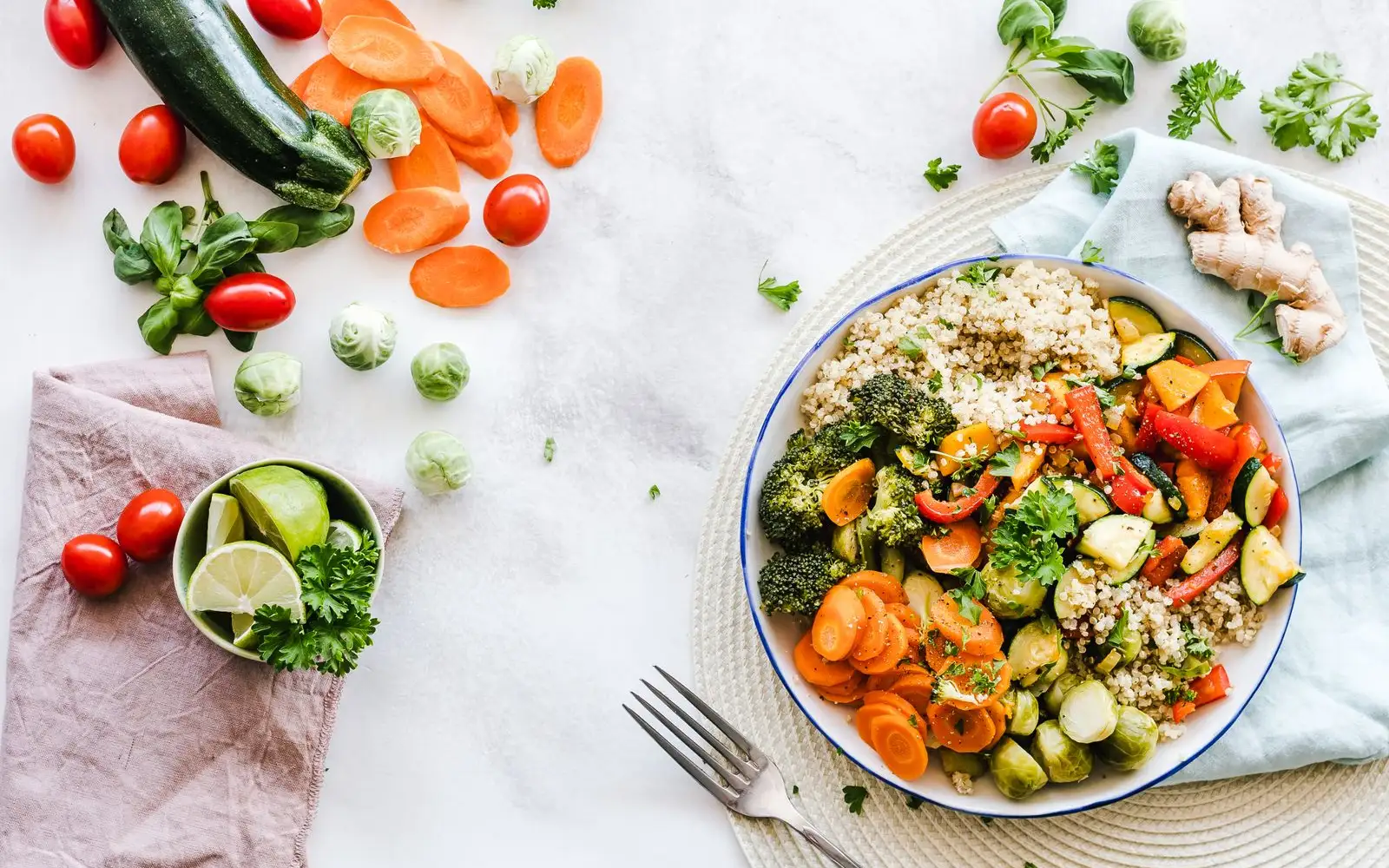
One that has you eating around 600 calories a day less than you do now, from normal food. Every lunch and dinner below follows the NHS plate rule: plenty of veg, some protein, and a starch that’s wholegrain where it can be.
| Day | Lunch | Dinner |
|---|---|---|
| Monday | Wholemeal wrap with chicken, salad and a plain yoghurt dip | Salmon, new potatoes in their skins, broccoli and peas |
| Tuesday | Lentil and vegetable soup with 1 slice of wholemeal bread | Chicken and vegetable stir-fry with brown rice |
| Wednesday | Baked potato with baked beans and a big side salad | Turkey mince chilli with kidney beans, peppers and brown rice |
| Thursday | Leftover chilli with extra salad | Two-egg vegetable omelette with salad and new potatoes |
| Friday | Hummus, grated carrot and salad in a wholemeal pitta | Oven-baked chicken breast, potato wedges in their skins, peas and carrots |
| Saturday | Eggs on wholemeal toast with grilled tomatoes and mushrooms | Chickpea and spinach curry with brown rice |
| Sunday | Roast chicken without the skin, a few roast potatoes and three veg | Sardines on wholemeal toast with a big salad |
Source: NHS Better Health
For breakfast, rotate three.
Porridge made with semi-skimmed milk and berries. Plain low-fat yoghurt with fruit and a spoon of oats. Or two plain wholewheat cereal biscuits with skimmed milk and a sliced banana.
Hungry between meals? The NHS suggests fruit or plain popcorn instead of crisps and chocolate.
Don’t like a meal? Swap it for one you do, and keep the same plate shape.
What should a healthy diet plan include?
Start with the veg. That’s the half-plate rule: the NHS says to fill about half of your plate with veg at your main meal. Most vegetables are low in calories and can help you feel fuller for longer.
| Part | How much | Examples |
|---|---|---|
| Vegetables | 2 or more portions at your main meal, about half the plate | Broccoli, peas, carrots, peppers, salad |
| Protein | Some at each meal | Beans, pulses (like lentils and chickpeas), fish, eggs or lean meat |
| Starchy food | No more than a third of what you eat each day, wholegrain when you can | Brown rice, wholemeal bread, potatoes in their skins |
| Fish | If you eat fish, 2 portions a week, at least 1 of them oily | Salmon, sardines, trout, mackerel or herring |
| Dairy | Lower fat, lower sugar | Semi-skimmed milk, reduced fat cheese, plain low-fat yoghurt |
| Oils and spreads | Small amounts, as all of them are high in calories | Olive, sunflower or rapeseed oil |
Source: NHS Better Health
Protein at each meal can help you feel full for longer too. The NHS also says to eat less red and processed meat, like ham, bacon and sausages. That’s why the week above has none.
Veg and wholegrains also bring fibre. See how much fibre you need a day. Tonight, put the veg on your plate first.
How many calories should I eat to lose weight?
About 600 fewer than you eat now. The NHS calls that a safe and sustainable way to lose weight. You don’t have to change everything at once.
Source: NHS Better Health
A label’s portion can be smaller than the amount you eat. The NHS example: a 75g portion of rice is 260 calories, so a 150g portion is 520.
For your first week, weigh rice and pasta before you cook them. You don’t have to do it forever.
How fast? The NHS says aim to lose 0.5 to 1kg a week. To pick a diet style, see the best diet to lose weight.
Is there a different meal plan for women?
No. The NHS gives one plate rule and one 600 calorie cut, with no separate version for women. What differs is how much you use: on average, women use around 2,000 calories a day and men around 2,500.
Your own number also depends on your age, weight, height and how much exercise you do. So keep the same meals and change how much goes on the plate.
Going through the menopause? See menopause weight gain.
Want more filling mornings? Try these high protein breakfasts.
How do I stick to a weekly meal plan?
Plan it before you shop. In a study of 40,554 French adults, people who planned meals for the next few days ate a better and more varied diet. They were also less likely to have obesity.
The study can’t show that planning caused it.
Don’t skip meals. The NHS says you might end up snacking more because you feel hungry. It also suggests sharing your plan with someone you trust, for the bad days.
Six portion habits for the week
- Use smaller plates and bowls.
- Measure oil, butter and ghee with a teaspoon when you cook.
- Serve yourself once, and try not to go back for more.
- Weigh pasta and rice before you cook them.
- Put snacks in a bowl, not straight from the packet.
- Turn off the TV while you eat, so you notice when you’re full.
Source: NHS Better Health
Drink 6 to 8 cups of fluid a day. Keep fruit juice and smoothies to 150ml a day in total. Cooking double helps too: Wednesday’s chilli is Thursday’s lunch.
Want help to track it? The free NHS Weight Loss Plan app gives you a 12-week plan and a daily calorie target.
The NHS also has recipes under 600 calories a portion. See also Mediterranean meal ideas and weight loss programmes.
When to speak to a GP
Talk to a GP before you change how you eat if you have a medical condition or a special diet for your health. The same goes if you have an eating disorder, or have had one.
BMI (body mass index) is a number that compares your weight with your height. See what your BMI means.
The NHS also says to see a GP if your BMI is in the overweight or obese range and:
- you want help to lose weight
- your waist is more than half your height (see waist-to-height ratio)
- you have pre-diabetes (blood sugar higher than normal, but not diabetes), diabetes, high blood pressure, joint pain, high cholesterol, sleep apnoea (breathing that stops and starts while you sleep) or heart and blood vessel disease
- you have a family history of obesity
- you have, or think you may have, an eating disorder, such as binge eating
For eating disorder support, the charity Beat helps adults and children.