What does azelaic acid cream do?
It calms acne spots and rosacea bumps, and may lighten dark patches. But it can sting at first. One small change to how you start can help, and the real test comes at week 4.
On this page
What does azelaic acid cream do?
It treats acne. It attacks the germ linked to spots and slows the skin cells that block pores and cause blackheads and whiteheads.
For moderate to severe acne, NICE lists it, at 15% or 20%, as one of its first options. It’s used twice a day with an antibiotic tablet, for 12 weeks.
| Use | UK product | What the evidence says |
|---|---|---|
| Acne | 20% cream (Skinoren) or 15% gel (Finacea) | A NICE first option for moderate to severe acne, with an antibiotic tablet, as a 12-week course. |
| Rosacea bumps | 15% gel (Finacea) | Beats a dummy gel. A big review of trials (Cochrane) rates this evidence high quality. |
| Dark patches (melasma) | 20% cream, used off licence (for something it isn’t approved to treat) | As good as 4% hydroquinone in one 24-week trial. |
Sources: NICE NG198; Finacea SmPC; Cochrane; Baliña 1991
Both products are prescription-only medicines in the UK. So your first step is to ask a GP.
How do I use azelaic acid 20% cream?
How to use azelaic acid 20% cream
- Wash with plain water, or a mild cleanser if your skin is greasy, then dry well.
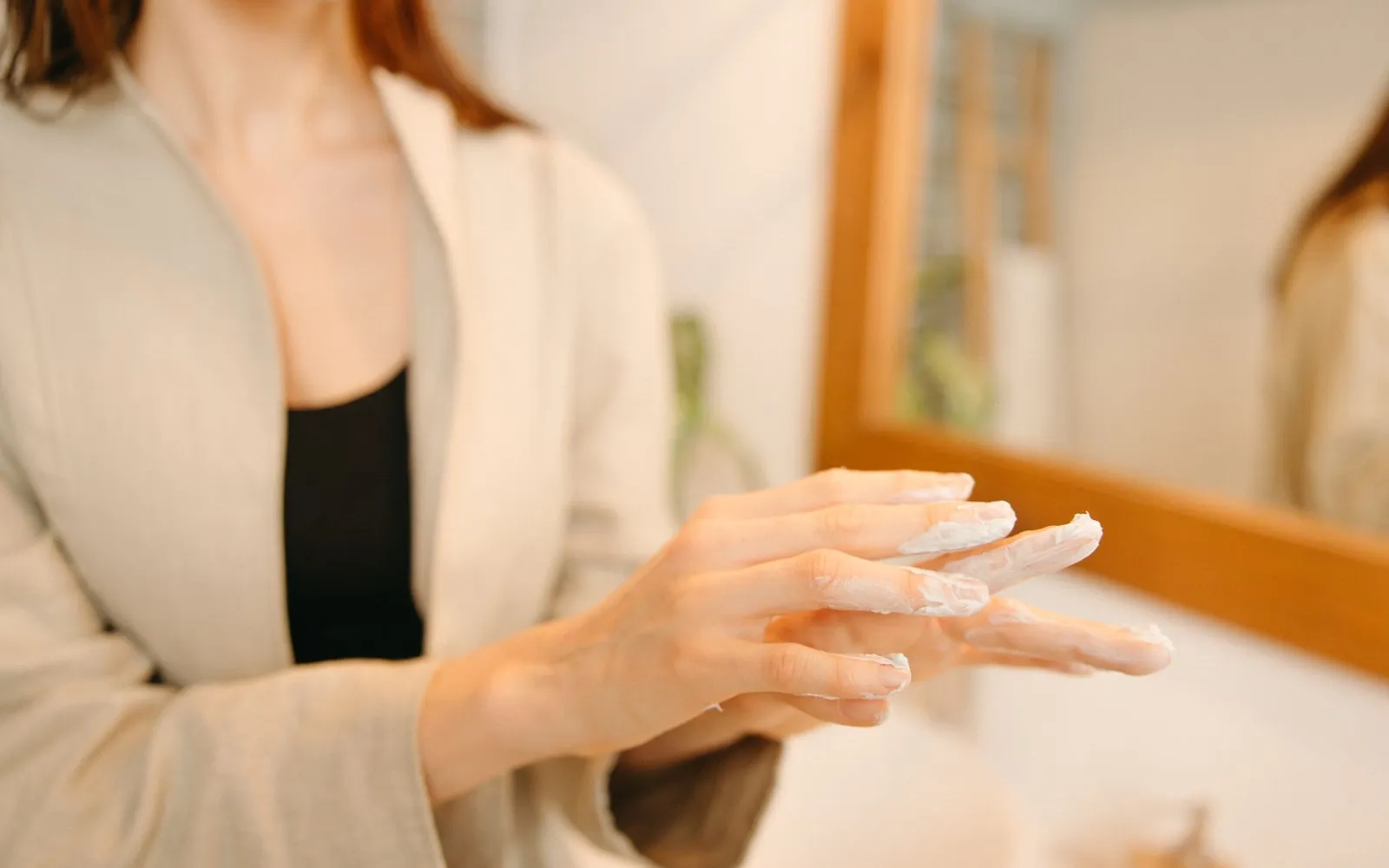
- Use about 2.5 cm of cream for your whole face, and rub it in gently.
- Apply it twice a day, unless your doctor has told you otherwise.
- Very sensitive skin? Use it once a day, in the evening, for the first week. Then go to twice a day.
- Keep it away from your eyes and mouth. If it gets in, rinse with lots of cool water.
- Wash your hands after each use.
Source: Skinoren leaflet
That evening-only first week is the small change from the top of the page. The leaflet suggests it for very sensitive skin.
Have rosacea? The gel’s maker advises skipping soaps, alcohol cleansers, scrubs and peels while you use it.
Ask your pharmacist which gentle skincare suits you. For drier, older skin, here’s which moisturisers are worth buying.
How long does azelaic acid take to work?
Think of it like a haircut growing out. You check in weeks, not days.
Week 4 is the first real check
- 1
Week 1
Stinging or redness is common. It usually eases.
- 2
Week 4
A clear change usually shows by now.
- 3
Weeks 6 to 12
NICE: acne results can take 6 to 8 weeks. Review at 12.
- 4
Up to 12 months
Often used for months. The cream leaflet says no longer than 12 at a time.
Sources: Skinoren leaflet; NICE NG198
On the 15% gel and no better? The maker says to stop and try another option after 1 month for acne or 2 months for rosacea.
Not everyone needs treatment after acne clears. If yours often comes back, NICE says azelaic acid alone is an option to help keep it away, if the usual combination doesn’t suit you. Mark week 4 and week 12 in your diary.
Does azelaic acid help pigmentation?
For melasma, the grey-brown patches on the face, it may. In a 24-week trial of 329 women, 20% cream gave good or excellent results in 65%.
It did as well as 4% hydroquinone, a bleaching cream. Everyone in the trial also used a broad-spectrum sunscreen.
A Cochrane review found it beat 2% hydroquinone, but not 4%. It called most melasma trials poor quality.
The UK cream’s leaflet says to use it only for acne. So ask a doctor before you use it on dark patches, and wear sunscreen daily. Here’s what sunscreen does for skin.
Azelaic acid side effects, and is it OK in pregnancy?
| How common | Side effect |
|---|---|
| More than 1 in 10 | Burning, itching or redness |
| Up to 1 in 10 | Flaking, pain, dryness, colour change or irritation |
| Rare | Worse asthma, in some people with asthma |
Source: Skinoren leaflet
New shoes often rub at first and ease as you wear them. The sting usually works the same way.
If it keeps hurting, use less, go to once a day, or take a short break. Still bad? Tell your doctor.
In one rosacea trial, the gel cut bumps by 72.7% against 55.8% for metronidazole 0.75%, another rosacea gel. But it caused more skin side effects, 25.8% against 7.1%.
Pregnant, breastfeeding or planning a baby? There’s limited experience of it in pregnancy, so ask your doctor or pharmacist first. Don’t let a baby touch treated skin or breast.
Its safety in children under 12 hasn’t been shown.
Never stop or change a prescribed medicine without your prescriber. Using vitamin A creams (retinoids) too? Read retinol and tretinoin.
When to speak to a GP
Book an appointment if:
- Your acne isn’t getting better after treating it yourself, or the spots are many, deep, painful or causing scars.
- Your skin is hot, swollen and red, which can be a sign of infection. Redness can be harder to see on brown and black skin.
- Your acne is affecting your mental health, or you think you have rosacea.
- You think you’re having an allergic reaction, such as a rash. Stop the cream and see your doctor as soon as possible.
Have rosacea and a painful or red eye, blurred vision, light sensitivity or a gritty eye? Ask for an urgent GP appointment or call 111.