Can breathing exercises lower blood pressure?
Yes, a little, if yours is raised: about 6 points off the top number. That’s the trial average for slow breathing. But NICE dropped relaxation therapies from its advice. One change has stronger proof.
On this page
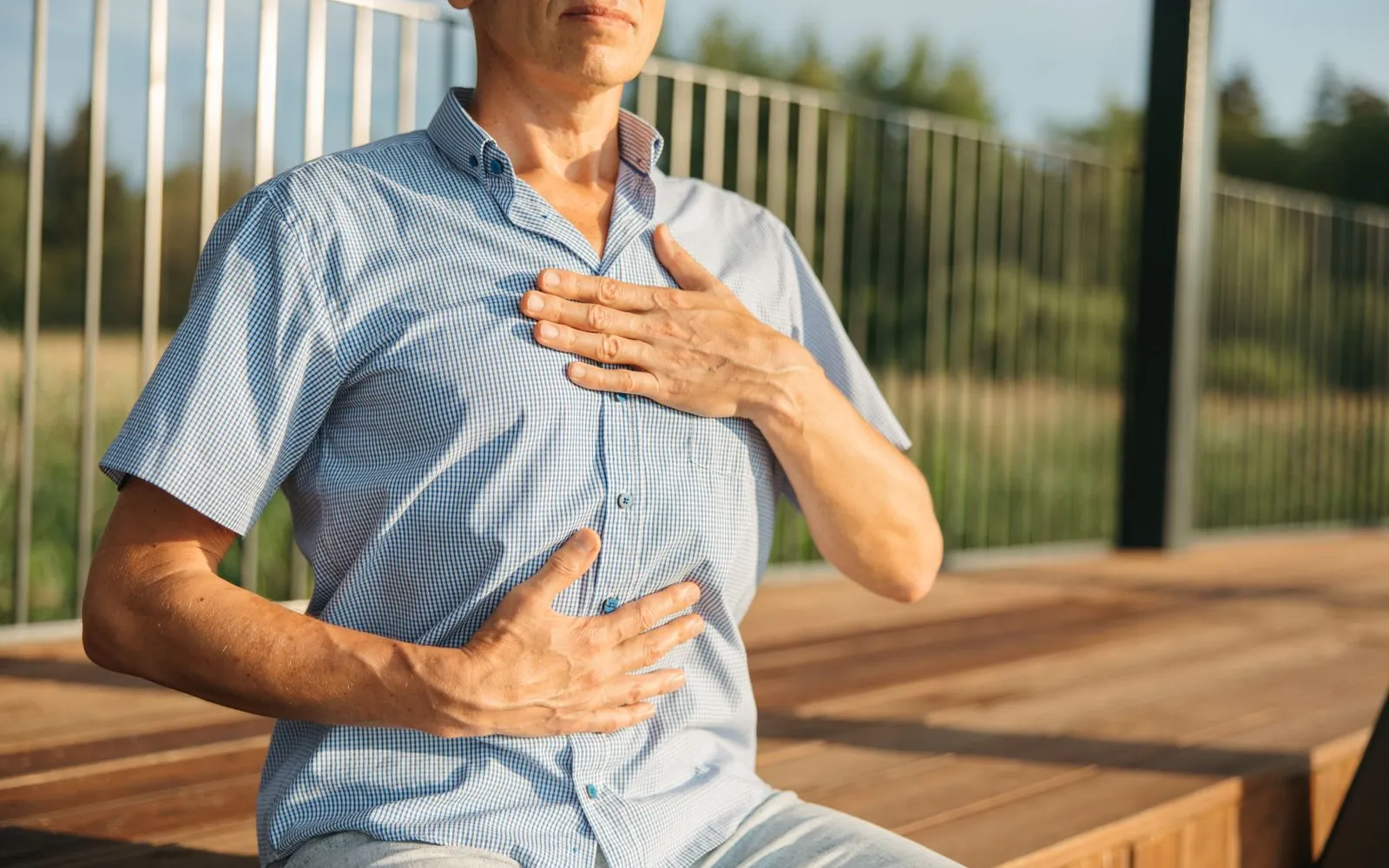
Can breathing exercises lower blood pressure?
Yes, a little. Across 17 trials, slow breathing cut the top number (systolic) by about 5.6 points (mmHg) on average. The bottom number (diastolic) fell by about 3.
People took 10 or fewer breaths a minute, for at least 5 minutes, on 3 or more days a week. They kept it up for 4 weeks or longer. All had high or slightly raised blood pressure, or took blood pressure medicine.
| Method | Effect on the top number | How strong the proof is |
|---|---|---|
| Slow breathing, 10 or fewer breaths a minute | About 5.6 lower on average | 17 trials. Results varied a lot. |
| Breathing trainer, 30 hard breaths a day, 6 days a week | 135 down to 126 in 6 weeks | One small trial of 36 people aged 50 to 79 with a top number of 120 or more. |
| Breathing gadget against a fake one | No clear difference | Fair tests where people didn’t know which gadget they had, but all short. |
| Meditation, yoga and other relaxation | Modest, mixed or no consistent effect | American Heart Association review, 2013. |
Sources: Chaddha 2019; Craighead 2021; Landman 2014; AHA 2013
An average is like a class’s average mark: it hides who did well and who didn’t. Your drop could be bigger, smaller or nothing. Only your own readings can tell.
Is a few points worth it? The NHS says lowering blood pressure even a small amount can help reduce your risk of heart attacks and strokes. But NICE found no evidence that relaxation therapies cut heart attacks or strokes themselves.
So try it for 4 weeks alongside other changes, and check your blood pressure at home before and after.
Which breathing technique lowers blood pressure?
No UK body names one. The trials tested slow breathing, some with a gadget setting the pace and some with yoga breathing (pranayama).
The simplest free version is the NHS breathing exercise for stress. It wasn’t written for blood pressure, but counted slowly it matches the trials’ pace.
The NHS breathing exercise, at the trials’ pace
- 1
Get comfortable
Sit in a chair that supports your back, feet flat and hip-width apart.
- 2
Breathe into your belly
As deep as is comfortable, without forcing it. In through your nose, out through your mouth.
- 3
Count to 5 each way
Count 1 to 5 in, then 1 to 5 out. You may not reach 5 at first.
- 4
Keep going
At least 5 minutes. The trials did it 3 or more days a week.
Sources: NHS; Chaddha 2019
Count about once a second and each breath takes 10 seconds. That’s 6 breaths a minute, under the trials’ limit of 10.
Box breathing or 4-7-8? These trials didn’t test named methods. Slow, steady breathing is what they tested.
The NHS says you get the most benefit if you do it regularly, as part of your daily routine. Tie it to something you already do, like brushing your teeth.
Do meditation or breathing gadgets lower blood pressure?
The proof is weaker. A 2013 American Heart Association review found modest, mixed, or no consistent evidence for meditation, yoga and relaxation.
It still says people above 120/80 may reasonably try these alongside other treatment, when suitable.
Breathing gadgets that set your pace did no better than a fake gadget or music in fair tests where people didn’t know which they had. You don’t need one to try slow breathing.
Breathing trainers are different: you breathe in hard against a handheld device.
One small trial took people aged 50 to 79 with a top number of 120 or more. They did 30 breaths a day, 6 days a week. Their top number fell from 135 to 126 in 6 weeks.
A fake trainer did nothing, and more research is needed. Ask your GP or nurse before buying one.
What lowers blood pressure more than breathing?
That change is exercise. The American Heart Association review found aerobic exercise, the kind that speeds up your heart and breathing, had stronger evidence than any relaxation method.
NICE wants the focus on regular exercise and a healthy weight. It doesn’t want to stop you trying relaxation, though.
Your weekly blood pressure plan
- Do at least 5 minutes of slow belly breathing, 3 or more days a week.
- Build up to at least 150 minutes of exercise a week.
- Lose weight if you’re overweight.
- Eat a healthy, balanced diet and avoid salty food.
- Avoid drinking more than 14 units of alcohol a week on a regular basis.
- Stop smoking, and don’t drink too much coffee, tea or cola.
Sources: NHS: high blood pressure; NHS: breathing exercises; Chaddha 2019
On blood pressure tablets? Breathing can sit alongside them, not replace them. Never stop or change a prescribed medicine without your prescriber.
Which exercise helps most? See exercise for blood pressure. For stress itself, see stress and blood pressure.
How do I know if it’s working?
Check at home before you start, then again after 4 weeks. NICE uses this home method to confirm high blood pressure:
- Sit down and take 2 readings, at least 1 minute apart.
- Do it twice a day, ideally morning and evening.
- Keep going for at least 4 days, ideally 7.
- Ignore the first day and average the rest.
- Below 135 mmHgBelow the NHS home level for high.
- 135 mmHg or aboveNHS: usually high when checked at home.
Source: NHS
A bottom number of 85 or more also counts as high at home. At a clinic, it’s 140/90 or higher.
More tips in checking blood pressure at home. Only high at the clinic? See white coat hypertension.
When to speak to a GP
High blood pressure does not usually cause symptoms. A check is the only way to know. Speak to a GP or pharmacist if:
- You think you might have high blood pressure or be at risk of it.
- Your home average is 135/85 or higher, or a clinic reading is 140/90 or higher.
- You’re 40 or over and haven’t had your blood pressure checked for more than 5 years.
- You often get headaches or blurred vision. Get help from 111.
- You have chest pain that comes and goes, or other symptoms you think may be from blood pressure. Get help from 111.
Call 999 for sudden chest pain or discomfort that does not go away. It can feel like squeezing, pressure, burning or indigestion.
Call 999 too for pain spreading to your arm, neck, jaw, stomach or back. The same goes for chest pain with feeling sweaty, sick, light headed or short of breath. Do not drive yourself to A&E.