Which resistance machines should you use?
Start with six machines, 2 or 3 days a week. Together they work every muscle group the NHS lists. And in a review of 13 studies, machines built muscle about as well as free weights.
On this page
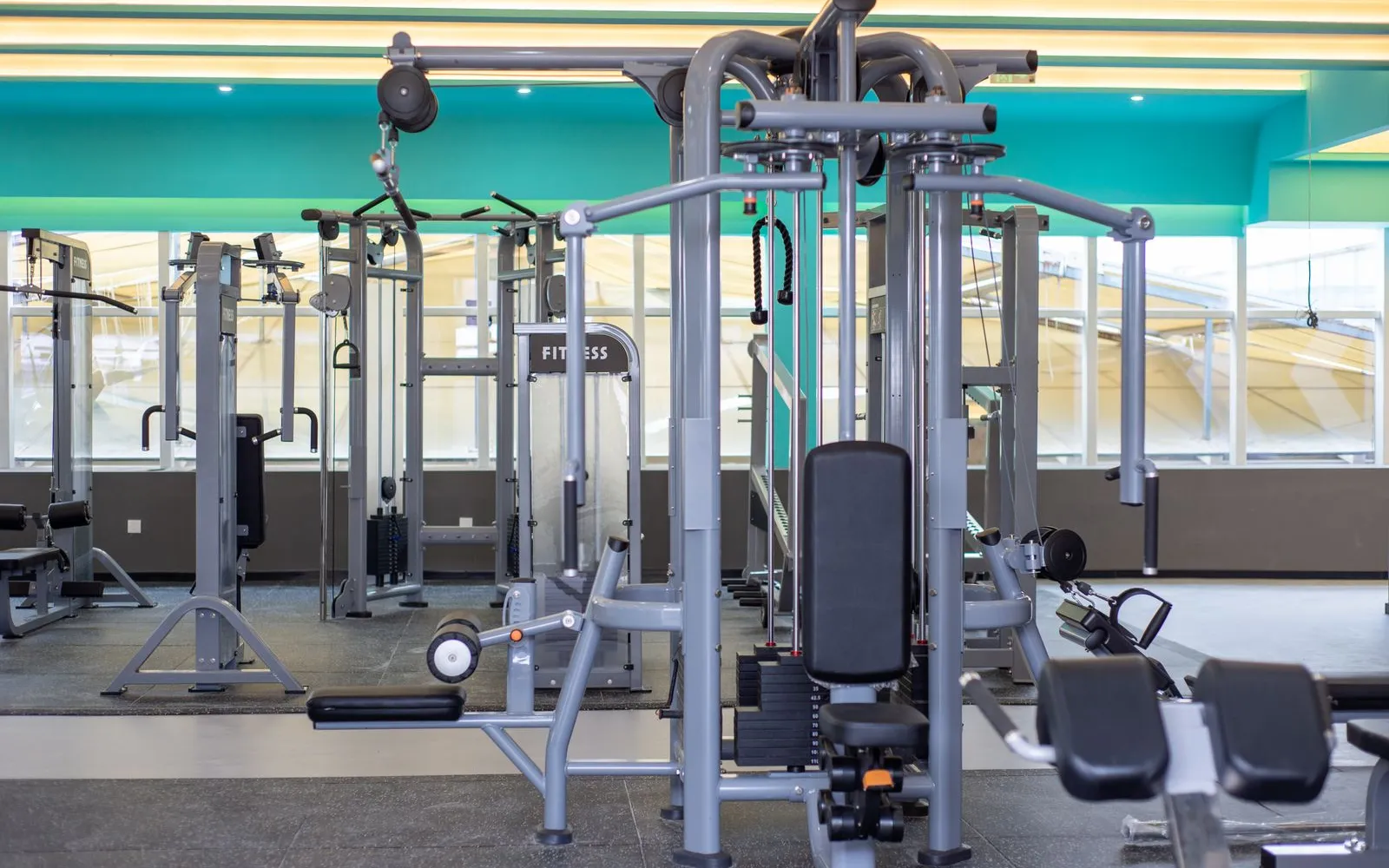
Which resistance machines should you use?
Here’s one simple set of six: leg press, chest press, seated row, shoulder press, leg curl and an ab machine. Between them they hit the legs, hips, back, tummy, chest, shoulders and arms.
That’s the full NHS list. Adults should work all the major muscle groups on at least 2 days a week.
| Machine, in order | Works | Sets and reps |
|---|---|---|
| 1. Leg press | Legs and hips | 2 to 3 sets of 8 to 12 |
| 2. Chest press | Chest, shoulders and arms | 2 to 3 sets of 8 to 12 |
| 3. Seated row | Back and arms | 2 to 3 sets of 8 to 12 |
| 4. Shoulder press | Shoulders and arms | 2 to 3 sets of 8 to 12 |
| 5. Leg curl | Back of the thighs | 2 to 3 sets of 8 to 12 |
| 6. Ab machine | Tummy | 2 to 3 sets of 8 to 12 |
Sources: NHS; ACSM 2009; Krieger 2009
The order matters. ACSM, a US body of sports doctors and scientists, puts large muscle groups before small ones. Moves that bend several joints come before moves that bend one.
Machine taken? Swap the next one in and come back. Take a photo of this list for your first visit.
How do you set up a gym machine?
Fit the machine to you before you pick a weight. Munson Healthcare, a US hospital group, sets this out in its weight machine guide.
Look for the coloured knobs or levers. In that guide, they’re yellow and mark the parts you can adjust.
| Machine | Set it so |
|---|---|
| Leg press | Knees bend to about 90 degrees, feet flat and shoulder width apart |
| Chest press | Handles sit level with the middle of your chest |
| Seated row | Handles line up with your shoulders |
| Shoulder press | Hands start just above your shoulders |
| Leg curl | Knees line up with the pivot point, where the arm turns |
| Ab machine | Thighs level with the floor, hips against the pad |
Source: Munson Healthcare
One machine works backwards. On an assisted dip machine, more weight makes it easier and less makes it harder.
Not sure? Ask a member of staff to show you each machine. Then note your seat number so set-up takes seconds next time.
What does a machine workout routine look like?
The same six machines, 2 or 3 days a week. That’s ACSM’s advice for beginners, which it defines as new to lifting or back after several years off.
Warm up for at least 6 minutes first. Then pick a weight you can lift 8 to 12 times with good technique. The NHS says to work to the point where you need a short rest.
Why 2 to 3 sets? A review of 14 studies linked them with 46% bigger strength gains than 1 set.
When to move the pin down the stack
- 1
Lift 8 to 12
Use a weight you can lift 8 to 12 times.
- 2
Beat 12
Manage 1 or 2 more good reps than 12.
- 3
Add 2 to 10%
Add the smallest step the stack allows.
- 4
Build again
Your reps drop back. Climb them up again.
Source: ACSM 2009
On a 25 kg row, 2 to 10% is 0.5 to 2.5 kg. A 5 kg plate would be a 20% jump.
Our progressive overload guide covers what to do when the next step is too big. Write down the weight and reps for every machine, every session.
Are resistance machines as good as free weights?
Yes, for building muscle and strength. A review pooled 13 studies of 1,016 adults aged 18 to 60, each lasting at least 6 weeks. Most were men.
| Question | What the research found |
|---|---|
| Muscle growth, head to head | No clear difference |
| Strength, head to head | No clear difference |
| Strength on the kit you trained on | Machine strength tended to rise more with machine training |
| Share of US emergency department lifting injuries, 1990 to 2007 | 90.4% involved free weights. Top cause: a weight dropped on the person |
Sources: Haugen 2023; Kerr 2010
So there is one catch: strength fits the kit you train on.
A machine guides the weight along a fixed path, so the small helper muscles do less. Planning to lift free weights later? Add some in now.
The injury figures count hospital visits, not risk per lifter. In people aged 55 and over, 18.2% of injuries happened on machines, against 9.3% in younger people.
Over 55? Our guide to strength training for older adults has more. For the other kit, read free weight exercises for beginners.
Can you do this workout on a multi gym?
Mostly, yes. A multi gym is one weight stack with several stations. Many have a chest press, a high pulley for pulldowns, a low pulley for rows and a leg curl.
Use the stations you have, in the same order. No leg press? Try a squat holding one weight at your chest instead.
Building one at home? See our home gym guide. For a gym week with other kit too, try our beginner gym plan.
Your machine workout plan
- Warm up for at least 6 minutes before each session.
- Do the machines in order: leg press, chest press, seated row, shoulder press, leg curl, ab machine.
- Set each seat to your body before you pick a weight.
- Use a weight you can lift 8 to 12 times with good technique, for 2 to 3 sets.
- Write down the weight and reps for every machine, every session.
- Add 2 to 10% once you can do 1 or 2 more reps than 12.
Sources: NHS: warm-up; Munson Healthcare; ACSM 2009; Krieger 2009
When to speak to a GP
The NHS says to speak to your GP first in some cases. Book an appointment if:
- You haven’t exercised for some time.
- You have a medical condition or health concerns.
- You get chest pain that comes and goes, or that goes away quickly but still worries you.
- You’re pregnant and new to lifting. The NHS says it’s not recommended to start a new vigorous activity in pregnancy. Ask your midwife what’s right for you.
Call 999 if you get sudden chest pain or discomfort that doesn’t go away. The same goes for pain that spreads to your arm, neck, jaw, stomach or back. Or chest pain with feeling sweaty, sick, light-headed or short of breath.