Healthy sweet snacks
Fresh fruit, or plain yoghurt with fruit. Most portions are about 100 calories or less. But the sweet snack that looks healthiest, dried fruit, is the one the NHS says to keep for mealtimes.
On this page
What are healthy sweet snacks?
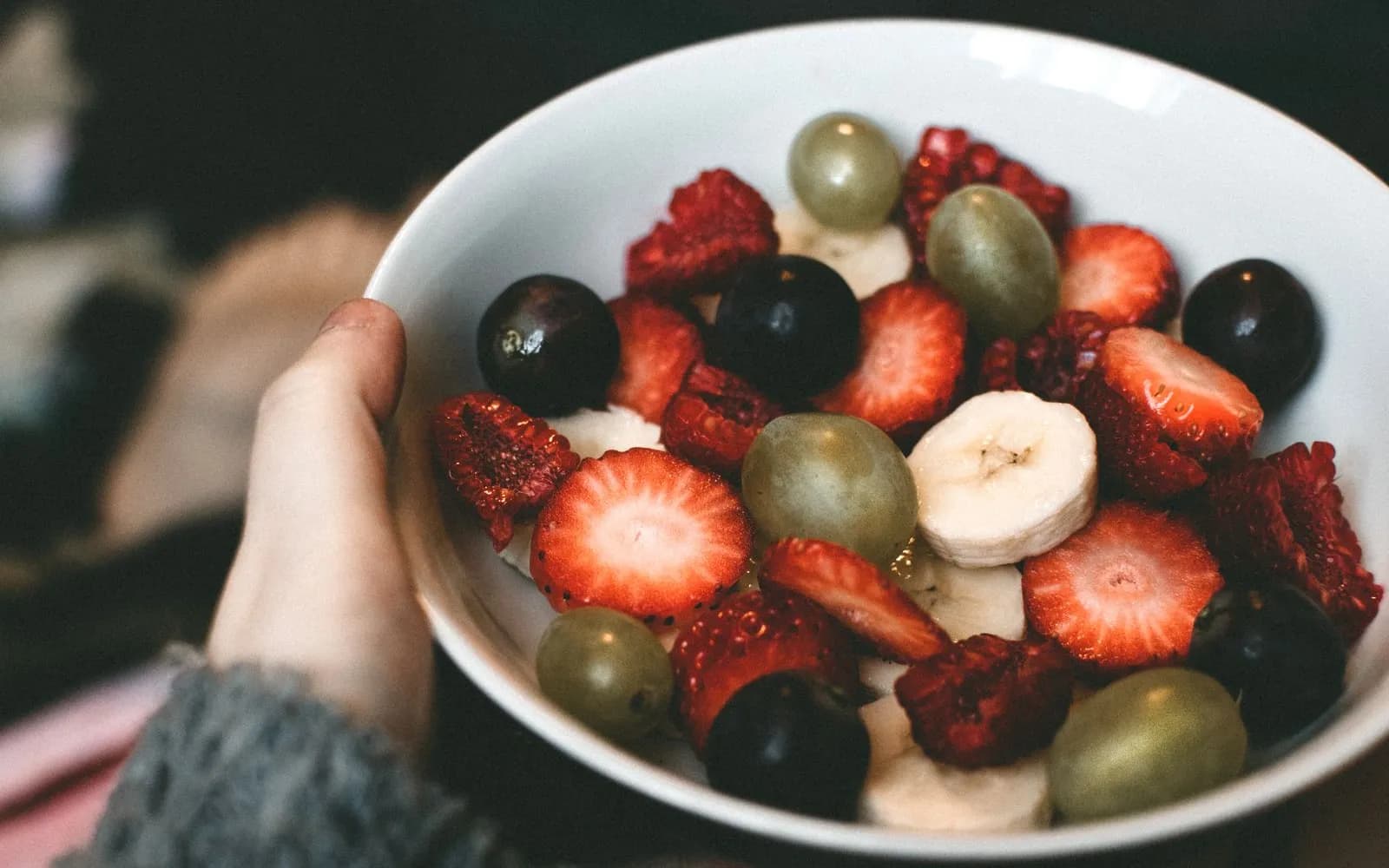
Fresh fruit comes first. The NHS lists fresh or tinned fruit (in juice, not syrup) and lower-sugar yoghurts as healthier snacks.
The sugar in whole fruit and plain yoghurt is not the kind to cut. The NHS says sugar in milk and fruit does not count as free sugars, unless the fruit is juiced or puréed.
| Snack | Amount | Calories |
|---|---|---|
| Sugar-free jelly | 150g | 9 |
| Melon | 80g | 15 |
| Strawberries | 80g (about 7) | 24 |
| Kiwi fruit | 80g | 35 |
| Grapes | 80g | 52 |
| Apple | 150g | 77 |
| Banana | 100g | 81 |
| Low-fat plain yoghurt with raspberries | 150g + 80g | 106 |
Sources: UK government CoFID; NHS 5 A Day portions
Each 80g of fruit is one of your 5 A Day. Pick two from the table and buy them this week.
What are good low calorie sweet treats?
Smaller portions, or something other than chocolate. The NHS says chocolate, cakes and biscuits should be eaten less often and in smaller amounts.
Source: UK government CoFID
Love chocolate? A small piece beats a whole bar. The calories come from the amount, not the colour.
| Craving | Swap for |
|---|---|
| Chocolate | A lower-calorie hot instant chocolate drink |
| Biscuits | Oatcakes, oat biscuits or unsalted rice cakes |
| Cake | A plain currant bun, fruit scone or malt loaf |
| Pudding | Fruit, lower-sugar rice pudding or plain lower-fat yoghurt |
Source: NHS: cut down on sugar
Skip cereal bars. The NHS says many are high in sugar and fat, despite their healthy image. To compare bars, see healthy protein bars.
Is dried fruit a healthy snack?
It counts as fruit, but it’s not a good between-meal snack. A 30g handful counts as one of your 5 A Day, the same as 80g of fresh fruit.
Sources: UK government CoFID; NHS 5 A Day portions
The NHS says dried fruit sticks to your teeth and can be high in sugar. So it’s best as part of a meal, as dessert, not as a between-meal snack.
Fruit juice and smoothies work the same way. Keep them to 150ml a day, a small glass, with a meal.
So stir raisins into your porridge. Between meals, reach for fresh fruit.
Are sugar-free treats healthy?
They can help you cut sugar. The NHS says approved sweeteners are a safe and acceptable alternative to sugar.
Two catches. Sweeteners such as sorbitol and xylitol can have a laxative effect in large amounts. And aspartame is not suitable for people with PKU, a rare inherited condition.
Watch “low fat” too. The NHS warns that lower fat does not necessarily mean low sugar. 150g of low-fat fruit yoghurt has 117 calories and 19.1g of sugar.
Check a sweet treat in 3 steps
- 1
Sugars line
More than 22.5g per 100g is high. 5g or less is low.
- 2
Ingredients
Sugar near the top means it’s likely high in free sugars.
- 3
Other names
Honey, syrups and fruit juice concentrate are sugars too.
Sources: NHS food labels; NHS: sugar
Run these checks on the next treat you buy. For daily limits, see how much sugar you can have a day.
How can I cut down on sweet snacks?
Have less, not none. The NHS asks a fair question: if you had sugary snacks less often, would you actually enjoy it more?
Six ways to have fewer sweet snacks
- Have 1 biscuit instead of 2. If a snack has 2 bars, share one or save it.
- Buy smaller packs, not family bags.
- Put snacks in a bowl. Do not eat straight from the packet.
- Do not keep sweets in the house. If they are not there, you cannot eat them.
- Keep dried fruit, juice and smoothies for mealtimes.
- Swap a fruit yoghurt for plain yoghurt with chopped fruit.
Sources: NHS: cut down on sugar; NHS Better Health; NHS Healthier Families; NHS 5 A Day portions
Trying to lose weight? The NHS suggests you cut around 100 calories from your snacks. See healthy snacks for weight loss and how many calories to eat to lose weight.
When to speak to a GP
Speak to a GP if:
- You have a medical condition or a special diet for your health. The NHS says talk to a GP before you change how you eat.
- You have an eating disorder, or have had one in the past. The charity Beat can also help.
- You feel thirsty all the time, pee more than usual, feel very tired or lose weight without trying. Other signs include blurred vision, cuts or wounds that take longer to heal, and itching around the penis or vagina, or thrush that keeps coming back. These can be symptoms of type 2 diabetes.
Toothache, or a sharp pain when you eat or drink? See a dentist.