What’s a good high-fibre breakfast?
Start with oats, bran flakes or beans on wholemeal toast. Then choose your topping well. A banana adds about 1 g of fibre. The same weight of berries adds over 3 g.
On this page
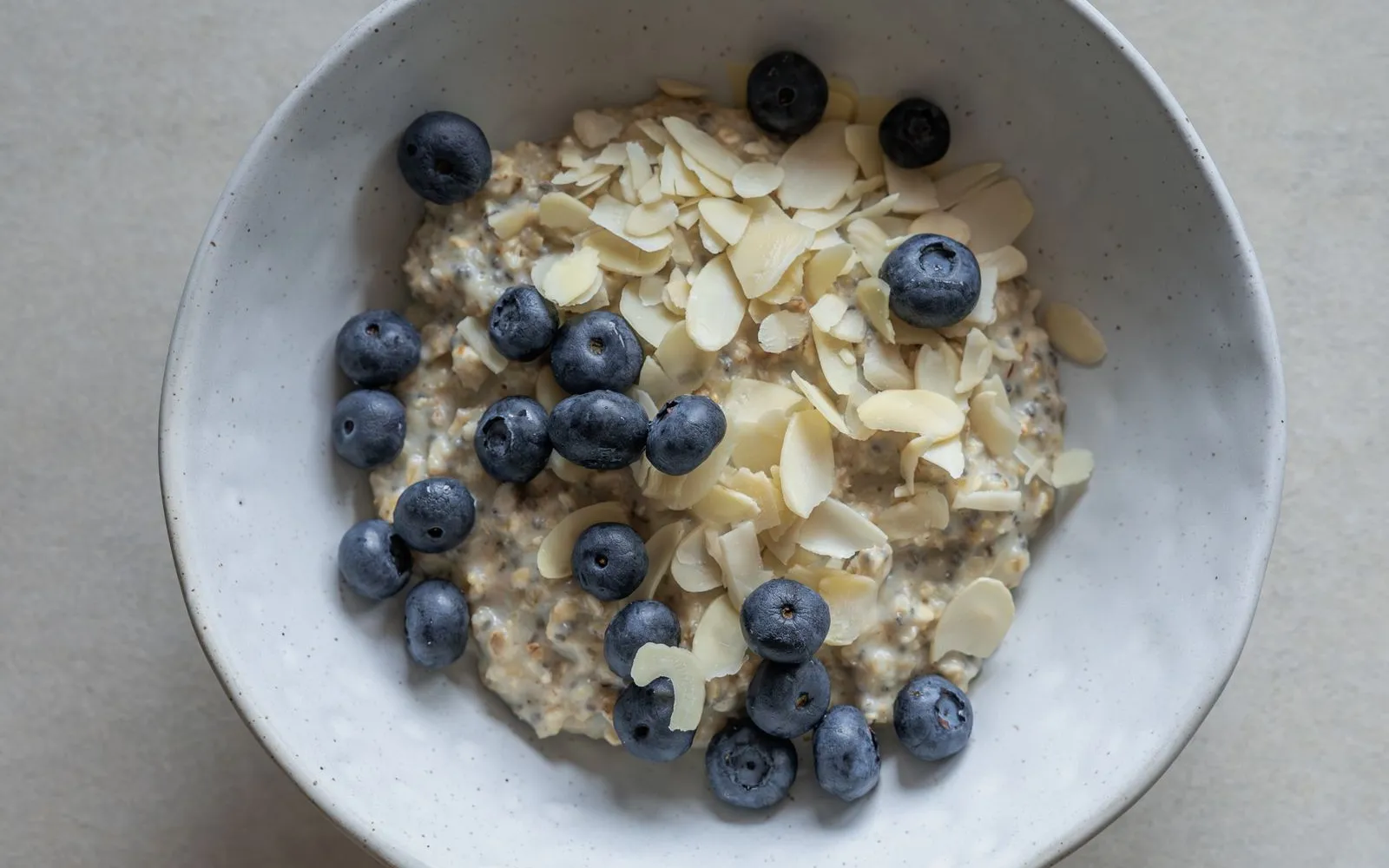
What is a high-fibre breakfast?
Pick a wholegrain base, then add fruit, nuts or seeds. Adults are advised to eat 30 g of fibre a day, but most eat about 20 g.
No UK guideline sets an amount for breakfast. But 8 g is over a quarter of your 30 g, and all five breakfast ideas below reach it.
| Food | Portion | Fibre |
|---|---|---|
| Baked beans | 200 g | 8.5 g |
| Wholemeal bread | 80 g | 5.8 g |
| Bran flakes | 40 g | 5.4 g |
| Porridge oats | 45 g dry | 3.5 g |
| Berries | 80 g | 3.3 g |
| Dried apricots or dates | 30 g | 3 g |
| Almonds | 20 g | 2 g |
| Sunflower seeds | 20 g | 1.6 g |
| Banana | 80 g | 1.1 g |
| Apple | 80 g | 1 g |
Source: British Nutrition Foundation
The exact amount varies by brand and portion size, so check your own pack.
Your next step: pick one base you like from the top half, and one topping that gives 2 g or more.
Which breakfast cereals are high in fibre?
The NHS suggests plain wholewheat biscuits, plain shredded wholegrain or porridge. Bran flakes and muesli with no added sugar are good picks too, says the British Nutrition Foundation.
Shopping for a new one? A food can say high fibre if it has at least 6 g per 100 g. It can say source of fibre at 3 g or more.
- Below 3 g per 100 gNot a source of fibre.
- 3 to just under 6 g per 100 gSource of fibre.
- 6 g per 100 g or aboveHigh fibre.
Sources: NHS; British Nutrition Foundation
Oats have 7.8 g per 100 g and bran flakes 13.5 g. But you don’t eat 100 g. A 40 g bowl of bran flakes gives 5.4 g.
To count your bowl, times the fibre per 100 g by your grams, then divide by 100.
Check the sugar line too. The NHS lists sugary breakfast cereals as a source of free sugars. It suggests a wholegrain lower sugar cereal with fruit sliced over the top.
Which fibre foods can I add to breakfast?
Berries, nuts, seeds and dried fruit add the most. The topping can matter as much as the bowl.
Source: British Nutrition Foundation
That’s the berry swap. Trading 80 g of banana for 80 g of berries adds about 2 g. A small handful of almonds adds another 2 g.
Like banana? The NHS suggests chopping one over your cereal towards your 5 A Day. Just add berries, nuts or seeds as well.
Dried fruit is sticky and can raise the risk of tooth decay. So the NHS says it’s better eaten as part of a meal, and breakfast counts.
Six ways to add fibre to your breakfast
- Swap a sugary cereal for porridge, bran flakes or a plain wholewheat biscuit cereal.
- Top your cereal or porridge with 80 g of berries.
- Add 20 g of almonds or seeds.
- Stir linseeds into yoghurt.
- Swap white toast for wholemeal.
- Add 30 g of dried apricots or dates to breakfast, not as a snack.
Sources: BDA; British Nutrition Foundation; NHS
Fibre-rich breakfast ideas, sweet and savoury
Each of these gives 8 g of fibre or more. Two come from the NHS and one from the British Dietetic Association (BDA).
| Breakfast | What’s in it | Fibre |
|---|---|---|
| Beans on toast with veg (NHS) | Reduced-salt and sugar beans, pepper, mushrooms, cherry tomatoes, wholemeal toast | 10.9 g |
| Overnight oats (BDA) | 50 g oats, 50 g frozen raspberries, 100 g yoghurt or milk, 40 to 50 g walnuts or almonds | About 9.3 g |
| Porridge with berries and almonds | 45 g oats, 80 g berries, 20 g almonds | About 8.8 g |
| Bran flakes with berries | 40 g bran flakes, 80 g berries, milk | About 8.7 g |
| Peanut butter toast (NHS) | 2 slices of wholemeal toast with peanut butter, then a medium orange | About 8.3 g |
Sources: NHS recipe; BDA; British Nutrition Foundation; NHS
Prefer savoury? The NHS beans on toast has 10.9 g of fibre and 247 kcal a serving. That’s over a third of your day.
Short of time in the morning? Make overnight oats the night before.
Watch for small bowls. The NHS porridge with yoghurt and berries gives 3.7 g a serving. Each bowl has about 37 g of oats and 25 g of berries.
Pick one breakfast from the table to try this week. For more ideas, see healthy breakfast ideas and high-protein, high-fibre meals.
Will a high-fibre breakfast make me bloated?
It can if you add a lot at once. The BDA says to build up gradually to avoid bloating and gas, so your gut can adjust.
Drink plenty too. Fibre draws water into the bowel, so you may become dehydrated if you don’t drink enough.
Have IBS (irritable bowel syndrome)? Bran may make symptoms worse for some people, while oats are often better tolerated.
If fibre gives you symptoms, cut back a little, then build up more slowly. If symptoms carry on, speak to your GP or a dietitian.
Start with one change, such as berries on your usual cereal. For the rest of the day, see high-fibre foods and how much fibre you need a day.
When to speak to a GP
More fibre won’t fix every gut problem. The NHS says see a GP if:
- You’re constipated and it’s not getting better with treatment, or you’re constipated regularly.
- You’re regularly bloated, or you have tummy pain.
- You have blood in your poo, or you’ve lost weight without trying.
- You notice a sudden change in how you poo, or you’re constipated and tired all the time.
- A medicine is causing your constipation, such as opioid painkillers.
Never stop or change a prescribed medicine without your prescriber.