High protein meals and dinner ideas
Build each meal on 100 g of chicken, salmon or cod. That’s 24 to 32 g of protein, more than most adults need at one meal. Building muscle? Piling it into dinner isn’t the answer.
On this page
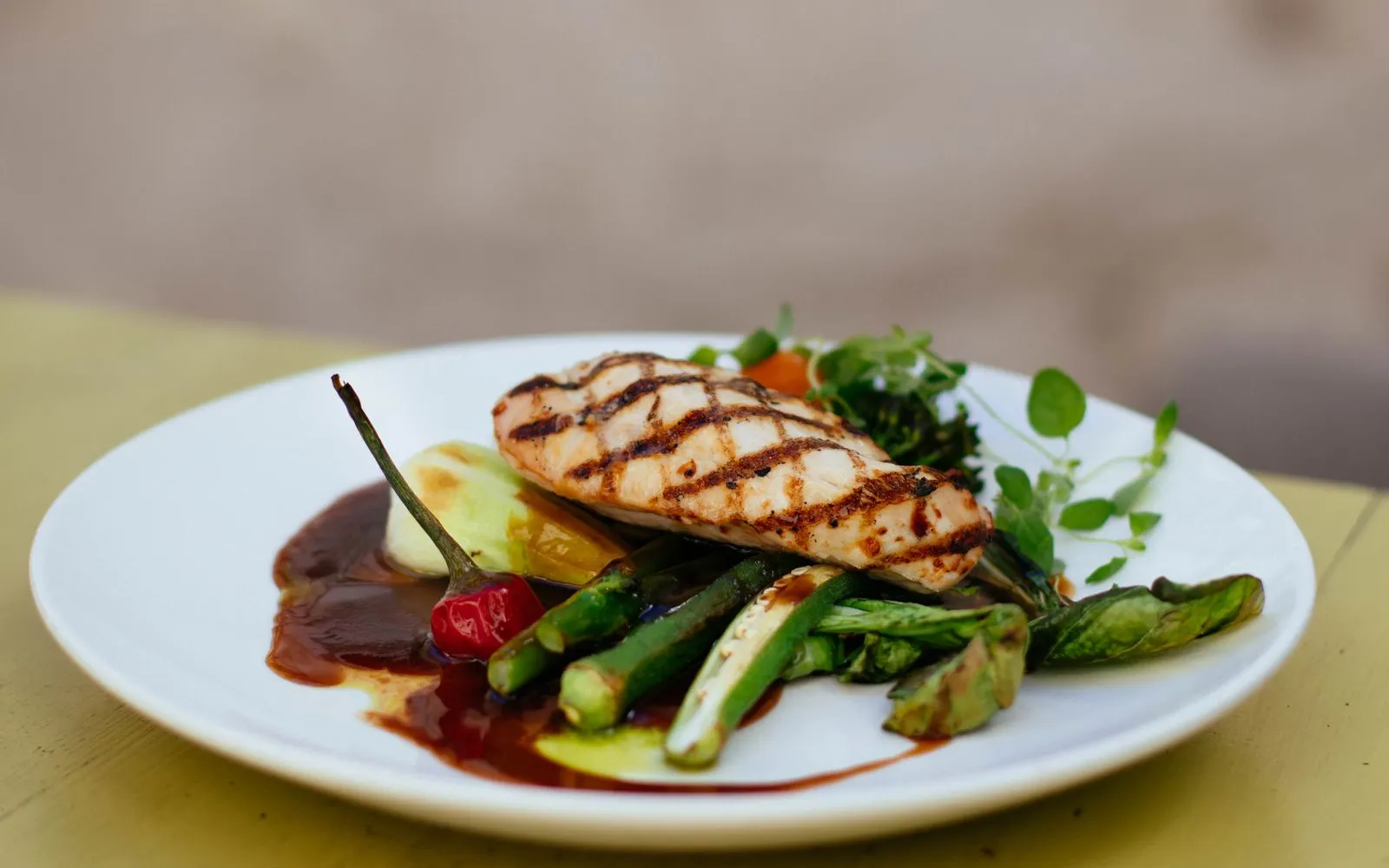
What is a good high protein meal?
One main protein food, plus beans or lentils if you like. Grilled chicken breast has about 32 g of protein per 100 g. Baked cod has about 24 g.
| Dinner | Protein foods (cooked weight) | Protein |
|---|---|---|
| Chicken stir-fry | 125 g chicken breast | About 40 g |
| Cod and lentils | 140 g baked cod, 100 g red lentils | About 41 g |
| Steak and bean chilli | 70 g lean steak, 200 g kidney beans | About 36 g |
| Salmon traybake | 140 g grilled salmon | About 34 g |
| Lentil and tofu curry | 200 g red lentils, 200 g tofu | About 31 g |
| Prawn and chickpea curry | 100 g prawns, 200 g chickpeas | About 30 g |
Source: British Nutrition Foundation
Rice, pasta and bread add a little on top.
Adults need 0.75 g of protein per kg of body weight a day. Most of us probably already get enough. UK men eat about 85 g a day and women about 67 g.
For a 75 kg man that’s 56 g, or about 19 g a meal. A 60 kg woman needs 45 g, or 15 g a meal. Every dinner above clears that easily.
Pick two for this week and add them to your shopping list.
How much protein should a meal have for muscle gain?
More than usual. To gain muscle, the British Dietetic Association (BDA) says you need about 1.6 to 1.7 g per kg a day.
You also need resistance training, like weights, and enough food and carbs. Protein alone won’t build muscle.
For a 75 kg person, 1.6 g per kg is 120 g a day. That’s about twice the 56 g they’d need without training.
Sources: British Nutrition Foundation; British Dietetic Association
That’s why one huge dinner isn’t the answer. The BDA says to spread your protein evenly through the day. Think about 40 g at each of three meals, not a light day and a huge dinner.
The BDA adds that a balanced diet with enough food usually covers it, even for athletes. So check your breakfast first. For more, see protein to build muscle and high protein breakfast ideas.
What are quick, easy high protein meals?
Ones built from eggs and tins. A medium egg has about 6.4 g of protein, so three give about 19 g.
| Meal | What goes in | Protein |
|---|---|---|
| Cheese omelette | 3 medium eggs, 30 g cheddar | About 27 g |
| Tuna pasta | 100 g tuna in brine, drained | About 25 g |
| Prawn stir-fry | 150 g cooked prawns | About 23 g |
| Beans on toast | 1 large can (400 g) baked beans | About 20 g |
| Quorn chilli | 165 g Quorn mince | About 20 g |
Sources: British Nutrition Foundation; British Egg Information Service; British Dietetic Association
Keep eggs, tinned tuna and baked beans in stock. Then a high protein dinner is always a few minutes away.
Cooking for the week? See high protein meal prep.
How do I make my usual dinner higher in protein?
Add one food to a meal you already make. Beans and lentils have less protein per 100 g than meat, so use a good portion.
Six ways to add protein to dinner
- Stir 200 g of tinned kidney beans into a chilli for about 14 g more.
- Add 100 g of tinned chickpeas to a curry or stew for about 7 g more.
- Spoon 150 g of cottage cheese onto a jacket potato for about 14 g.
- Slice 2 medium boiled eggs into a salad or rice dish for about 13 g more.
- Add 100 g of cooked prawns to a pasta sauce for about 15 g more.
- Swap meat for 165 g of Quorn mince for about 20 g.
Sources: British Nutrition Foundation; British Egg Information Service; British Dietetic Association
Meat-free? See high protein vegetarian meals.
Watching calories too? See high protein, low calorie meals.
Are high protein meals healthy?
They can be, if you pick the right protein.
The NHS says beans, peas and lentils are good alternatives to meat, as they’re low in fat and give fibre. It also says to choose lean cuts and eat less red and processed meat.
Too much red and processed meat probably raises your risk of bowel cancer. If you eat more than 90 g (cooked weight) a day, the NHS says to cut down to 70 g.
Fish is a good swap. The NHS says to have at least 2 portions a week, and 1 of them oily, like salmon.
Girls and women who haven’t been through the menopause should have no more than 2 portions of oily fish a week. If you’re pregnant or trying for a baby, have no more than 4 cans of tuna a week.
So swap one red meat dinner a week for fish or beans before you add more. Over 40? See how much protein after 40.
When to speak to a GP
Speak to a GP if:
- you keep losing weight without changing your diet or exercise
- you’re losing weight and have other symptoms too (go as soon as possible)
- you have kidney disease and blood tests show high potassium and phosphate (minerals your kidneys usually clear)
With kidney disease, the NHS says you may not need a special diet. If those two minerals are high, you may be referred to a dietitian.