Insulin resistance diet: what to eat
Swap sugary drinks and white carbs first. You don’t need to cut out carbs, or even fruit. But if you carry extra weight, one change may matter more than any food.
On this page
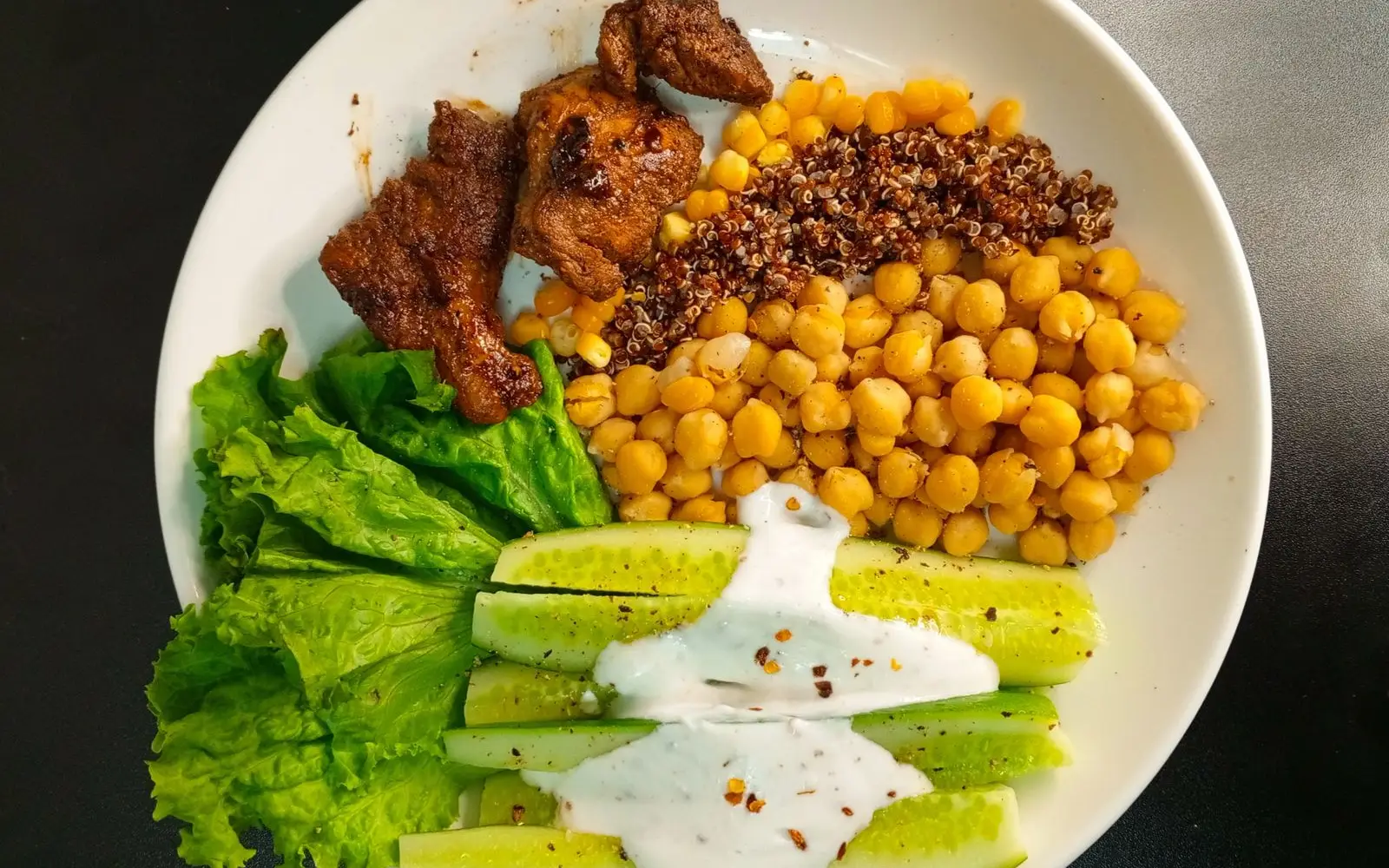
What should I eat with insulin resistance?
Eat more fruit, veg, wholegrains, beans and fish. Have fewer sugary drinks, white carbs, and red and processed meats. Diabetes UK links those last three to a higher risk of prediabetes.
Prediabetes means your blood sugar is higher than normal, but not high enough to be type 2 diabetes.
Insulin resistance means your body does not respond to insulin properly. Insulin is the hormone that helps keep your blood sugar steady.
No food is banned. Diabetes UK calls it “a question of choosing healthier foods more often”.
| Swap this | For this |
|---|---|
| Cola or lemonade | Water, or diet or no added sugar versions |
| White bread, rice and pasta | Wholemeal bread, brown rice and wholemeal pasta |
| Sugary breakfast cereal | Porridge oats or unsweetened oat muesli |
| Bacon, ham and sausages | Beans, lentils, eggs, fish or chicken |
| Crisps, biscuits and cake | Fruit, unsalted nuts or plain yoghurt |
| Butter, coconut or palm oil | Olive, sunflower or rapeseed oil, or a spread made from them |
Sources: Diabetes UK; Diabetes UK: GI
Don’t try all six at once. Diabetes UK suggests you pick one or two to start.
Six changes to start this week
- Swap sugary drinks for water, or diet or no added sugar versions.
- Choose brown rice, wholemeal pasta and wholemeal bread over white.
- Get protein from beans, lentils, eggs, fish or chicken instead of bacon, ham and sausages.
- Keep fruit juice or smoothies to one small glass (150ml) a day.
- Snack on fruit, unsalted nuts or plain yoghurt instead of crisps, biscuits or cake.
- Walk, or do something that leaves you out of breath, for at least 2.5 hours across the week.
Sources: Diabetes UK; NHS
Do I need to cut carbs?
No. The type of carb matters first. White carbs raise blood sugar more quickly than wholegrain ones.
The amount matters too. Diabetes UK says how much carb you eat has a bigger effect on blood sugar than the type alone.
| Food | Carbs |
|---|---|
| Medium slice of bread | About 15 to 20g |
| Regular apple | About the same as a slice of bread |
| Large jacket potato | Up to 90g |
| 1 litre of orange juice | About 90g |
Source: Diabetes UK: low-carb
In type 2 diabetes, low-carb diets can help weight and blood sugar in the short term. There’s no evidence they beat other diets for diabetes in the long term.
Want fewer carbs? Cut chips, cake, chocolate, biscuits and sugary drinks, not fruit.
On insulin or diabetes medicine? Cutting carbs may mean your dose needs to change, so talk to your diabetes team first. Never stop or change a prescribed medicine without your prescriber.
Can I eat fruit with insulin resistance?
Yes, any fruit. Diabetes UK says it’s a myth that you can’t eat grapes, bananas or mango.
Watch the portion. A handful of grapes or a heaped tablespoon of raisins is one.
Juice and smoothies are the exception. Keep them to one small glass (150ml) a day, and eat whole fruit instead where you can.
Aim for at least 5 a day, such as three veg and two fruit. Apples, grapes, berries and leafy greens have been linked with a lower risk of type 2 diabetes.
Fruit and veg also bring fibre. Adults should get 30g a day, but most get about 20g. See high-fibre foods for easy ways in.
Does losing weight help insulin resistance?
That one change is losing weight, if you carry extra. For prediabetes, Diabetes UK says it’s likely to have the biggest impact.
Fat stored in and around the liver and pancreas (the organ that makes insulin) can cause insulin resistance. Losing small amounts of weight can cut that fat. A high waist can be a clue, even at a healthy weight.
You don’t need to lose a lot. With prediabetes, losing 1% to 9% of your weight can help lower your average blood sugar.
Already a healthy weight? Food changes and more activity can still help insulin work better. If you’re underweight, losing more is not safe.
Go slowly if it feels hard. The NHS says a small change every week can make it easier.
Is there a PCOS insulin resistance diet?
No single one. The international PCOS guideline found no evidence that any one type of diet works better than another.
Any diet that follows normal healthy eating advice will have health benefits. The guideline warns against diets that are too strict or unbalanced.
A healthy lifestyle has benefits even if you don’t lose weight. The NHS, which now calls PCOS PMOS, says to eat a healthy, balanced diet. It also says to try to lose weight if you’re overweight.
So the swaps above fit PCOS advice too. For more, see PCOS weight loss.
When to speak to a GP
If you have prediabetes, Diabetes UK advises speaking to your GP first before you change your diet, lose weight or start a new activity. Also book an appointment if:
- You feel very tired, pee more than usual, feel thirsty all the time or lose weight without trying. These can be signs of type 2 diabetes.
- You have blurred vision, slow-healing cuts, or itching around your penis or vagina or repeated thrush. These can be signs too.
- You think you’re at risk of metabolic syndrome, a group of problems linked to insulin resistance.
- You take insulin or other diabetes medicine and want to try a very strict low-calorie diet. It may not be suitable.
- You’re underweight. Losing more weight is not safe to try.
Taking diabetes medicine and being sick, having diarrhoea or a very high temperature? Ask for an urgent GP appointment or call 111.
Want to know where you stand? See insulin resistance blood tests, lowering blood sugar naturally and the type 2 diabetes food list.