Is dry skin a menopause symptom?
Yes, dry, itchy skin is on the NHS list. It can start in perimenopause. Skin can lose nearly a third of its collagen within 5 years of menopause. One daily habit can slow skin ageing.
On this page
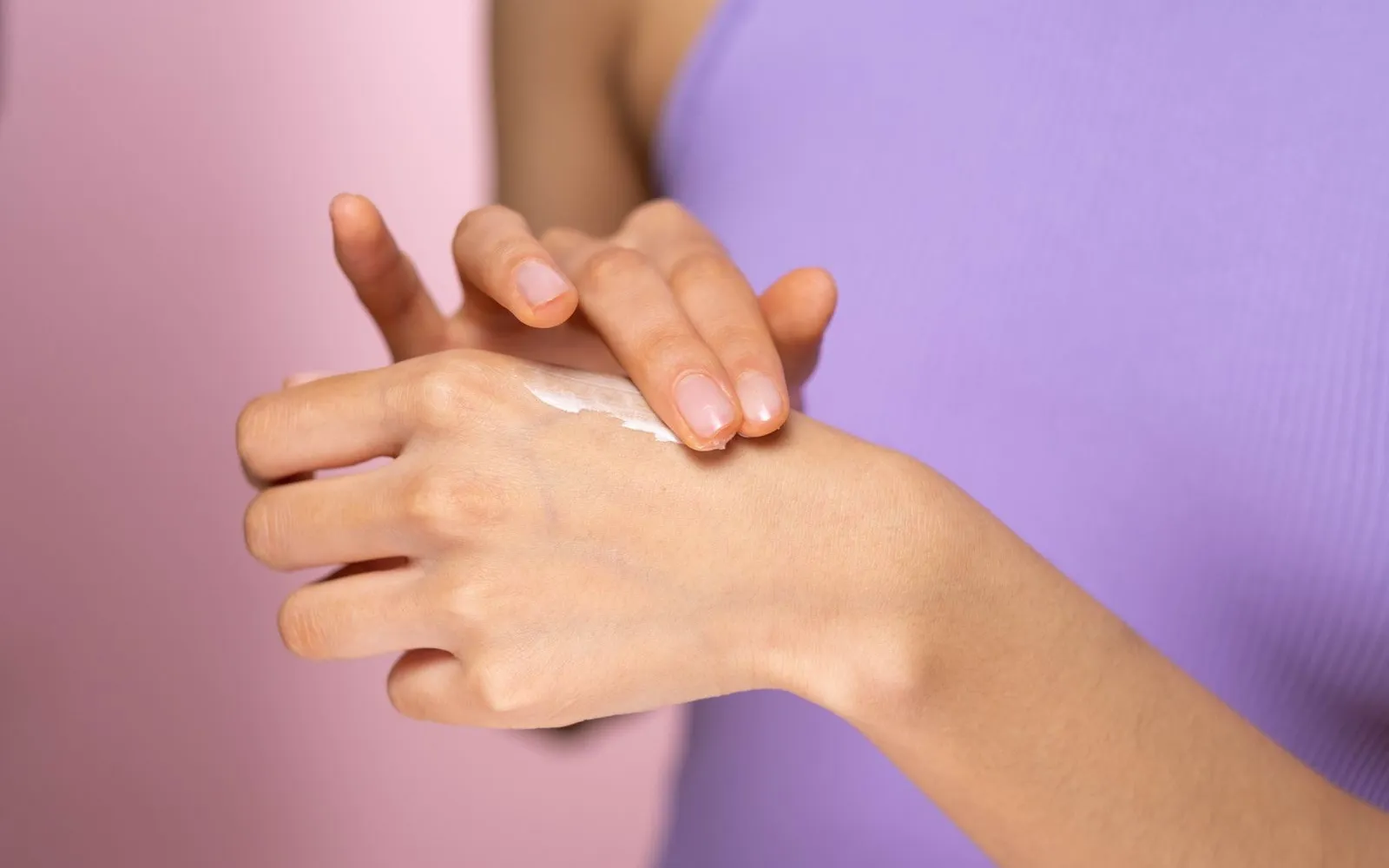
Is dry skin a symptom of menopause?
Yes. The NHS lists skin changes, including dry and itchy skin, as a menopause symptom.
It doesn’t wait for your periods to stop. The NHS says symptoms can happen in perimenopause, in menopause and after it. They usually last 7 to 9 years, sometimes longer.
Why? Skin doctors link falling oestrogen (a female hormone) to skin losing more water. Itching is common, and it often comes with dry skin.
| What you notice | What’s behind it |
|---|---|
| Dry, tight or flaky skin | Less oestrogen is linked to skin losing more water. |
| Itchy skin | Often caused by dry, cracked or irritated skin. |
| Thinner skin, more fine lines | Less collagen, the protein that gives skin its thickness. |
| Looser, less springy skin | Skin gets less elastic. |
| Spots as an adult | Possibly a shift in the balance of oestrogen and male-type hormones. |
Sources: NHS; NHS: itchy skin; Kamp 2022; Thornton 2013
Itchy skin after menopause usually gets better over time. Start with the steps below, and ask a pharmacist which products suit your skin.
How to treat menopause dry skin
Six NHS steps for dry, itchy skin
- Use an unperfumed moisturiser or emollient (a moisturising treatment you put straight on the skin) regularly, especially on your hands and face.
- Put it on straight after washing, a bath or a shower, when skin most needs moisture.
- Use a cream by day and an ointment at night if your skin is very dry.
- Swap soap and shower gel for a leave-on emollient, which cleans just as well.
- Keep baths and showers short, cool or lukewarm.
- Pat or tap itchy skin instead of scratching it, and keep your nails short.
Sources: NHS: emollients; NHS: itchy skin
Lotions are thin and not very moisturising. Ointments are greasy, so they suit very dry skin. You may have to try a few to find one you like.
Skip perfumed soaps, deodorants and moisturisers. Wear loose cotton or silk, and wash clothes in a laundry product for sensitive skin.
One safety point. Fabric with emollient on it can easily catch fire, so keep away from flames and cigarettes.
For which cream to buy, see the best moisturiser for mature skin.
Why does menopausal skin age faster?
Mostly collagen. It’s the protein that gives skin its thickness. When oestrogen falls, skin gets thinner, less elastic, drier and more wrinkled.
The drop is fast at first. Skin loses nearly a third of its collagen in the first 5 years after menopause. Over the 15 years after menopause, it loses about 2% a year.
The clock that matters is years since menopause, not your age. Studies show collagen loss tracks the years since your last period, not your birthday.
The next two sections cover what may slow it. For supplements, see collagen for women after menopause.
Does HRT help menopause skin?
Maybe for collagen, but not clearly for wrinkles. The NHS list of symptoms HRT can help doesn’t name skin. It names hot flushes, sleep, mood and vaginal dryness.
| Study | Who | What it found |
|---|---|---|
| Brincat 1987 | 106 women past menopause, 37 on hormone implants (thigh skin measured) | Collagen fell with years since menopause. Not in women on HRT. |
| KEEPS 2016 | Women aged 42 to 58, within 3 years of their last period, given HRT or a dummy treatment for 4 years | No difference in wrinkles or skin stiffness. |
Sources: Brincat 1987; KEEPS 2016
The second study is the stronger kind. Women were picked at random for HRT or a dummy treatment. It found HRT doesn’t appear to affect wrinkles at most spots on the face.
Thinking about HRT for other symptoms? Ask your GP. Never stop or change a prescribed medicine without your prescriber. See HRT side effects.
Can you slow skin ageing after menopause?
That one daily habit is sunscreen. In a trial of 903 adults under 55, daily sunscreen users had 24% less skin ageing over 4.5 years than people who used it when they liked.
Sun protection the NHS way
- 1
SPF 30
At least SPF 30 for UVB.
- 2
4-star UVA
At least 4 stars on the label.
- 3
Shade
11am to 3pm, March to October.
- 4
Cover up
Clothes and shade too. Don’t rely on sunscreen alone.
Sources: NHS: sun safety; Hughes 2013
That trial was in men and women under 55 in Australia, not women in menopause. But it’s the clearest test of a daily habit on skin ageing.
Put it on your face, neck and hands each morning. More on the evidence: does sunscreen stop skin ageing?
When to speak to a GP
A GP may look at your skin, prescribe a cream or arrange a blood test. Book an appointment if:
- Itchy skin affects your daily life, is severe or is all over your body.
- Itching doesn’t get better with self care, keeps coming back, or is caused by a new rash, lump or swelling you’re worried about.
- A growth on your skin gets bigger or changes colour or texture, or skin hurts, itches, bleeds, crusts or scabs for more than 4 weeks.
- You’re over 45 with menopause symptoms and thinking about HRT, or under 45 with menopause symptoms.
Itching in and around the vagina is a separate symptom. See vaginal dryness in menopause. For the full list, see perimenopause symptoms and blood tests for itchy skin.