Dumbbell forearm exercises
Three moves: two wrist curls and a hammer curl. Do them on at least 2 days a week. But the classic palms-up wrist curl works only one side of your forearm.
On this page
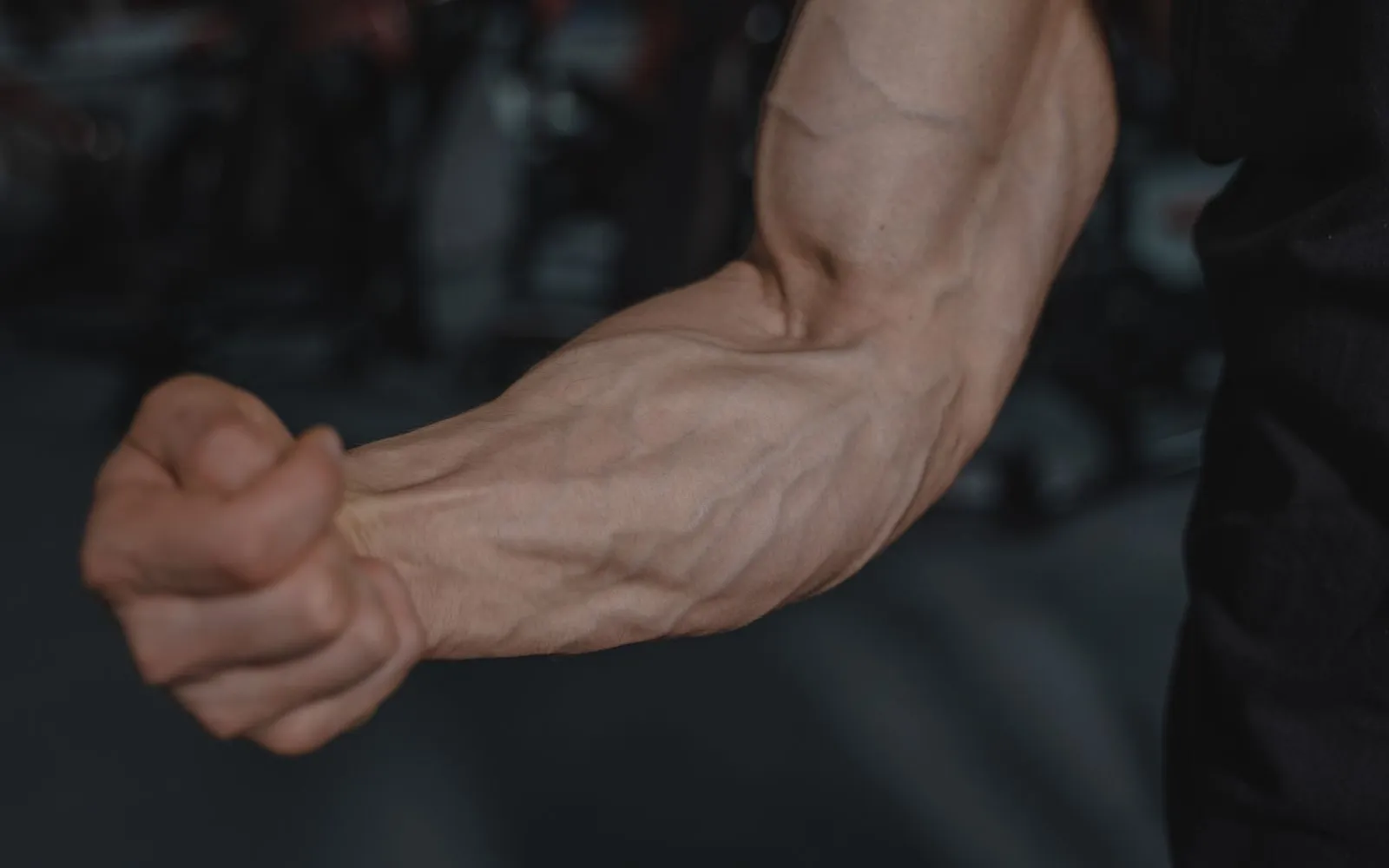
What are the best dumbbell forearm exercises?
Wrist curls with your palms up, wrist curls with your palms down, and hammer curls. Rest your forearms on a bench or your thighs so only your wrists move.
| Exercise | Which part it works | How to do it |
|---|---|---|
| Wrist curl, palms up | Palm side of the forearm | Let the weight lower slowly, then curl your wrists up towards you. |
| Wrist curl, palms down | Back of the forearm | Same set-up, palms down. Lift the back of your hands up. |
| Hammer curl | Forearms and biceps | Stand, palms facing each other. Curl up, then lower under control. |
| Wrist turn | Muscles that turn the hand | Hold the dumbbell upright. Slowly turn it palm down, then palm up. |
| Thumb-up wrist lift | Wrist, side to side | Thumb on top, wrist straight. Tip the weight down, then up. |
Sources: ACE; ACE; ACE; Catalyst Athletics; Catalyst Athletics
The palms-up curl works the muscles that bend your wrist towards your palm. The other side is the back of your forearm. The palms-down curl works those muscles.
Weightlifting coach Greg Everett adds the palms-down curl to balance all the gripping his lifters do.
Next session, pair each palms-up set with a palms-down set.
How do I build forearm muscle?
Train them like any other muscle. The NHS says strength work builds muscle strength and size.
One forearm session, start to finish
- 1
Go light
Start with a light weight and build up over weeks.
- 2
8 to 12 reps
That counts as 1 set. Do 2, or 3 for more benefit.
- 3
Near the limit
End each set when one more rep would be hard without help.
- 4
2 days a week
Train on at least 2 days a week.
Source: NHS
Light or heavy? Both can work. A review of 21 studies found muscle grew about the same with light or heavy weights, when every set went to the last possible rep.
Heavy weights built more strength for your single heaviest lift.
Think of it like filling a bucket with a cup or a jug. Both fill it if you keep going to the top.
More sets also helped. Across 15 studies of muscles in general, not forearms alone, more sets a week gave more muscle growth.
Everett uses sets of 10 to 30 for wrist curls and 8 to 20 for hammer curls. Once the top of your range feels easy, add a little weight. Our beginner strength guide shows how.
Can I do forearm exercises at home?
Yes. The wrist moves work sitting on a sofa edge or a kitchen chair, with your forearms on your thighs.
| Swap | Use it for |
|---|---|
| Filled water bottles | Light weights for curls. The NHS suggests them for biceps curls. |
| Heavy shopping bags | Carrying them counts as strength work, says the NHS. |
| Your thighs | A rest for your forearms during wrist curls. |
Sources: NHS; NHS; Catalyst Athletics
Carries and hangs train your grip more than your wrists. Our grip strength guide gives times and distances.
Want the rest of your body too? Fit these moves into a full-body dumbbell workout or a home strength plan.
How do I improve wrist strength?
Move your wrist every way it goes: up, down, side to side and turning. That means the curls plus the wrist turn and the thumb-up lift.
Go slow at the ends. ACE, a US fitness body, says to slow down at each end of the turn to control the weight.
Wrist turn too hard? Everett says the closer you hold to the weighted end, the easier it gets.
Your forearm week
- Train your forearms on at least 2 days a week.
- Do wrist curls palms up and palms down, 2 or 3 sets of 8 to 12 reps.
- Add a hammer curl, with your palms facing each other.
- End each set when one more rep would be hard without help.
- Keep hold as you lower. Letting the dumbbell roll to your fingertips raises the risk of wrist injury.
- If your wrist hurts, rest it and avoid lifting heavy or gripping tightly.
Sources: NHS; ACE; NHS: wrist pain
Should I train through wrist or forearm pain?
No. For a sore wrist, the NHS says don’t lift heavy objects or grip anything too tightly. Rest it and keep it moving with gentle exercises.
Pain on the outside of the elbow may be tennis elbow. It can feel worse when you grip or move your wrist, and can hurt in your forearm too.
Not better after 6 weeks at home? Physio may help, and can include strengthening exercises for your wrist and forearm. In many areas you can refer yourself to an NHS physio.
Numb or tingling fingers, usually worse at night, may be carpal tunnel syndrome. The NHS says cut down on things that make you bend your wrist often or grip hard.
When to speak to a GP
Haven’t exercised for a while, or have a health condition? The NHS says to speak to your GP first. See a GP if:
- Wrist pain stops normal activities, gets worse, keeps coming back or hasn’t improved after 2 weeks at home.
- You have any tingling or loss of feeling in your hand or wrist, or you have wrist pain and diabetes.
- Your wrist is painful, warm, swollen and stiff, or hurts and you feel unwell with a high temperature.
- Elbow pain lasts after at least 2 weeks of rest and self-care.
Contact 111 if any of these happen. They may be signs of a break or an infection.
- You have severe wrist pain.
- You feel faint, dizzy or sick from the pain, or feel unwell, hot, cold or shivery.
- You heard a snap, grinding or popping noise when you hurt it.
- You can’t move your wrist or hold things.
- Your wrist has changed shape or colour, or has a very painful, hot or red lump.
- You’ve lost feeling in part or all of your hand.
Hurt your arm or wrist? Go to A&E or call 999 if:
- it’s numb, tingling or has pins and needles
- you have a bad cut that is bleeding heavily
- a bone is sticking out of your skin
- it has changed colour or shape, or is at an odd angle