Which fruits are high in protein?
Passion fruit, at about 2 g a portion. Few fresh fruits come close. But no fruit is truly high in protein. The protein in a fruit snack comes from what you eat it with.
On this page
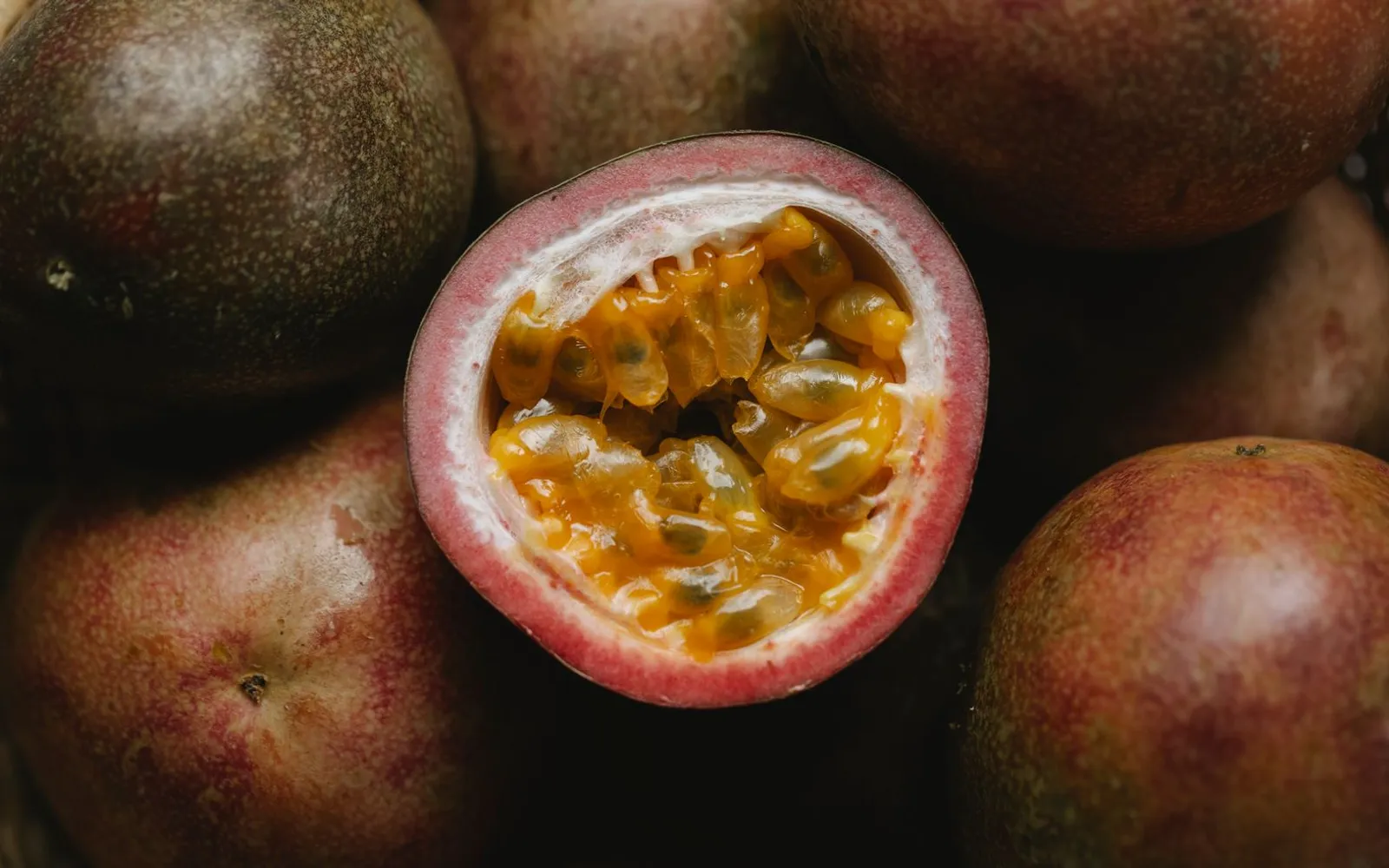
Which fruits are highest in protein?
Passion fruit tops the common fresh fruits. The UK food tables give it 2.6 g of protein per 100 g. Avocado and physalis (Cape gooseberry) come next, at 1.8 g.
The NHS counts one adult portion of fruit as 80 g. That’s about 1 banana, 1 apple or 7 strawberries.
| Fresh fruit | Per 100 g | In 80 g |
|---|---|---|
| Passion fruit | 2.6 g | 2.1 g |
| Avocado | 1.8 g | 1.4 g |
| Physalis | 1.8 g | 1.4 g |
| Jackfruit | 1.3 g | 1.0 g |
| Pomegranate | 1.3 g | 1.0 g |
| Banana | 1.2 g | 1.0 g |
| Cherries | 1.2 g | 1.0 g |
| Blackberries | 1.1 g | 0.9 g |
Sources: UK food tables (CoFID); NHS
So even the top fruit gives about 2 g a portion. Pick passion fruit or avocado if you want the most from fruit. Then plan your protein around other foods.
How much protein is in a banana, apple or berries?
Under 1 g a portion for most of them. A banana has 1.2 g per 100 g, so about 1 g. Apples and strawberries give about half a gram.
| Fresh fruit | Per 100 g | In 80 g |
|---|---|---|
| Blueberries | 0.9 g | 0.7 g |
| Orange | 0.8 g | 0.6 g |
| Kiwi fruit | 0.8 g | 0.6 g |
| Guava | 0.8 g | 0.6 g |
| Mango | 0.7 g | 0.6 g |
| Grapes | 0.7 g | 0.6 g |
| Apple | 0.6 g | 0.5 g |
| Strawberries | 0.6 g | 0.5 g |
| Pear | 0.3 g | 0.2 g |
Source: UK food tables (CoFID)
Guava often sits near the top of online lists. The UK food tables give it just 0.8 g per 100 g, the same as an orange.
Swapping an apple for a banana adds only about half a gram. Choose fruit you enjoy, and look elsewhere for protein.
Is dried fruit high in protein?
It looks higher per 100 g. Dried apricots have 4.8 g per 100 g, almost twice as much as passion fruit.
But a portion of dried fruit is only about 30 g. That’s 1 heaped tablespoon of raisins, 2 figs or 3 prunes.
| Dried fruit | Per 100 g | In 30 g |
|---|---|---|
| Apricots | 4.8 g | 1.4 g |
| Figs | 3.6 g | 1.1 g |
| Pineapple | 3.3 g | 1.0 g |
| Raisins | 3.0 g | 0.9 g |
| Prunes | 2.8 g | 0.8 g |
| Sultanas | 2.7 g | 0.8 g |
| Dates | 2.4 g | 0.7 g |
Sources: UK food tables (CoFID); NHS
So per portion, dried apricots give less protein than fresh passion fruit.
The NHS says dried fruit can be high in sugar and bad for your teeth. Have it as part of a meal, not as a snack between meals.
For more on sugar and portions, see is dried fruit healthy.
Can fruit help you hit your daily protein?
Only a little. UK adults need about 0.75 g of protein per kg of body weight a day. That’s 45 g for a 60 kg woman and 56 g for a 75 kg man.
Sources: UK food tables (CoFID); British Nutrition Foundation
On average, people in the UK already eat more protein than they need. But athletes and older adults may need more.
Work out your own number in how much protein you need a day.
How to make a fruit snack high in protein
Eat it with a protein food. That’s where the protein in a fruit snack really comes from. The British Nutrition Foundation says milk, yogurt, cheese, nuts and nut butters all provide protein.
| Add this to fruit | Protein per 100 g | Calories per 100 g |
|---|---|---|
| Quark | 14.6 g | 74 |
| Cottage cheese, reduced fat | 10.6 g | 68 |
| Fromage frais (a soft fresh cheese), virtually fat free | 7.7 g | 49 |
| Greek-style yogurt, plain | 5.7 g | 133 |
| Low fat plain yogurt | 4.8 g | 57 |
| Peanut butter | 22.8 g | 607 |
| Almonds | 21.2 g | 554 |
Source: UK food tables (CoFID)
Nuts and peanut butter are high in protein but far higher in calories. Use a small amount. Yogurts vary a lot by brand, so check the protein per 100 g on the pot.
Six ways to add protein to your fruit
- Spoon 100 g of quark over berries for about 14.6 g of protein.
- Top fruit with reduced-fat cottage cheese, which has 10.6 g per 100 g.
- Pick the yogurt with the most protein per 100 g on the label.
- Spread a thin layer of peanut butter on apple or banana slices.
- Scatter almonds or pumpkin seeds over fruit or porridge.
- Have dried fruit as part of a meal, not as a snack between meals.
Sources: UK food tables (CoFID); NHS
For more ideas, see high protein snacks and high protein, low calorie snacks.
When to speak to a GP
Dried fruit, like raisins or apricots, can make you fart more. See a GP if:
- Wind is affecting your life, and self-help and pharmacy treatments haven’t worked.
- You have a stomach ache or bloating that won’t go away or comes back, or you keep getting constipation or diarrhoea.
- You’ve had blood in your poo.
- You keep losing weight without changing your diet or exercise routine. See a GP as soon as possible if you also have other symptoms.
- You have signs of not getting enough nutrition (malnutrition), such as feeling tired all the time, feeling weak or losing interest in eating and drinking. Or you’re worried someone in your care, such as a child or older person, may be malnourished.
Want more ideas? See the best fruits for weight loss and high protein vegetables.