Do Black people need sunscreen?
Yes, when the UV index is 3 or more. Dark skin burns less, but it can still burn. And a clear sunscreen won’t block the light that darkens patches on brown and black skin.
On this page
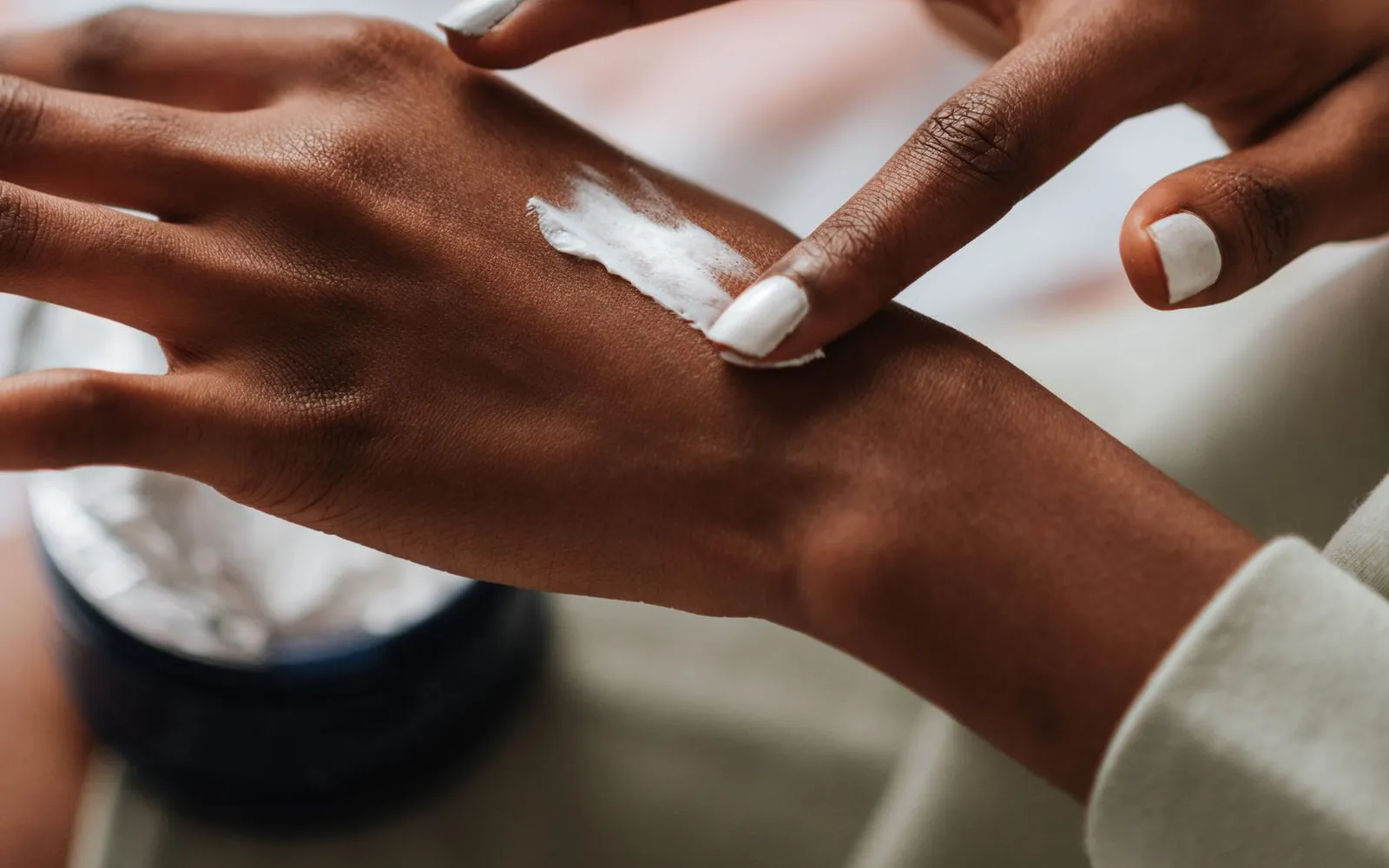
Do Black people need sunscreen?
Yes. The NHS says brown or black skin has some protection against UV rays, so you’re less likely to get skin cancer. But it says to still avoid burning, as people of all skin tones can get it.
How much protection? In one old lab study, about five times less UV got through black skin than white skin. A review puts that at roughly SPF 13.
That’s less than half the SPF 30 the NHS asks everyone to use. Think of it as a built-in SPF 13 you can’t top up. It helps, but it’s well short of the level you’re told to buy.
| Risk | With brown or black skin | What to do |
|---|---|---|
| Sunburn | Less likely. Skin may not go red, but can feel hot, sore or peel. | Avoid burning. Use SPF 30 or more. |
| Skin cancer | Lower chance, but you can still get it. | Check your skin, including palms, soles and nails. |
| Dark patches | More common on darker skin. Sun makes them worse. | Wear a tinted sunscreen on your face. |
| Vitamin D | You may make less from sunlight. | Consider 10 micrograms a day, all year. |
Sources: NHS: sun safety; NHS: sunburn; NHS: melanoma; Skin of colour review; NHS: vitamin D
So when do you need it? The NHS says to consider protecting your skin when the UV index is 3 or higher. Check it on your weather app before you head out.
Don’t rely on sunscreen alone: use shade and clothing too.
What is the best sunscreen for black skin?
The one you’ll wear, with SPF 30 or more and at least 4 UVA stars. A review on darker skin gives the same SPF 30 line. There’s no special higher number for darker skin.
The real choice is the type. Mineral sunscreens use zinc oxide or titanium dioxide, and they can leave a white cast. On darker skin, that thick white layer can make them hard to use.
| Type | On darker skin | Blocks |
|---|---|---|
| Tinted mineral (with iron oxide, a skin-coloured pigment) | Comes in different shades | UV and visible light |
| Mineral, not tinted, not nano (not tiny particles) | Can leave a white cast | UV and visible light |
| Clear: chemical, or nano mineral (very tiny particles) | Goes on clear | UV only |
Sources: Skin of colour review; Skin Health and Disease review
That missing light is visible light, the light you see by. On darker skin, it can cause darker, longer-lasting marks than UV does.
So for your face, try a tinted one in your shade. For your body, any SPF 30 you’ll actually wear will do. More on filters in mineral vs chemical sunscreen.
Why does the sun make dark patches worse?
Two kinds of dark patch affect darker skin more often. A review says sun protection is key to stop them forming or getting worse.
| Patch | What it looks like | What helps |
|---|---|---|
| Melasma | Dark patches on the face, often the same on both sides. | Daily sunscreen that also blocks visible light. |
| Marks after spots or injury | A dark mark left after acne, eczema, a cut or sunburn. | Sunscreen and shade while it fades. |
Sources: Skin of colour review; Melasma trials review
Visible light matters here. In a study of 20 people with darker skin, it caused darker marks that lasted longer than long-wave UV light. It caused no marks on the pale skin tested.
For melasma, a review of 36 trials found evidence that sunscreen covering visible light as well as UV may help a fading cream work better. That cream was hydroquinone, a skin-lightening medicine.
Using a fading cream? Wear tinted sunscreen with it every day.
Never stop or change a prescribed medicine without your prescriber. See also acne scars and age spots.
How much sunscreen should you use on dark skin?
The same as anyone else. Most people don’t use enough, and a thin coat protects less.
Your sun routine for darker skin
- Check the UV index. If it’s 3 or more, protect your skin.
- Use about 6 to 8 teaspoons to cover your whole body.
- Put it on 30 minutes before you go out, then again just before.
- Reapply every 2 hours, and straight after swimming (even if it’s water resistant), towel drying or sweating.
- Stay in the shade from 11am to 3pm, March to October, and wear a wide-brimmed hat.
- Check the open-jar symbol, and don’t use it past that date.
Source: NHS: sun safety
In a US survey of patients with mostly darker skin, the top reason for skipping sunscreen was simply forgetting. So keep it next to your keys or toothbrush.
And sunscreen isn’t a pass to stay out longer. The NHS says don’t spend any longer in the sun than you would without it. Why it matters long term: sunscreen and skin ageing.
Does sunscreen stop you getting vitamin D?
Dark skin may need more time in the sun to make the same vitamin D. So if you have an African, African-Caribbean or south Asian background, the NHS says to consider 10 micrograms a day, all year.
Sunscreen doesn’t seem to make it worse. In US data, Black adults who used sunscreen had higher vitamin D levels, not lower.
So you don’t have to choose. Wear sunscreen, and consider the supplement.
Adults and children aged 11 to 17 shouldn’t take more than 100 micrograms (4,000 IU) a day, as it could be harmful. Younger children have lower limits. More in vitamin D deficiency and how much vitamin D to take.
When to speak to a GP
On black or brown skin, melanoma most often shows up on the soles, palms or under a nail. That type isn’t thought to come from sun, so check there even if you never burn. See a GP if:
- You have a new or unusual mark that hasn’t gone after a few weeks, including on your palms or soles.
- You have a dark area under a nail that wasn’t caused by an injury.
- A mole has changed size, shape or colour, or is painful, itchy, inflamed, bleeding or crusty.
- After sun, your skin is blistered or swollen, your temperature is very high, or you feel hot, cold or shivery. Ask for an urgent GP appointment or call 111. The same goes if you feel very tired, dizzy or sick, have a headache or cramps, or a baby or young child has sunburn.
Sunburn on dark skin may not look red. Go by how it feels: hot, sore or peeling.