What should I eat after a workout?
About 20g of protein, plus some carbs. Half a big pot of Greek yoghurt and a banana does it. Only training once today? You don’t need to rush to eat. One thing matters more.
On this page
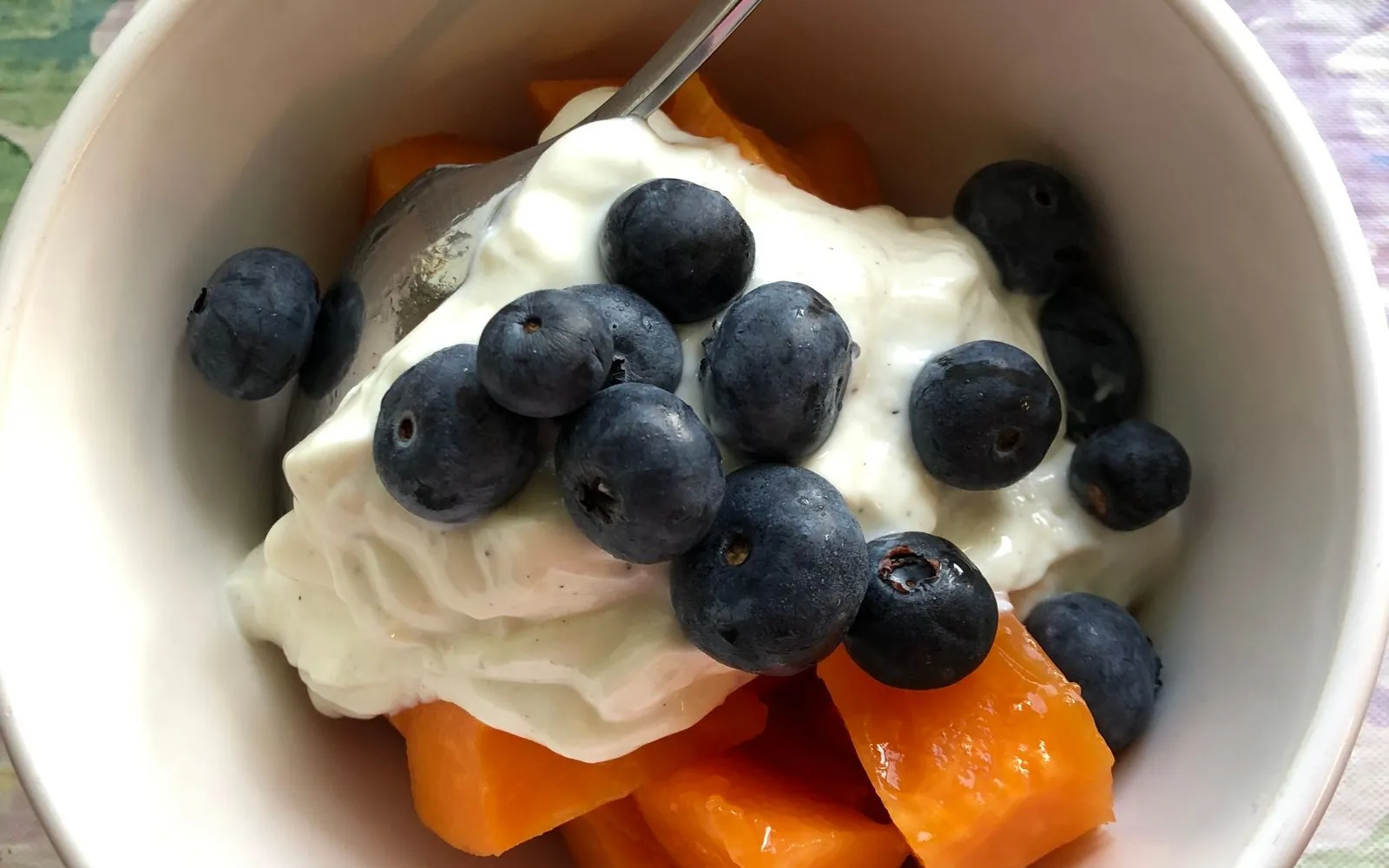
What is a good post-workout snack?
One with about 20g of protein and some carbs. A sports nutrition society, the ISSN, advises 20 to 40g of protein at a time. Older people likely need nearer 40g to get the most from it.
The British Dietetic Association (BDA) lists everyday portions that each give about 20g.
| Food | Portion |
|---|---|
| Greek yoghurt | Half a 450g pot (225g) |
| Low-fat cottage cheese | Half a 300g pot (150g) |
| Eggs | 3 medium eggs |
| Tinned tuna or salmon | 1 small can (100g) |
| Chicken | 1 small breast (75g cooked) |
| Semi-skimmed milk | 1 pint (600ml) |
| Baked beans | 1 large can (400g) |
| Unsalted nuts or seeds | 2 handfuls (100g) |
| Quorn mince | 6 and a half tablespoons (165g) |
Source: BDA
Then add carbs, your muscles’ main fuel. A banana, a bagel or two crumpets with jam all work. The BDA says to start refilling that fuel after exercise with a carb-rich snack or meal.
Pick one food from the table to keep in your fridge or gym bag. For more, see high protein snacks.
Do I need to eat straight after a workout?
Not usually. The ISSN says total protein and calories matter most. For people who aren’t athletes, eating just before or just after training seems to add very little.
Your muscles stay extra responsive to protein for up to 24 hours after a weights session. In one study, 20g of whey boosted muscle building just as much before training as after.
That one thing is your protein across the whole day. The ISSN puts hitting your daily total first, spread out about every 3 hours.
When to eat after training
- 1
Trained once today
Your next normal meal or snack is fine. Give it protein and carbs.
- 2
Training again soon
Within about 4 hours? Start on carbs as soon as you can.
- 3
Spread your protein
Have some at each meal, about every 3 hours.
- 4
Drink
Drink to stay just ahead of thirst.
Work out your own daily total with how much protein you need a day.
What are good post-workout meals?
The BDA tip is simple: put protein and carb-rich foods on your plate at all meals. These six use its own portions.
Six post-workout meals, each with a 20g protein portion
- Scramble 3 medium eggs and have them on 2 thick slices of toast.
- Stir a small 100g tin of tuna into 150g of cooked pasta.
- Have 1 small chicken breast (75g cooked) with 150g of cooked rice and veg.
- Pour a large 400g can of baked beans over a large jacket potato.
- Cook 165g of Quorn mince into a chilli and serve it on 150g of rice.
- Grill 1 medium fish fillet (100g) and have it with a large potato and greens.
Source: BDA
Add veg or salad too. The BDA says to eat at least five portions of fruit and veg a day.
Want more? Try these high protein meals.
What is good fitness food?
Mostly normal, healthy food. On a general fitness plan, the BDA says a normal healthy diet covers your carbs. You need more as training gets longer and harder.
| How much you train | Carbs a day, per kg of body weight |
|---|---|
| 1 to 2 hours of light to moderate activity, 3 to 5 times a week | 3 to 5g |
| 2 to 3 hours a day of hard training, 5 to 6 times a week | 5 to 8g |
| 3 to 6 hours a day of hard training, in 1 or 2 sessions, 5 to 6 days a week | 8 to 10g |
Source: BDA
Two medium-large bananas, a bagel or 150g of cooked rice each give about 50g of carbs. See healthy carbs for better picks.
Protein needs rise too. Strength and endurance athletes need about 1.4 to 2.0g per kg a day, against 0.75g for people who don’t exercise.
In most cases a balanced diet covers that, if you eat enough overall. So plan your meals before you buy anything.
Do I need a protein shake or sports drink?
Usually not. The BDA says a varied diet should give you what you need for sport. Supplements won’t make up for poor food choices.
A shake is handy when you can’t get to food. See whey protein and post-workout supplements.
To drink, the NHS says water is best to replace fluid lost in sweat. Aim for clear pale yellow pee.
An isotonic sports drink is made to match your body’s salt and sugar balance. 800ml gives about 50g of carbs, the same as two medium-large bananas. Fruit juice counts too, but keep juice and smoothies together to one small 150ml glass a day, with a meal.
Sore a day or two later? See muscle soreness and progress.
When to speak to a GP
Speak to a GP if:
- You have diabetes and get low blood sugar (hypos) often, have had severe hypos, or get them at night. Lots of exercise without more carbs or less insulin can cause them.
- You have diabetes and don’t always notice the signs when your blood sugar is low.
- You don’t have diabetes but get signs of low blood sugar, such as shaking, sweating, a fast heartbeat or feeling confused.
- You exercise too much, eat very little or have very strict food habits. These can be signs of an eating disorder, so see a GP as soon as you can.
- You keep losing weight without changing your diet or exercise.
Call 999 if someone with very low blood sugar is unconscious or not responding normally. That applies if there’s no glucagon injection (an emergency jab that raises blood sugar) or you don’t know how to use one. It also applies if they haven’t recovered within 10 minutes of having it, or if they’ve been drinking alcohol.
On insulin or other medicines that lower blood sugar? Diabetes UK suggests keeping glucose tablets or a sugary drink to hand when you exercise. Never stop or change a prescribed medicine without your prescriber.